

What Are Cream Chargers Used For? From Whipped Cream to Modern Culinary Foams
2026-08-10
Cream chargers are small steel cylinders filled with food-grade nitrous oxide, and what cream chargers are used for starts with one job: whipping cream inside a sealed dispenser in seconds. From that core function, their uses have expanded to cold foam for coffee, cocktail foams, rapid infusions, savory espumas, and high-volume dessert production. We manufacture both the gas and the cylinders at our own facility, so we see daily how professional buyers put them to work. This guide covers every major application, from daily café service to industrial-scale output.
What Is a Cream Charger Used for at Its Core?
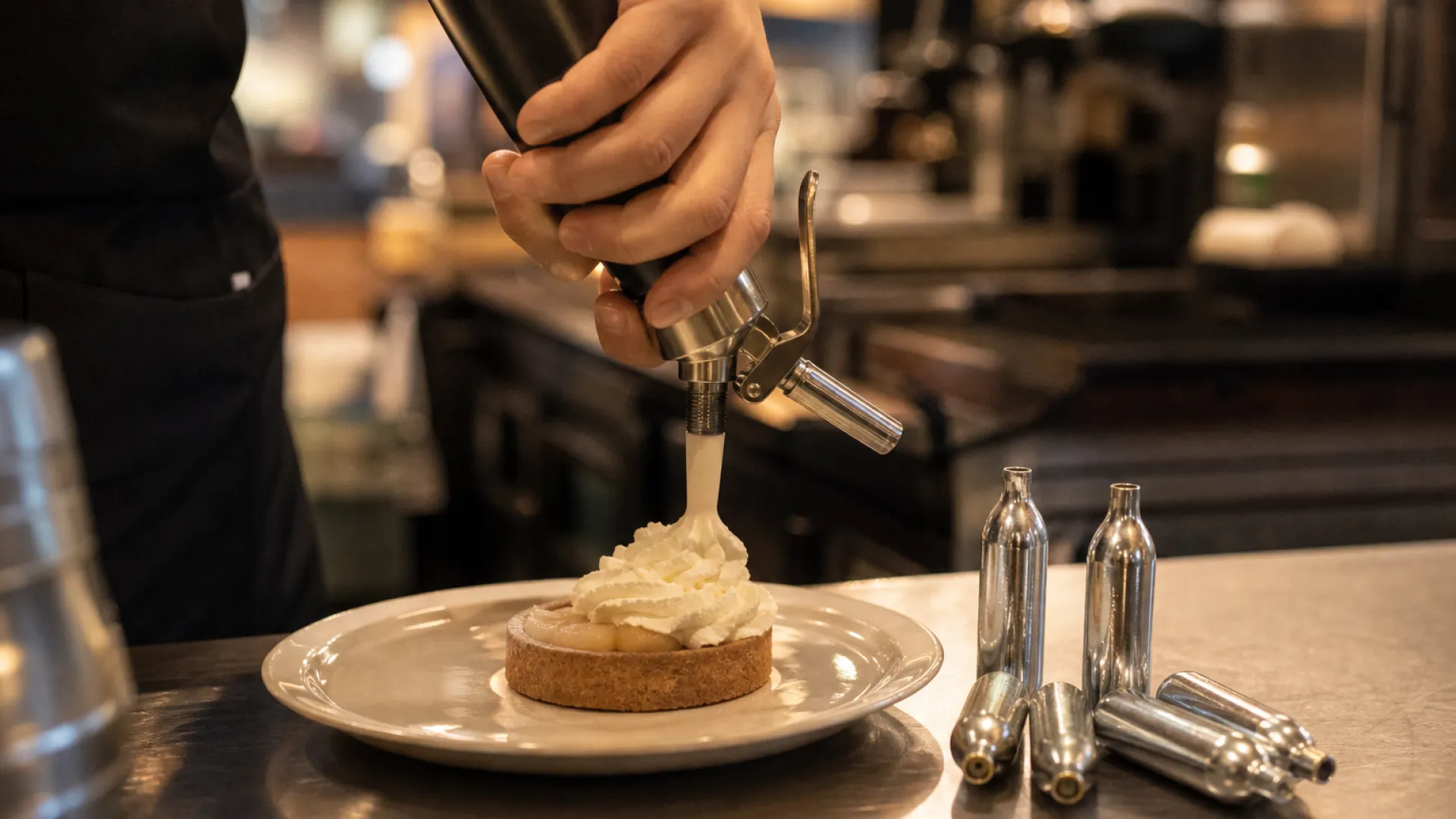
The core use of a cream charger is aerating liquid cream. You fill a dispenser with cold heavy cream, screw in a charger, and the N2O dissolves into the cream's fat while the vessel stays sealed. When you press the lever, the pressure drops at the nozzle and the dissolved gas expands into millions of micro-bubbles — liquid becomes stable foam in the time it takes to pull a trigger. We break down the full pressure cycle in our article on how a whipped cream dispenser works.
Compared with hand whipping or a mixer, the charger method wins on three points a business actually measures: speed (seconds per portion instead of minutes per batch), consistency (the same texture across every plate and every shift), and shelf life (charged cream keeps up to two weeks refrigerated in the sealed canister, because the N2O atmosphere suppresses bacterial growth). One fill also yields two to three times its liquid volume in finished cream, which is why whipped cream charger uses start with economics, not just convenience.
Why nitrous oxide and not another gas? N2O is highly soluble in fat and completely neutral in taste, so it aerates cream without changing its flavor. CO2, by contrast, dissolves into an acid that turns cream sour, and plain air whips slowly and unevenly. This chemistry is what makes the charger format irreplaceable for dairy foams — and it is also why gas purity matters: off-grade N2O carries oil and odor traces that end up directly in the cream.
Everyday Uses in Cafés and Dessert Shops
For most buyers, cream charger uses begin at the bar and the dessert station:
- Dessert toppings. Whipped cream for cakes, pies, sundaes, and plated desserts — portioned in seconds, identical every time, and stable enough to hold rosettes through a full service.
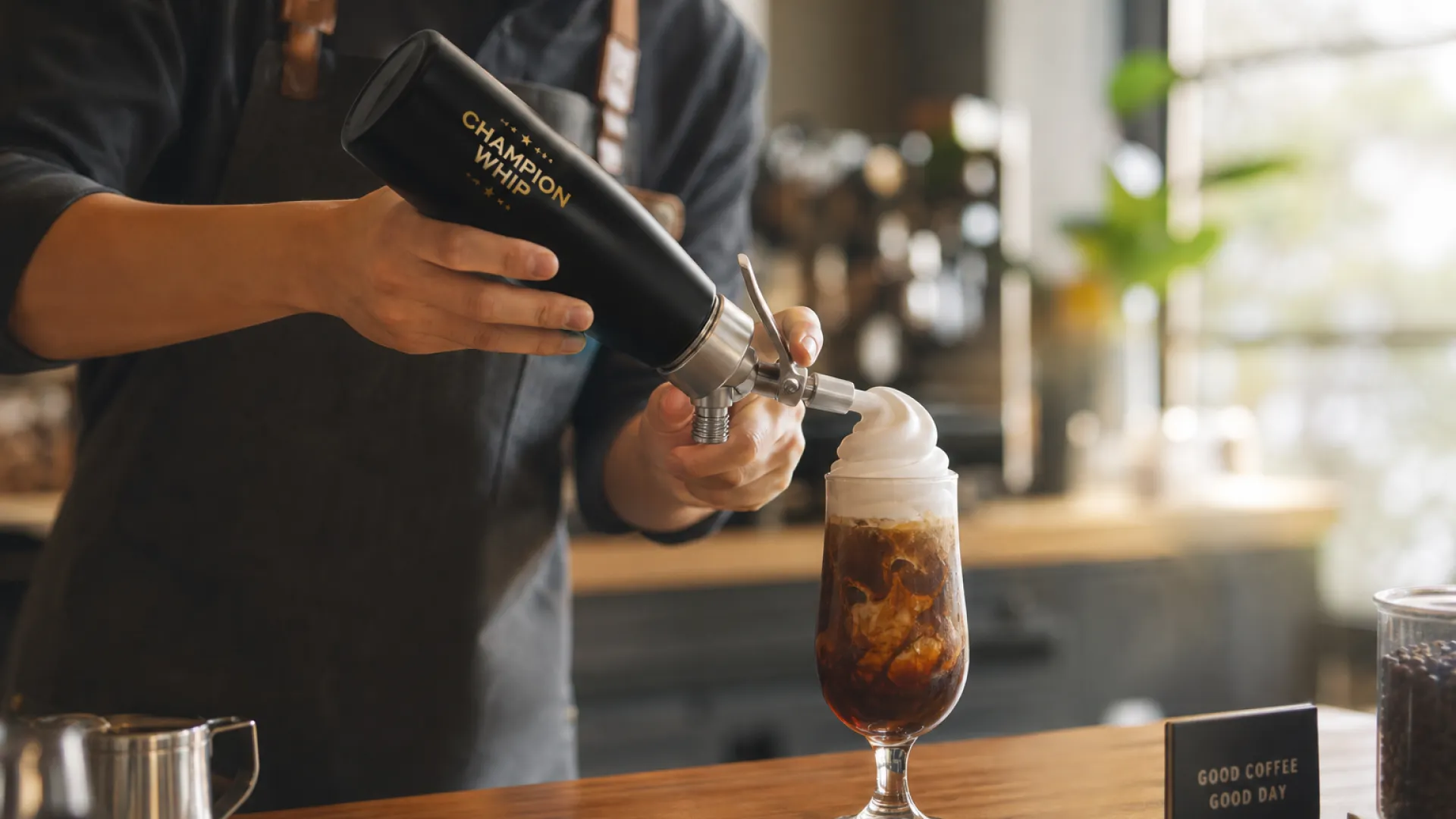
- Cold foam for coffee. Iced lattes and cold brew topped with a dense, slow-settling foam are now standard menu items at specialty coffee shops. A dispenser produces cold foam in seconds without a steam wand or a blender.
- Flavored whipped creams. Vanilla, chocolate, caramel, or seasonal fruit creams for signature drinks and dessert menus. Flavoring goes into the dispenser with the cream, and a standard 8g N2O cream charger does the rest.
The same kit also travels well. Caterers and event bars run dispensers off-site with no power connection at all — a dispenser, a box of chargers, and a cooler cover a full wedding or festival service. For food trucks and pop-ups this is often the deciding factor: fresh cream and foam production with almost no equipment footprint.
All of these run on the same simple kit: a dispenser and chargers. A commercial-grade stainless steel cream whipper handles the daily workload of a café bar, survives dishwashing and drops, and accepts universal 8g chargers from any supplier — which keeps your gas sourcing flexible.
Creative Uses Beyond Desserts
The same pressure cycle that whips cream does three other jobs in a professional kitchen or bar. These N2O cream charger applications have moved from experimental restaurants into regular service:
- Cocktail foams. A charged dispenser turns citrus, egg white, or dairy bases into stable foams for sours and signature cocktails — faster and more consistent than dry shaking, with no egg-white smell carried into the drink.
- Rapid infusions. N2O pressure forces a liquid into the pores of a solid and pulls flavor back out when the pressure releases. Spirits, oils, and vinegars pick up the flavor of herbs, fruit, chilies, or coffee in two to five minutes — a process that takes weeks in a jar. Bars use this for custom gin and flavored vodka; kitchens use it for herb oils and quick pickles.
- Savory espumas. Warm or cold foams from cheese, vegetable, or stock bases — parmesan foam over pasta, truffle foam over meat, tomato foam on appetizers. The espuma technique put the dispenser on the map in modern restaurants, and it remains a standard garnish tool in tasting-menu kitchens.
- Mousses and sauces. Chocolate mousse sets in minutes instead of hours, and butter-based sauces like hollandaise hold a light, stable texture through service without constant whisking over a water bath.
There is also a menu-development angle. Each test batch costs one charger and a few minutes, so chefs can trial new foams, infusions, and textures without committing prep time or extra equipment. Many of our buyers run seasonal R&D exactly this way: test small, keep what sells, and scale the winners onto the regular menu with the same dispenser they already own.
Commercial Uses: When Businesses Scale Up
At low volume the 8g charger is the whole system. As output grows, the same workflow moves to larger gas formats, and the logic is simple enough to run as a checklist:
- Count your daily charger use. One 8g charger whips about half a liter of liquid cream.
- Below roughly 20 chargers a day, stay on 8g chargers — the cost of cartridges is still trivial against labor and waste.
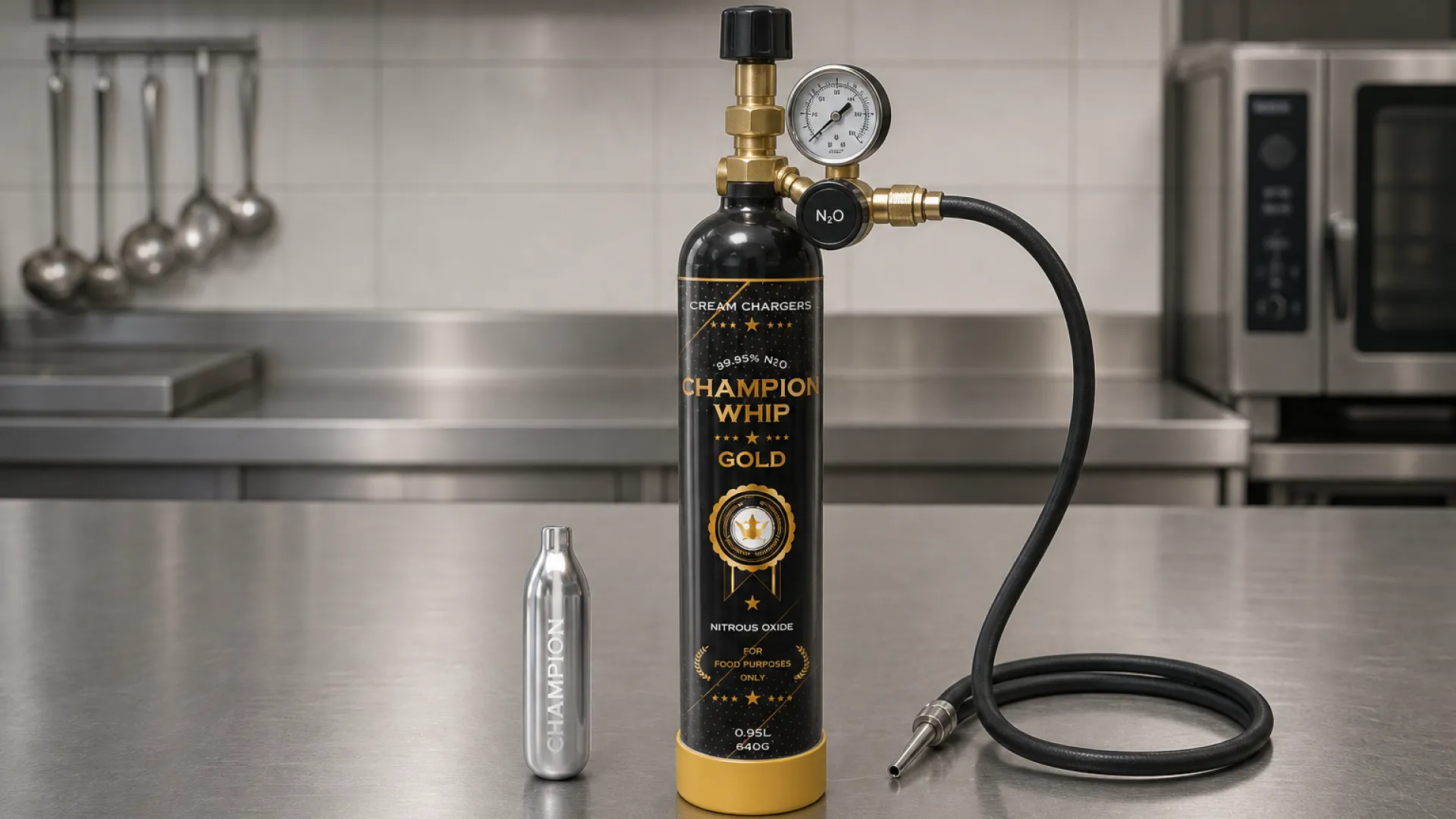
- Above 20–30 chargers a day, switch the gas supply to a large N2O cylinder with a pressure regulator. The dispenser, recipes, and workflow stay identical — only the gas source changes, and gas cost per liter drops sharply.
- Central production and chains run 2000g or 3000g cylinders as base supply, with chargers kept for mobile and backup service.
| Format | Gas capacity | Equivalent output | Best fit | Cost profile |
|---|---|---|---|---|
| 8g charger | 8g N2O | ~1–1.5 L finished cream per charger | Cafés, bars, low-to-medium daily volume | No setup cost; moderate cost per liter |
| 640g cylinder | 640g N2O | Equal to about 80 chargers | Busy cafés and dessert shops past 20–30 chargers/day | Lower gas cost per liter; needs a regulator |
| 2000g–3000g cylinder | 2–3 kg N2O | Equal to 250–375 chargers | Chains, bakeries, central production | Lowest cost per liter at sustained volume |
The split by business type is consistent across our customer base. Single cafés and coffee bars start on 8g chargers and usually stay there, because daily volume rarely justifies a regulator setup. Bakeries and dessert shops sit in the middle: once decorating runs all day, a 640g cylinder pays for itself in gas savings. Chains, central kitchens, and distributors treat 2000g and 3000g cylinders as standing supply and keep chargers for mobile backup. The dispenser workflow and the recipes stay the same at every level — only the gas source scales.
Because we fill the gas and manufacture the cylinders in the same facility, every format above ships with the same 99.95% food-grade purity, backed by FDA, CE, FSSC 22000, and SGS documentation — and stocked in our US and EU warehouses for short lead times. Flavored options exist across the range for buyers building differentiated menus.
Safety and Compliance Notes for Professional Use
Cream chargers are a food product and a pressurized vessel, and professional use carries a short list of obligations:
- Food use only. N2O in cream chargers is a food additive — E942 in the EU, FDA 21 CFR 184.1545 in the US. It is supplied for culinary preparation, and inhalation is dangerous and prohibited everywhere.
- Know your local rules. Purchase age limits and retail restrictions vary by country and state — 18+ in the UK and Australia, state-by-state rules in the US. B2B food-grade supply remains legal across these markets; keep your purchase records and supplier documentation on file.
- Buy documented gas. Ask suppliers for food-grade certification and a certificate of analysis per batch. Purity below food grade shows up in taste, and undocumented supply creates compliance risk you do not need.
- Store and dispose correctly. Cool, dry storage away from heat; empty steel chargers and cylinders go to metal recycling.
- Train your staff. Charge only with the head fully tightened, never point the nozzle at people, and release residual pressure through the lever before opening the dispenser for cleaning. A two-minute briefing during staff onboarding prevents the most common handling mistakes.
Get a Wholesale Quote
Cream chargers are used for far more than whipped cream — they are the fastest, most consistent aeration tool in a commercial kitchen or bar, and the same system scales from a single café dispenser to chain-level cylinder supply. Champion Whip manufactures the full range factory-direct: 8g chargers through 3000g cylinders, flavored options, and OEM customization, with orders starting from one pallet. Send your volume and market through our cream chargers wholesale page, and our team will reply with a tailored quote within 4 hours.
FAQ
What are cream chargers used for besides whipping cream?
Beyond whipped cream, cream chargers are used for cold foam on coffee, cocktail foams, rapid flavor infusions for spirits and oils, savory espumas, and fast-setting mousses and sauces. All of these run on the same dispenser and N2O pressure cycle.
Can cream chargers be used for infusing cocktails or oils?
Yes. N2O pressure forces liquid into the pores of herbs, fruit, or spices and pulls the flavor back out when pressure releases. A spirit, oil, or vinegar picks up full flavor in two to five minutes in a charged dispenser — a technique called rapid infusion.
How many cream chargers does a café use per day?
A small café typically uses a few 8g chargers a day; a busy specialty coffee bar can reach 10–20. Once daily use passes roughly 20–30 chargers, switching to a large N2O cylinder with a pressure regulator cuts gas cost and steel waste.
Are cream chargers only for commercial kitchens?
No. Home users buy the same 8g chargers and dispensers for desserts and drinks. The difference is volume and documentation: commercial buyers work at higher daily output and need food-grade certificates and batch traceability.
What size cream charger is right for my business?
Match the gas format to daily volume. Most cafés and restaurants run on 8g chargers; operations past 20–30 chargers a day move to 640g cylinders with a regulator; chains and central kitchens use 2000g–3000g cylinders as base supply.
Are cream chargers safe and legal to use for food?
Yes, when used as intended. Food-grade N2O is an approved food additive (E942 in the EU, FDA 21 CFR 184.1545 in the US). Buy certified gas, follow local purchase and storage rules, and never inhale the contents — inhalation is dangerous and illegal in many jurisdictions.


Elevate Your Creations with
Champion Whip
Explore our premium whipped cream chargers – designed for perfectionists.
View our Products


