

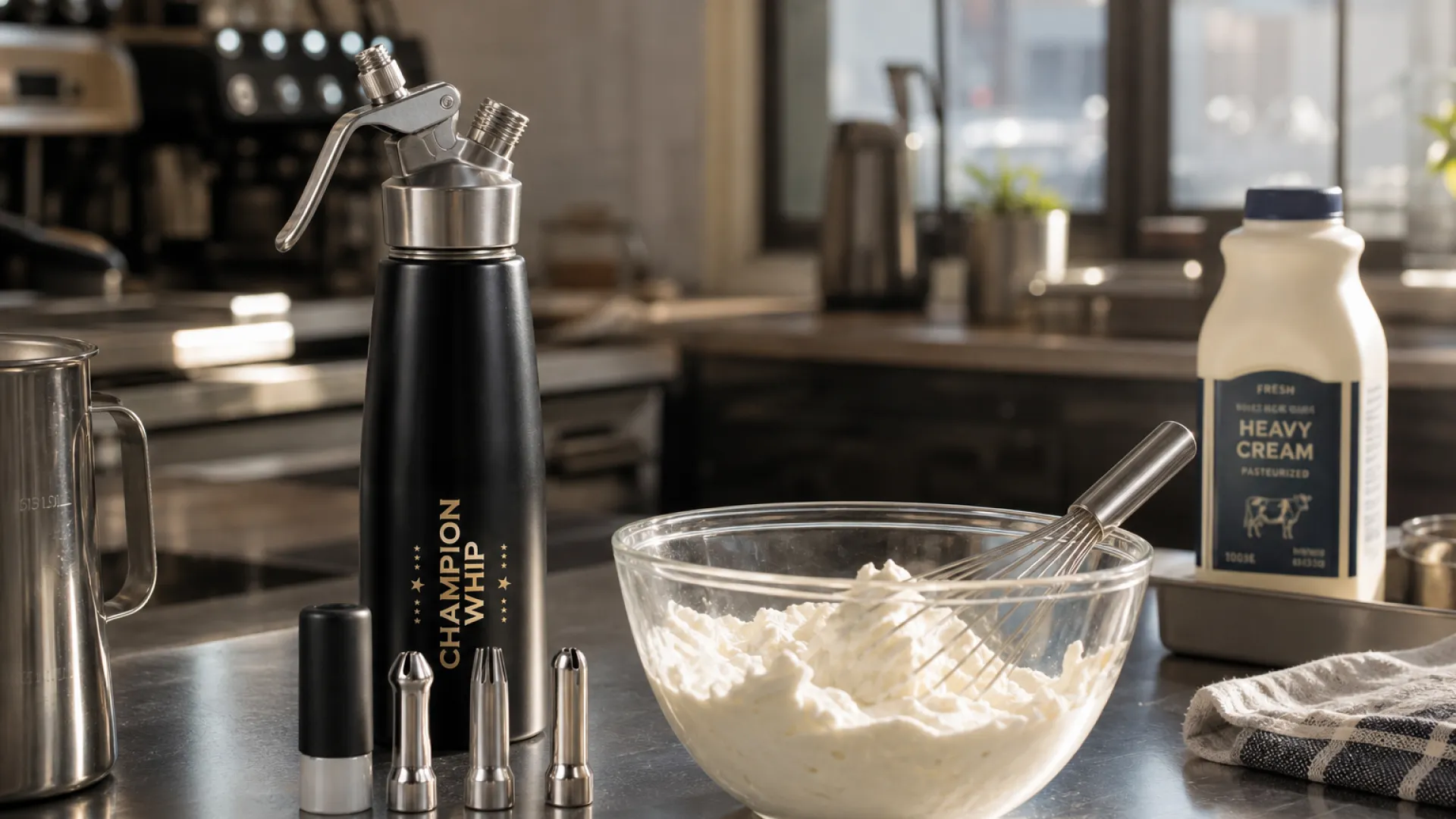
How to Use Whipped Cream Dispenser Without Charger (And When You Shouldn't)
2026-08-18
It is 7 p.m. on a Friday, dessert orders are stacking up, and the last charger just went into the dispenser. Knowing how to use whipped cream dispenser without charger is a genuinely useful emergency skill: the canister is a sealed vessel, so even without N2O you can still move cream through it by hand, and a couple of field tricks can rescue the service. This guide covers three proven manual methods, shows what actually changes in texture, speed, and cost, and explains why any kitchen that serves whipped cream daily should treat these fixes as a short-term backup. Usually the situation comes from a missed reorder, a delayed delivery, or a new site that opened before its first gas shipment arrived.
Can You Use a Whipped Cream Dispenser Without a Charger?
Yes. A whipped cream dispenser is a sealed pressure vessel with a lever valve, and the vessel, head, and nozzle all work without a charger. What you lose is the N2O itself, which supplies both the pressure and the aeration. You can reactivate leftover gas, load pre-whipped cream and pipe it out, or bypass the canister entirely. Expect softer foam and a far shorter hold time.
Inside a charged dispenser, N2O dissolves into the cream's fat under pressure, then expands into millions of micro-bubbles at the nozzle. That pressure cycle, covered in detail in our article on how a whipped cream dispenser works, is what creates fine, stable foam in seconds. Remove the gas, and every workaround follows the same logic: whip air into the cream before loading, or squeeze out whatever pressure remains inside.
How to Use Whipped Cream Dispenser Without Charger: 3 Proven Methods
1. Reactivate the Residual Gas
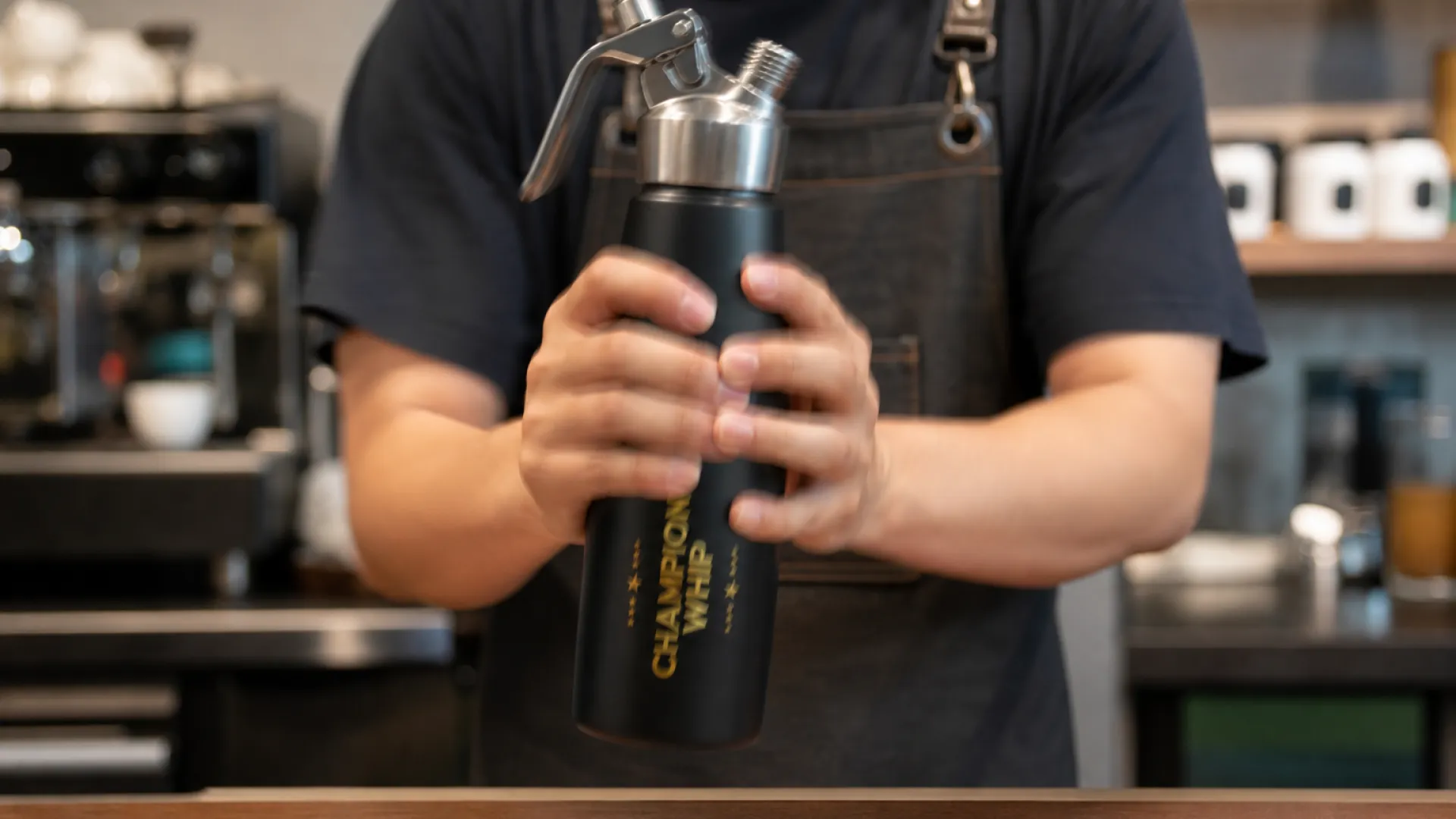
A spent charger often leaves a little unreleased N2O in the canister. Hold the dispenser vertically with both hands and shake hard, up and down, for 15 to 30 seconds, the way a bartender works a cocktail shaker. Turn the dispenser fully upside down so the nozzle points down, then press the lever in short bursts of one to two seconds. If you still feel resistance, shake for another 10 seconds and repeat. Stop after the second or third round, when the foam turns noticeably thinner.
The cream you recover this way is usable for topping drinks and simple plating, but it deflates fast. Serve it within a few minutes of dispensing.
2. Pre-Whip by Hand, Then Load the Dispenser
Chill the bowl and whisk in the fridge for 10 minutes. Pour in cold heavy cream with at least 35% fat and whip to soft peaks, adding powdered sugar in two or three rounds to stabilize the foam; a small pinch of cream of tartar helps it hold longer. Fill the canister to a maximum of two-thirds, screw the head on without a charger, and pipe the cream out with slow, even lever pressure, exactly like a piping bag.
Two rules matter here. First, use the cream within five minutes of filling, because hand-whipped foam starts deflating as it warms. Second, expect denser results with no fine surface bubbles, which suits lines, dots, and rustic plating rather than detailed rosettes.
3. Skip the Dispenser Entirely
For one or two desserts, hand whipping straight into a piping bag is faster than rescuing the canister. An electric mixer on medium-high gets a 500 ml batch to soft peaks in about three minutes. Keep the cream, bowl, and attachments cold, and stop the moment the peaks hold, because over-whipping turns the mix grainy and eventually buttery.
Manual vs Charger Whipping: What Actually Changes
| Factor | Hand whisk / mixer | Charger + dispenser |
|---|---|---|
| Time per portion | 3 to 5 minutes per batch | Seconds per plate |
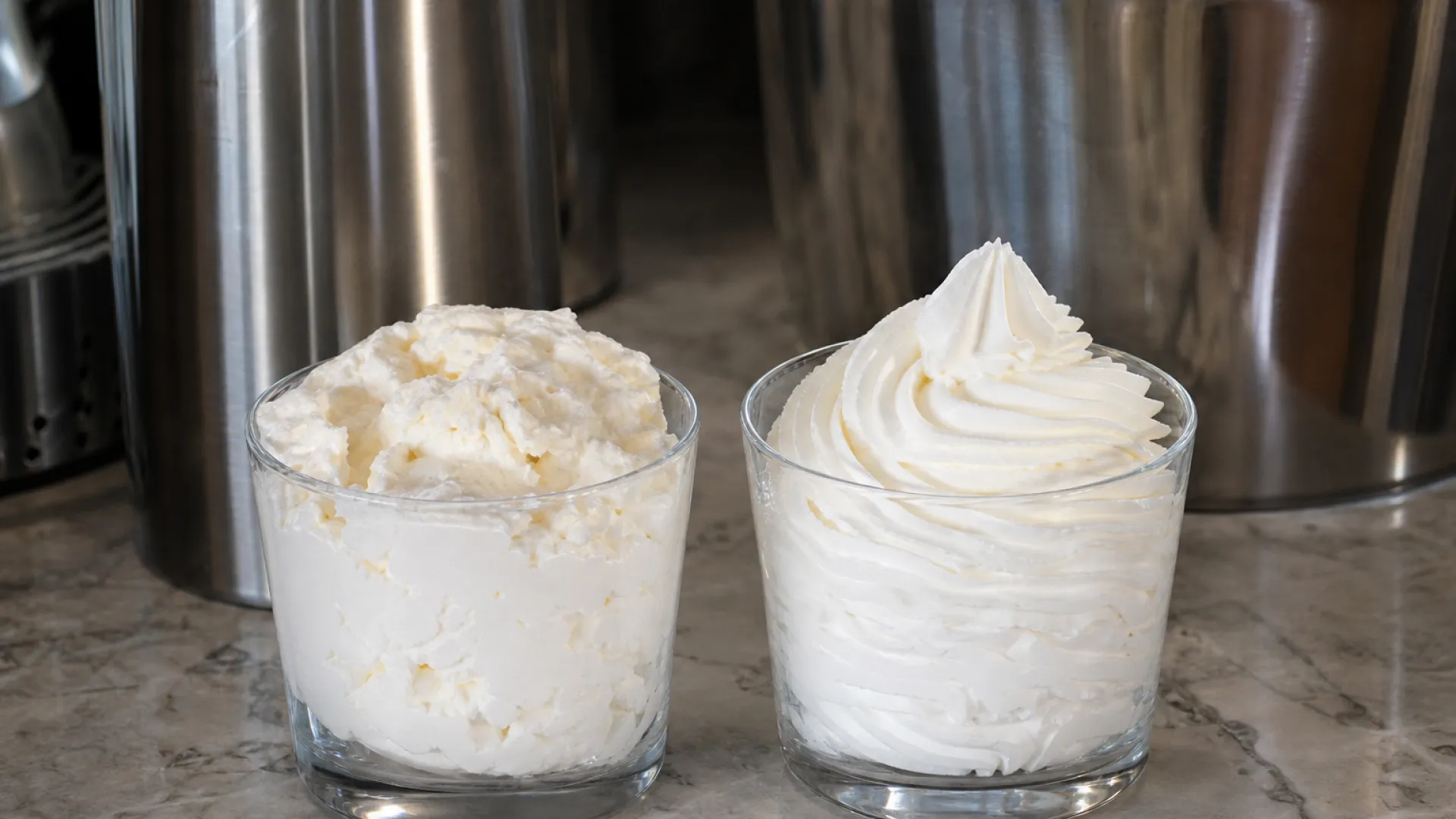
| Texture | Good when fresh, deflates quickly | Fine, uniform micro-bubbles |
| Volume yield | Roughly 1.5 to 2x the liquid volume | 2 to 3x the liquid volume |
| Hold time | A couple of hours before weeping | Up to two weeks refrigerated in the sealed canister |
| Cost profile | No consumables, more labor | Charger cost per fill, minimal labor |
The hold-time row is the one buyers underestimate. Because the sealed canister keeps cream under an N2O atmosphere that suppresses bacterial growth, one prep session can cover several days of service. Hand-whipped cream must be made fresh for every shift, and the texture varies with whoever holds the whisk. Cost per portion deserves a closer look too: manual whipping looks free because there is no consumable, but the labor minutes add up across a full service, and deflated cream gets rewhipped or discarded. A charger costs a fixed small amount per fill and removes both problems.
Why Commercial Kitchens Still Need Chargers
Emergency methods get you through one bad evening. They fail as a system for three reasons a purchasing manager will recognize immediately.
Speed: during a rush, seconds per plate versus minutes per batch decides whether dessert tickets clear or stall. Consistency: charger foam is identical on the first plate and the hundredth, while manual foam depends on the operator. Yield and waste: a 2 to 3x overrun means less liquid cream per portion, and the two-week refrigerated hold means almost nothing gets thrown out.
There is also a hygiene argument. A sealed, charged canister is a closed system: cream goes in, foam comes out, and the N2O atmosphere slows bacterial growth between services. Open bowls of hand-whipped cream sit exposed in the fridge and must be discarded far sooner.
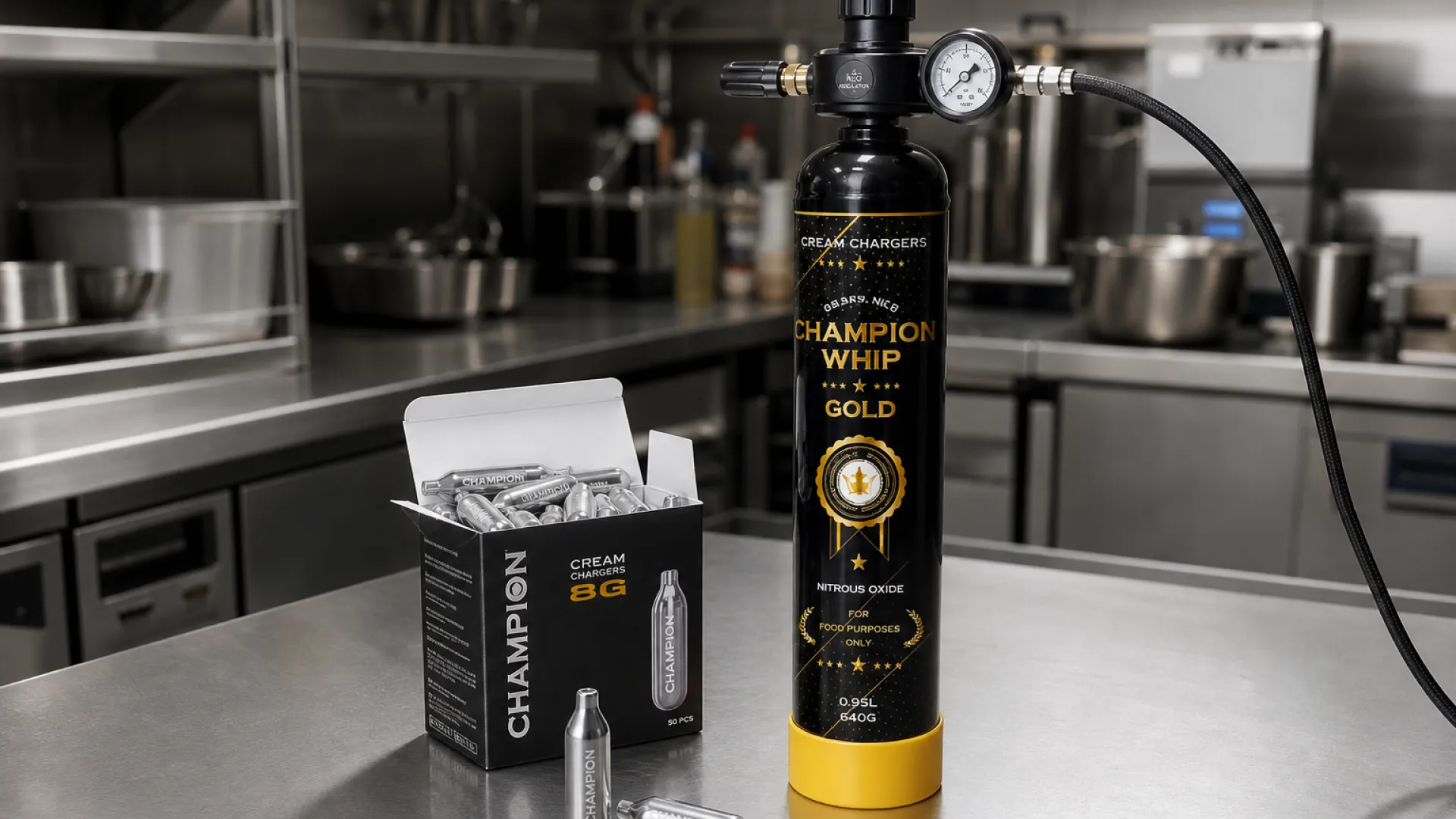
The procurement math scales with volume. A café dispensing a handful of portions a day runs fine on the standard 8g cream charger. Once daily use passes roughly 20 to 30 chargers, switching to a 640g cylinder with a pressure regulator cuts gas cost and steel waste. Learning how to use a cream charger takes one short training session; recovering from a mid-service stockout costs an entire Friday night.
Getting Your Supply Set Up Right
Now that you know how to use whipped cream dispenser without charger in a pinch, the better goal is never needing to. We manufacture N2O and cylinders in our own facility and hold stock in US, German, and Belgian warehouses, so restock lead times stay short. Tell us your daily output and delivery region, and we will recommend a charger format and restock plan, from 8g cases to bulk cream chargers sized for your volume.
FAQ
Is there a whipped cream dispenser that doesn't require an N2O charger?
Yes. Pump-action manual dispensers build pressure through repeated hand pumping instead of a gas cartridge. They suit occasional home use, but the lower pressure produces denser foam and less volume, which is why professional kitchens stay on N2O.
How do I charge a whipped cream dispenser?
Fill the canister with cold heavy cream up to the fill line, screw the head on tight, seat an 8g charger in the holder, and twist until you hear the gas release. Shake 8 to 10 times, rest the canister in the fridge briefly, then dispense with the nozzle pointing down.
How many times can you use a whipped cream charger?
An 8g charger is single-use. One charger aerates one standard half-liter dispenser fill; a one-liter dispenser takes two. Large-format cylinders such as 640g or 2000g replace dozens of cartridges and connect through a pressure regulator.
Can I use a CO2 cartridge instead of N2O in an emergency?
No. CO2 dissolves into carbonic acid, which turns the cream sour and fails to stabilize the fat foam. Chargers may look identical, but the gas inside decides the result. If no N2O is available, whip by hand instead.
Why is my charger-free whipped cream runny?
The usual causes are warm cream, fat content below 35%, an overfilled canister, or under-whipping. Chill the cream and tools, whip to soft peaks before loading, fill to two-thirds at most, and serve within minutes.


Elevate Your Creations with
Champion Whip
Explore our premium whipped cream chargers – designed for perfectionists.
View our Products


