

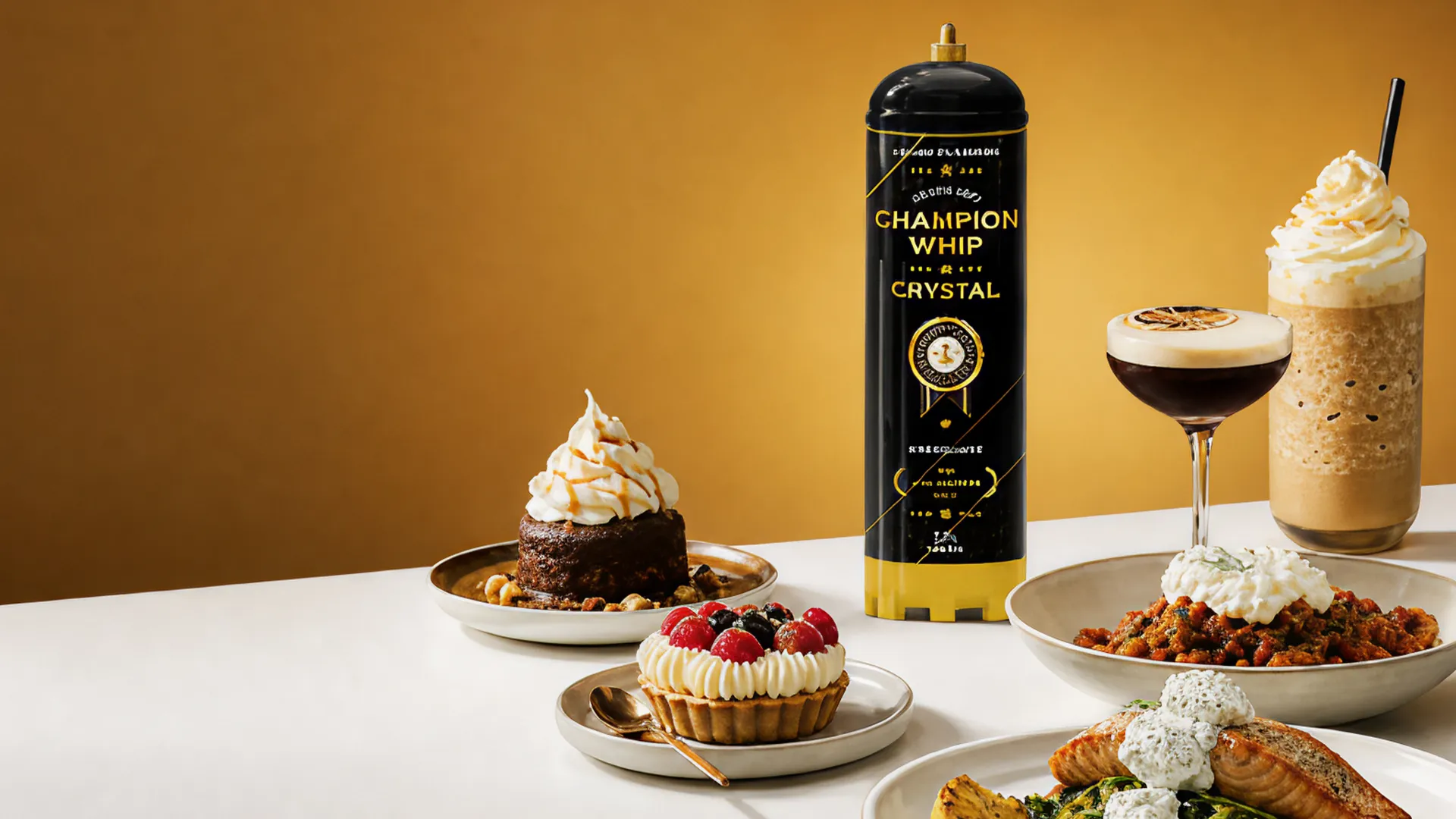
How to Use a Cream Charger: Complete Guide for 8g Cartridges and Large N2O Cylinders
2026-05-22
If you've just received your first cream charger order and aren't sure where to start, or you're scaling up from 8g cartridges to larger N2O cylinders, this guide covers the full process. We've been producing N2O cream chargers for over a decade and field a lot of the same questions from new wholesale customers. Here's what actually matters.
What You Need Before You Start
The basic setup requires a whipped cream dispenser (also called a siphon or whipper), at least one cream charger, and your liquid ingredients. For larger-format cylinders (640g and above), you'll also need a pressure regulator to control the flow of gas into the dispenser.
- Whipped cream dispenser — standard 0.5L or 1L capacity; stainless steel models hold pressure better and last longer than plastic
- Cream charger — 8g cartridges for household and low-volume use; 640g or 2000g cylinders for cafés and commercial kitchens
- Pressure regulator — required when using cylinders of 640g or larger; controls gas output and prevents over-pressurization
- Foamer tip or decorating nozzle — determines the texture and shape of output
- Cream or liquid base — minimum 30% fat content for stable whipped cream; lower-fat liquids work for some infusions but produce weaker foam
How to Use an 8g Cream Charger
This is the standard process for cartridge-based dispensers, covering everything from filling to dispensing.
- Chill your cream. Pour cold heavy cream (30–36% fat) into the dispenser. Cold cream whips faster and holds structure better. Fill to the max line — usually 0.5L for a standard dispenser — and don't overfill, or gas won't distribute properly.
- Add flavoring if needed. Liquid sweeteners, extracts, or sugar syrups can go in at this stage. Avoid chunky ingredients that could clog the nozzle.
- Seal the dispenser. Screw the head on firmly. Make sure the gasket is seated correctly — a common cause of leaks is a twisted or misaligned gasket.
- Attach the cream charger. Thread the charger holder onto the dispenser head until you feel resistance. Keep threading — the piercing pin punctures the charger as the holder tightens. You'll hear the gas enter the dispenser. One 8g charger is typically enough for 0.5L of cream; use two for a fuller 1L dispenser.
- Shake the dispenser. Hold the dispenser upside down and shake 2–4 times to distribute the gas through the cream. Vigorous shaking isn't necessary — you're just ensuring even gas contact.
- Dispense. Keep the dispenser inverted (nozzle pointing down), press the lever, and dispense onto your surface. The cream should come out smooth and stable.
One 8g charger typically produces enough whipped cream for 4–6 servings or roughly 0.5L of cream. For higher volume, see the cylinder options below.
How to Use Large-Format N2O Cylinders (640g / 2000g)
Larger cylinders operate on the same principle as 8g cartridges but require a pressure regulator in between. The regulator steps down cylinder pressure (around 50–60 bar) to a safe working pressure for the dispenser (typically 8–12 bar).
- Attach the pressure regulator to the cylinder. Hand-tighten first, then use a wrench for a quarter-turn. Check for leaks by listening and feeling around the connection.
- Set the output pressure. Most whipped cream applications work at 8–10 bar. Check your dispenser's rated pressure and don't exceed it. Savory espumas and lighter foams may work at slightly lower pressure.
- Connect the regulator to your dispenser via the hose fitting. Some setups use a dedicated foamer head designed for cylinder connections rather than a cartridge-based head.
- Fill and seal the dispenser as you would with an 8g charger — liquid first, head sealed, then gas in.
- Open the cylinder valve slowly. A rapid open can spike pressure. Crack the valve open gradually until the regulator reads your target pressure.
- Shake and dispense as normal.
The advantage of cylinder setups is continuous operation without stopping to reload cartridges. A 640g cylinder typically charges 80 standard 0.5L dispensers; a 2000g cylinder charges roughly 250. This makes them the default choice for any commercial operation running steady cream service.
Cream and Ingredient Requirements
The gas does its job through fat — N2O dissolves into fat under pressure, then expands when pressure drops, forming stable bubbles. Without enough fat, the bubbles collapse. Here's what to use:
| Liquid | Fat Content | Result |
|---|---|---|
| Heavy / double cream | 35–48% | Best result — firm, stable foam |
| Whipping cream | 30–35% | Good — slightly softer foam |
| Half-and-half | 10–18% | Weak foam, won't hold shape |
| Skim milk | <1% | Will not whip — no fat to bind gas |
| Coconut cream (full-fat) | 20–25% | Works well chilled; good dairy-free option |
| Ganache / chocolate base | Varies | Works if cream ratio is sufficient; strain before filling |
Temperature matters too. Cold cream (4–7°C) whips better and holds longer. Warm cream produces foam that collapses quickly. If the kitchen is hot, pre-chill both the dispenser and the cream before charging.
How Much Gas Per Use: Charger Size Comparison
| Charger Size | Gas Volume | Dispenser Charges (0.5L) | Typical Use Case |
|---|---|---|---|
| 8g cartridge | ~4.3L gas | 1 | Home, occasional café use |
| 640g cylinder | ~345L gas | ~80 | Small-medium cafés, restaurants |
| 2000g cylinder | ~1,080L gas | ~250 | High-volume operations, caterers |
How Long Does a Cream Charger Last?
An unused 8g cartridge has a shelf life of around 3–5 years if stored at room temperature, away from heat and direct sunlight. The steel body and crimp seal keep the N2O stable indefinitely under normal conditions.
Once a charger is used and cream is loaded into the dispenser, the situation changes. A charged dispenser — cream inside under N2O pressure — stays fresh in the refrigerator for up to two weeks. This is because N2O is bacteriostatic: it inhibits bacterial growth in the sealed environment. That's one reason commercial kitchens prefer cream charger dispensers over manually whipped cream for service.
Opened cylinders (640g, 2000g) should have the valve closed after each use. Stored upright in a cool, dry location, they hold pressure with no significant loss between uses.
Troubleshooting: When Your Cream Charger Doesn't Work
Most problems come down to one of four causes:
- No gas entering the dispenser. Check that the charger holder is threaded all the way — the piercing pin needs full engagement to puncture the cartridge. A partial thread is the most common cause of "dead" chargers that still have gas in them.
- Cream comes out liquid, not whipped. Likely causes: cream fat content below 30%, cream too warm, or insufficient shaking after charging. Try chilling both cream and dispenser, use higher-fat cream, and shake more thoroughly before dispensing.
- Foam collapses immediately. Usually means the cream is too warm or too low in fat. Also check whether your dispenser gasket is sealing properly — a leaking gasket means gas escapes before it can fully saturate the cream.
- Leaking from the head area. The gasket (silicone O-ring at the dispenser head) may be worn, cracked, or misaligned. Replace it — gaskets are inexpensive and sold separately. Always seat the gasket flat before tightening the head.
- Nozzle blockage. Chunky ingredients or sugar that hasn't dissolved can clog the nozzle. Remove and rinse in warm water. For persistent blockages, use a small brush or pipe cleaner.
How to Clean a Whipped Cream Dispenser
Residual cream inside a dispenser goes bad quickly at room temperature. Clean after every use — or at least daily in a commercial setting.
- Release remaining pressure. Press the lever until gas stops coming out. Never unscrew the head while the dispenser is still pressurized.
- Disassemble. Unscrew the head, remove the gasket and nozzle. Keep the small parts together.
- Rinse immediately. Rinse with warm water to prevent cream from drying. Dried cream is much harder to remove and can harbor bacteria.
- Wash with warm soapy water. Wash the body, head, gasket, and all nozzles. A bottle brush helps reach inside the canister body. Avoid abrasive scrubbers on the inner surface.
- Rinse and air-dry. Rinse thoroughly and allow all parts to air-dry before reassembling or storing. Moisture trapped inside a stored dispenser can cause issues.
Most components are dishwasher-safe, but check the manufacturer's instructions for your specific model. Stainless steel bodies typically handle the dishwasher well; head mechanisms and valves do better with hand washing.
If you're sourcing cream chargers for commercial use, Champion Whip supplies the full size range — 8g cartridges through 2000g cylinders — direct from our factory, with 99.95% purity N2O under FDA, CE, FSSC22000, and SGS certification. We work with cafés, distributors, and private label brands across multiple markets. Contact us about wholesale pricing and OEM options.
FAQ
How does a cream charger work?
A cream charger is a small steel cartridge filled with food-grade nitrous oxide (N2O) at around 50–60 bar of pressure. When the charger is loaded into a dispenser and the holder is tightened, a piercing pin punctures the cartridge seal, releasing N2O into the cream inside. Under pressure, N2O dissolves into the fat molecules in the cream. When you press the dispenser lever and the pressure drops to atmospheric, the dissolved gas rapidly expands, forming millions of tiny bubbles stabilized by the fat network — producing whipped cream. The process is entirely physical: no heat, no additives.
How much cream does one 8g charger make?
Why is my whipped cream coming out liquid?
Can I use a cream charger with non-dairy alternatives?
How long does charged cream last in the fridge?
What fat percentage does cream need to be for a cream charger?
Do I need a pressure regulator for a 640g or 2000g N2O cylinder?
How do I know when a cream charger cylinder is empty?


Elevate Your Creations with
Champion Whip
Explore our premium whipped cream chargers – designed for perfectionists.
View our Products


