

Whipped Cream Machine: The Complete Guide to Types, Costs, and the Right Setup
2026-08-03
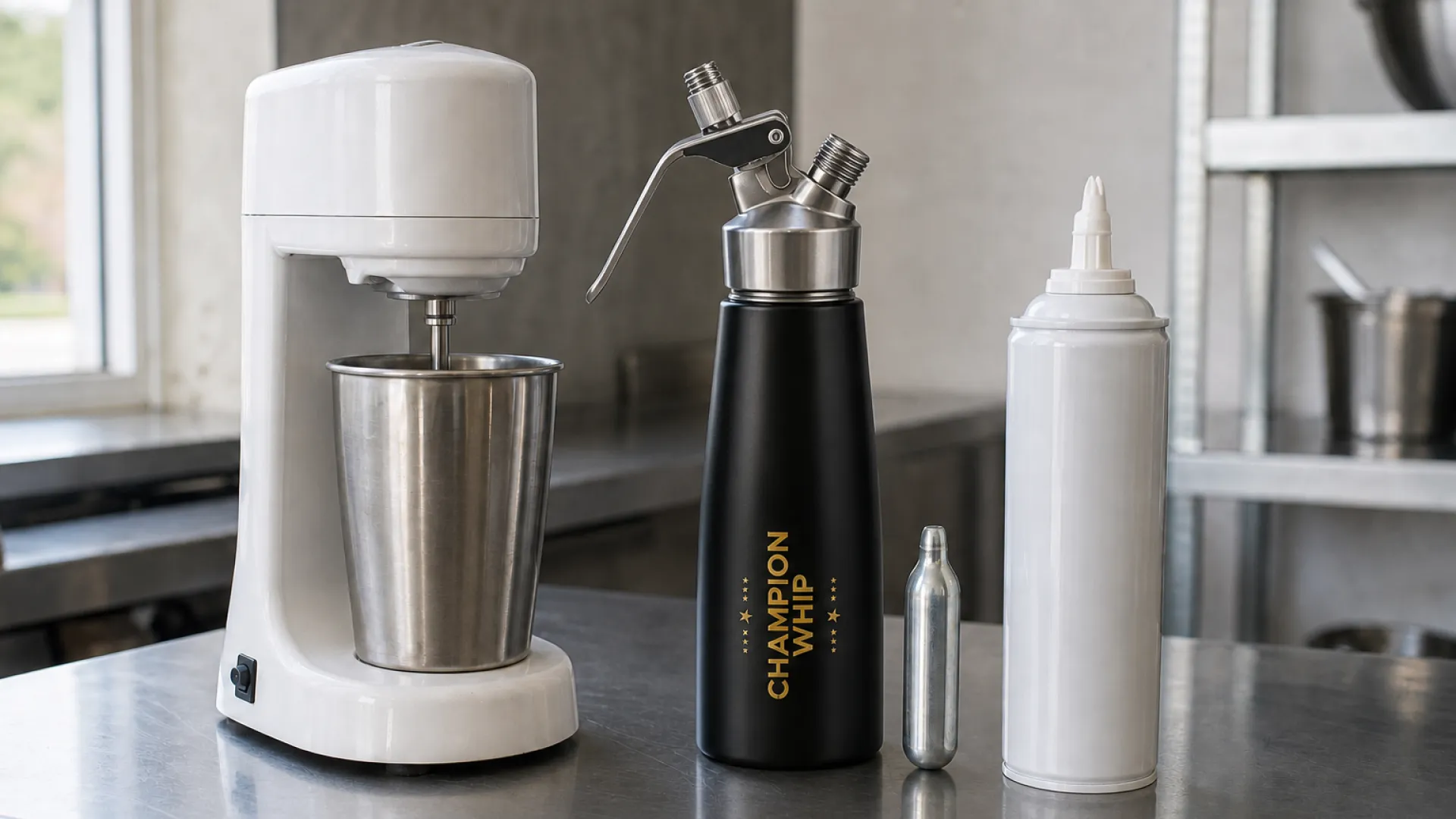
A whipped cream machine is any device that turns liquid cream into stable foam, and the term covers three very different kinds of equipment: electric whipping machines, dispenser systems pressurized with nitrous oxide, and pre-charged aerosol cans. All three produce whipped cream, but they differ sharply in output, cost per liter, and the operations they suit. We manufacture food-grade N2O and the dispensers and regulators that use it, and we watch cafés, bakeries, and distributors weigh these options every week. This guide maps the whole category so you can match a setup to your daily volume.
What Counts as a Whipped Cream Machine?
In commercial purchasing, a whipped cream machine falls into one of three types. An electric whipped cream machine aerates cream mechanically with a motor-driven beater or pump. A dispenser + N2O system dissolves food-grade nitrous oxide into cream inside a sealed canister and releases it as foam. An aerosol can is the same gas principle, factory-sealed and disposable. The table below puts the three side by side.
| Type | How it whips | Practical capacity | Cost profile | Best fit |
|---|---|---|---|---|
| Electric whipping machine | Motor-driven beater or aerating pump in a hopper | Roughly 60–400 L/h by machine class | High upfront, minimal consumables | Bakery plants, central kitchens |
| Dispenser + N2O system | N2O dissolves into cream fat under pressure, expands at the nozzle | 1–3 L finished cream per fill; scales with cylinders | Low entry cost, moderate consumables | Cafés, bars, restaurants, caterers |
| Aerosol can | Factory-charged propellant gas, same expansion principle | One can at a time, no refills | No equipment cost, highest cost per liter | Low-volume backup, home use |
Most buyers searching this term are really asking the whipped cream dispenser vs machine question: pay for an electric unit, or run the gas-based system that most coffee shops already use. The sections below give each option an honest reading.
Electric Whipped Cream Machines
An electric cream whipping machine works like a purpose-built mixer with a feed hopper. Cold cream goes in, a motor drives a beater or aerating pump, and finished foam comes out continuously. Commercial units sit in a capacity band of roughly 60 to 400 liters per hour depending on machine class, and the largest systems plumb directly into filling lines for cakes, desserts, and dairy products.
The strengths are real. Once running, an electric machine produces a steady volume with no gas consumable to reorder, and per-liter consumable cost stays close to zero. For a central kitchen filling hundreds of cakes a day, that math wins.
The limitations deserve equal weight, because we regularly see buyers overspend here:
- Purchase cost. A commercial whipped cream machine is capital equipment. Countertop commercial units start in the low thousands of dollars, and continuous industrial systems run into five figures, before installation.
- Space and plumbing. These machines need counter or floor space, power, and often a dedicated cleaning station.
- Cleaning load. Dairy residue inside pumps and hoppers means daily disassembly and sanitation. Skipping it is a food-safety problem, not a shortcut.
- Minimum efficient volume. Below a certain daily output, the machine sits idle and the payback never arrives.
For bakery factories and central production kitchens, an electric machine earns its floor space. For almost everyone else, the next option does the same job for a fraction of the investment.
Dispenser + N2O Systems
A whipped cream dispenser is a sealed pressure canister. You fill it with cold heavy cream, charge it with nitrous oxide, and the gas dissolves into the cream's fat while the vessel stays sealed. At the nozzle, the pressure drops and the dissolved gas expands into micro-bubbles — liquid cream becomes stable foam in seconds, with no motor and no whisk. We covered the full pressure cycle and part-by-part mechanics in our article on how a whipped cream dispenser works, so here we stay at the purchasing level.
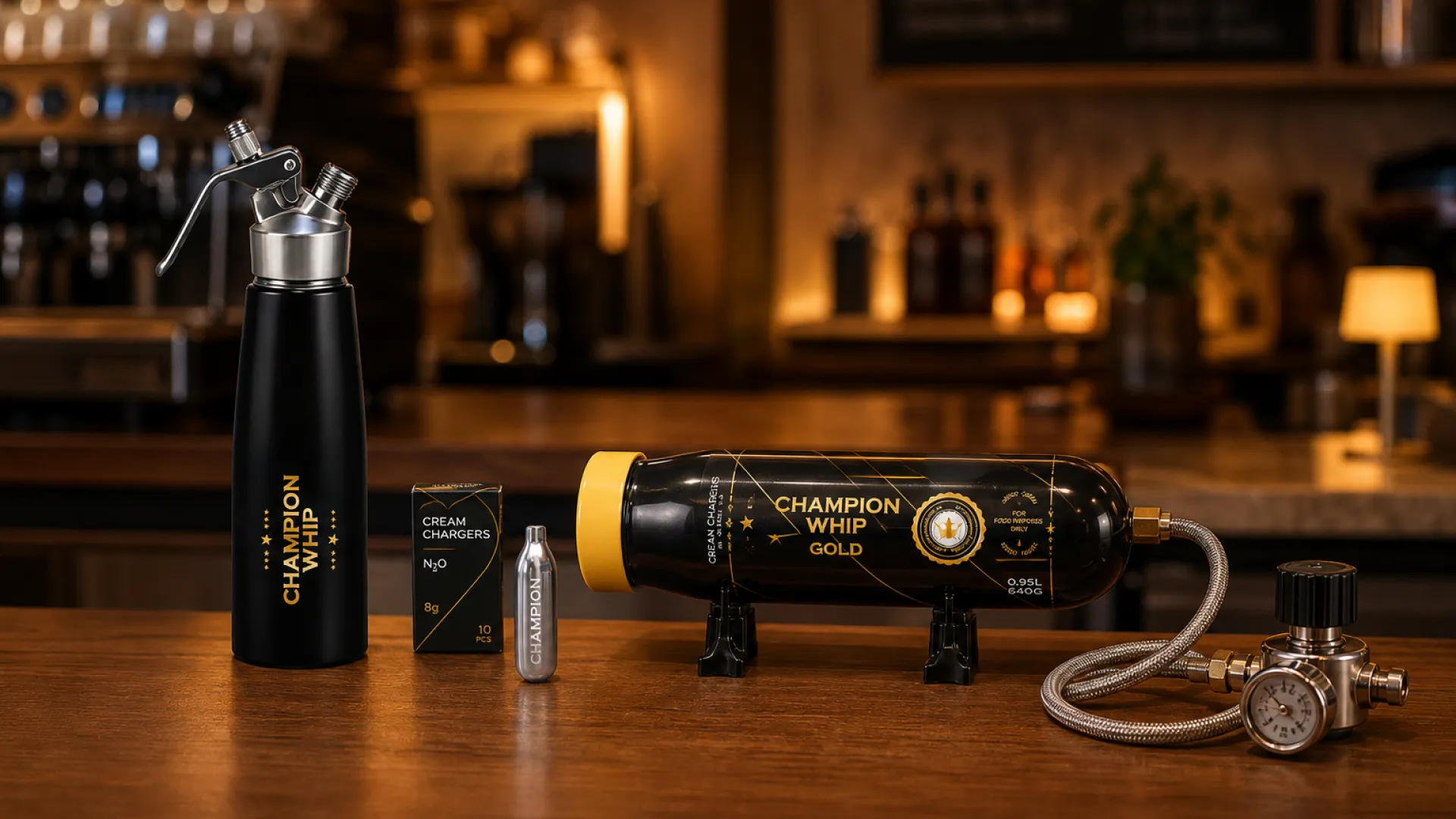
Dispensers come in three standard sizes: 250ml, 500ml, and 1L. The 500ml unit is the commercial standard because it matches exactly one 8g N2O cream charger per fill and turns out roughly 1–1.5 liters of finished cream — enough for a service block in most cafés. A 1L unit halves refill frequency on busy stations but needs two chargers per fill. Our 500ml stainless steel cream whipper is built to this spec: universal charger fit, serviceable valve, rated comfortably above working pressure.
When to Move From Chargers to a Cylinder
The 8g charger is the right gas supply until it isn't. Once an operation burns through 30–40 chargers a day, cartridge cost and steel waste both start to hurt, and that is the point where a large N2O cylinder plus a pressure regulator takes over. The dispenser and the workflow stay identical — only the gas source changes. The regulator steps cylinder pressure down to a controlled charge, one cylinder replaces hundreds of single-use chargers, and gas cost per liter drops to the lowest level in this whole category.
Why Cafés and Bars Standardize on This System
The dispenser format dominates coffee shops and cocktail bars for practical reasons: a portion takes seconds, texture is identical across shifts, the same tool handles whipped toppings, cold foam, espumas, and rapid infusions, and charged cream keeps up to two weeks refrigerated in the sealed canister. Entry cost is a dispenser and a box of chargers. No other option in this guide comes close on footprint or flexibility.
Aerosol Cans and Hand Whipping
Two reference points complete the map. Aerosol cans apply the same N2O principle in a factory-sealed, disposable format — zero cleaning and zero setup, but the highest cost per liter in the category and no control over ingredients, so they work as a low-volume backup rather than a primary supply. Hand whipping and stand mixers sit at the other end: no consumables at all, but labor-heavy, inconsistent across staff, and the cream holds for hours instead of weeks. Both have their place; neither is what most commercial buyers searching for a whipped cream maker should build a business on.
Cost per Liter: Comparing the Five Realistic Setups
Whipped cream machine cost only makes sense per liter of finished cream, across three dimensions: equipment depreciation, consumables, and labor. Exact figures depend on your supplier prices and wages, so the table stays in relative bands — the ranking is what holds across markets.
| Setup | Equipment depreciation | Consumables | Labor | Overall cost level |
|---|---|---|---|---|
| Hand / stand mixer | Low | None | High — labor dominates | Acceptable only at very low volume |
| Aerosol cans | None | Highest per liter | None | Highest overall |
| Dispenser + 8g chargers | Low | Moderate (cartridges) | Low | Low to moderate |
| Dispenser + cylinder & regulator | Moderate (regulator + cylinder hardware) | Lowest gas cost per liter | Low | Lowest at sustained volume |
| Electric machine | Highest | Minimal | Low once running | Competitive only at high daily output |
The decision lines follow from the table. Below roughly 10 liters of finished cream a day, a dispenser with 8g chargers is the cheapest complete system. In the middle band, the cylinder-and-regulator upgrade takes over — the 30–40 chargers per day rule marks the crossover. An electric machine only wins its depreciation back when daily output is high, continuous, and centralized in one production room.
Which Setup Fits Your Business?
Cafés and bars. Start with one or two 500ml dispensers and 8g chargers. The format covers whipped toppings, cold foam, and cocktail foams with a tool a barista can run through a rush. When charger consumption crosses the threshold above, add a cylinder and regulator and keep the dispensers unchanged.

Bakeries and dessert shops. Station-level finishing — toppings, rosettes, plated desserts — runs well on 1L dispensers. Centralized filling of cakes and pastries at scale is the one case where an electric machine genuinely belongs.
Catering and distributors. Portability decides here. A dispenser fleet with chargers goes anywhere, and cylinders with regulators serve as the base station back at the kitchen. Distributors should stock both gas formats, because their customers split across the whole range.
High-volume industrial. Continuous electric systems carry the main load. Even here, N2O cylinders keep a role for specialty foams, recipe development, and backup capacity when the line is down for sanitation.
Buyer's Checklist
Whatever form you choose, these five checks separate equipment that runs for years from purchases that generate support tickets. They apply to any brand, including ours.
- Gas purity and certification. For any N2O-based setup, specify 99.95% food-grade nitrous oxide with third-party documentation — SGS or LFGB test reports, aligned with E942 and FDA 21 CFR 184.1545. Gas of unknown purity shows up in the taste of the cream.
- Universal 8g compatibility. A dispenser should accept standard 8g chargers from any brand. Proprietary cartridge designs lock you into one supply chain at higher per-unit gas cost.
- Gaskets and wear parts. The head gasket is the part you will actually replace. Confirm spares are cheap and available, and that the valve comes apart for cleaning.
- Stated pressure rating. A standard charge runs at roughly 8–10 bar inside the vessel. Reputable manufacturers state a rating comfortably above that; silence on the spec sheet is itself an answer.
- Gas and equipment from one source. Buying the dispensers, chargers, and regulator from a single manufacturer gives you one quality standard and one point of accountability when something underperforms.
The Bottom Line
Choosing a whipped cream machine takes three steps: count your daily liters of finished cream, pick the form that matches that volume, then run cost per liter with your own supplier prices and wages. For most food-service operations the answer lands on the dispenser + N2O system, scaling from 8g chargers to cylinders as volume grows — which is the part of the market we build for. Send your daily volume and market through our wholesale page, and we will quote a matched setup of chargers, cylinders, dispensers, and regulators within one business day.
FAQ
Is a whipped cream dispenser the same as a whipped cream machine?
A dispenser is one type of whipped cream machine. The term "whipped cream machine" covers the whole category — electric whipping machines, dispenser + N2O systems, and aerosol cans. A dispenser is the gas-based, handheld form used in most cafés and bars.
How much whipped cream does one 8g cream charger make?
One 8g charger whips about 0.5 liters of liquid heavy cream, which expands to roughly 1–1.5 liters of finished whipped cream — two to three times the liquid volume. A 1L dispenser needs two chargers per fill.
When should I switch from 8g chargers to a large N2O cylinder?
The usual crossover is 30–40 chargers per day. Past that point, a large N2O cylinder with a pressure regulator costs less per liter of gas and eliminates hundreds of single-use steel cartridges, while the dispenser and workflow stay the same.
Which type of whipped cream machine is best for a coffee shop?
A 500ml dispenser with standard 8g chargers. It costs little to start, handles whipped toppings and cold foam with the same tool, and scales later to a cylinder + regulator setup without replacing any equipment.
How long does whipped cream last in a dispenser?
Up to two weeks refrigerated in the sealed, charged dispenser — the N2O atmosphere suppresses bacterial growth while the vessel stays closed. Once dispensed, the foam holds its shape for hours at service temperature.
Do I still need 8g chargers if I buy a large N2O cylinder?
The cylinder and regulator replace chargers as your daily gas supply, but keeping a sleeve of 8g chargers on hand is still practical — for mobile service, off-site events, and backup when a cylinder runs out mid-shift.


Elevate Your Creations with
Champion Whip
Explore our premium whipped cream chargers – designed for perfectionists.
View our Products


