

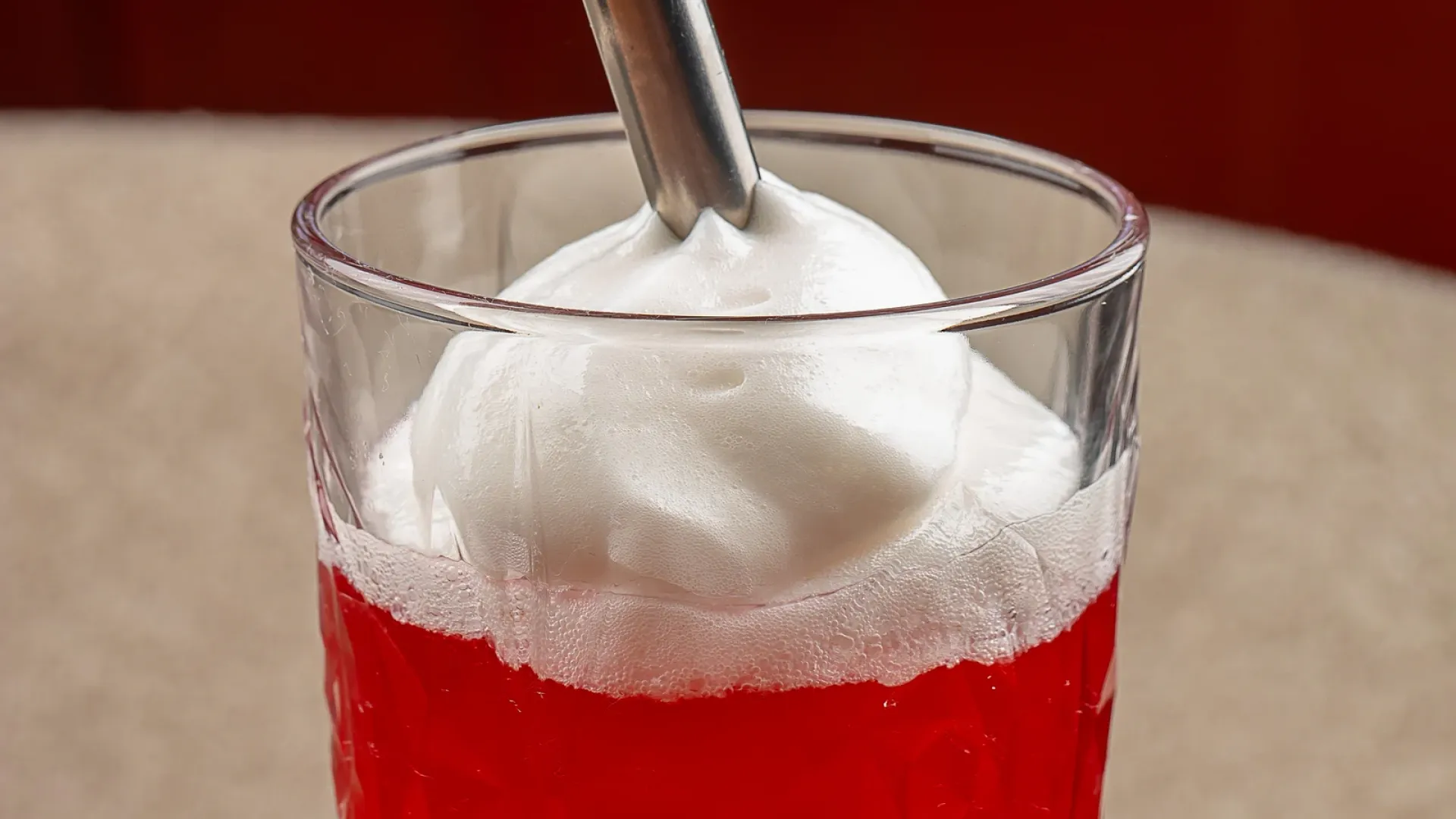
Whipped Cream Dispenser: The Complete Guide
2026-07-13
A whipped cream dispenser looks like a simple metal bottle. In practice, it's a small pressure vessel that decides how consistent your whipped cream, foams, and espumas turn out, how much labor your kitchen spends on toppings, and how often you replace worn parts. We manufacture the N2O that powers these tools, and we supply dispensers to cafés, bakeries, and distributors, so we see the same purchasing mistakes repeat: wrong material for the workload, wrong size for the daily volume, and gaskets destroyed by bad cleaning habits.
This guide covers the whole picture in one place — what a dispenser is, how the parts work together, how stainless steel, aluminum, and plastic actually compare, which capacity fits which operation, the correct first-use procedure, and the maintenance routine that keeps a unit in service for years.
What Is a Whipped Cream Dispenser?
A whipped cream dispenser (also called a cream whipper or cream siphon — the terms mean the same tool) is a sealed canister that aerates liquids using pressurized nitrous oxide. You fill it with cold heavy cream, seal the head, charge it with an 8g N2O cream charger, shake, and dispense. The gas dissolves into the fat of the cream inside the sealed canister; when you press the lever, the pressurized mixture exits the nozzle and the dissolved N2O expands instantly into millions of micro-bubbles. Liquid cream becomes stable foam in the time it takes to pull the trigger.
Compared with a balloon whisk or a stand mixer, a dispenser gives three things a commercial kitchen actually cares about: speed (seconds instead of minutes), consistency (the same texture every portion, every shift), and shelf life (charged cream keeps up to two weeks refrigerated in the sealed canister, because N2O also suppresses bacterial growth while the vessel stays closed). One 500ml fill typically yields two to three times its liquid volume in finished whipped cream.
Anatomy: The Six Parts That Do the Work
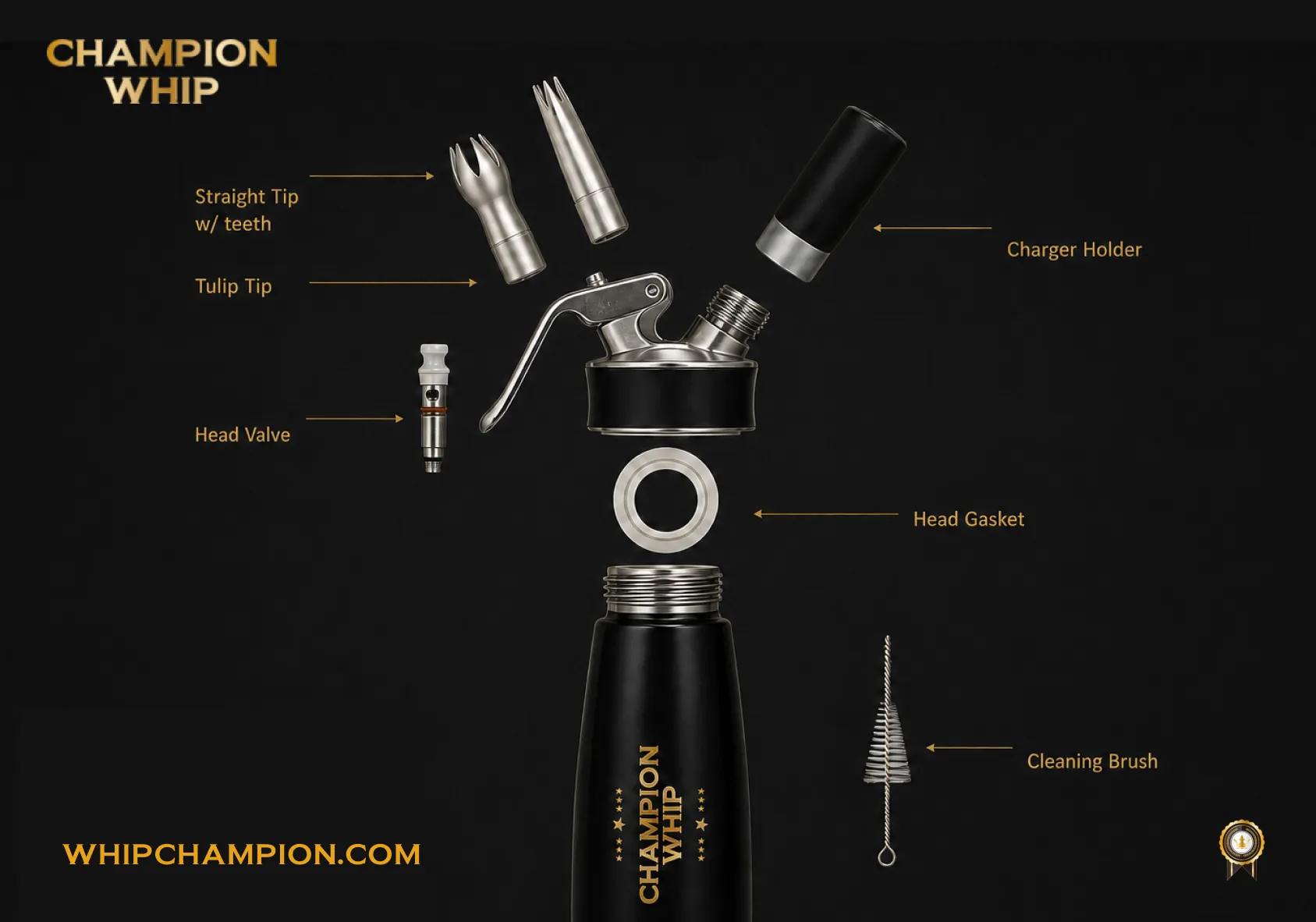
Every dispenser on the market, from budget aluminum to professional stainless steel, is built around the same six components. Knowing them matters because five of the six are wear parts or failure points.
- Canister (body). The pressure vessel that holds the liquid. Rated to withstand the working pressure the charger creates — a properly filled dispenser runs at roughly 8–10 bar internally.
- Head. Screws onto the canister and houses the valve, gasket, and lever. Heads come in stainless steel, aluminum, or composite plastic, and the head material often matters more than the body material for longevity.
- Head gasket. The silicone or rubber ring that seals the head to the canister. This is the number-one wear part. A tired gasket leaks gas, and a leaking dispenser will not whip.
- Valve. Controls gas and cream flow. The piercing pin that opens the charger sits in this assembly.
- Charger holder. The threaded sleeve that presses the charger against the piercing pin. Standard holders fit standard 8g chargers across brands.
- Nozzle (decorating tip). Shapes the output. Straight, star, and tulip tips are standard; stainless tips hold their shape longer than plastic ones.
The working principle is short: N2O is unusually soluble in fat. Under pressure, the gas dissolves into the cream rather than just sitting above it. Release the pressure at the nozzle and the gas comes out of solution as fine, evenly distributed bubbles, while the cream's fat structure locks them in place. That's also why fat content matters — cream below roughly 30% fat lacks the structure to hold the foam, and 33–36% is the practical working range.
Materials in Brief: Stainless Steel, Aluminum, or Plastic
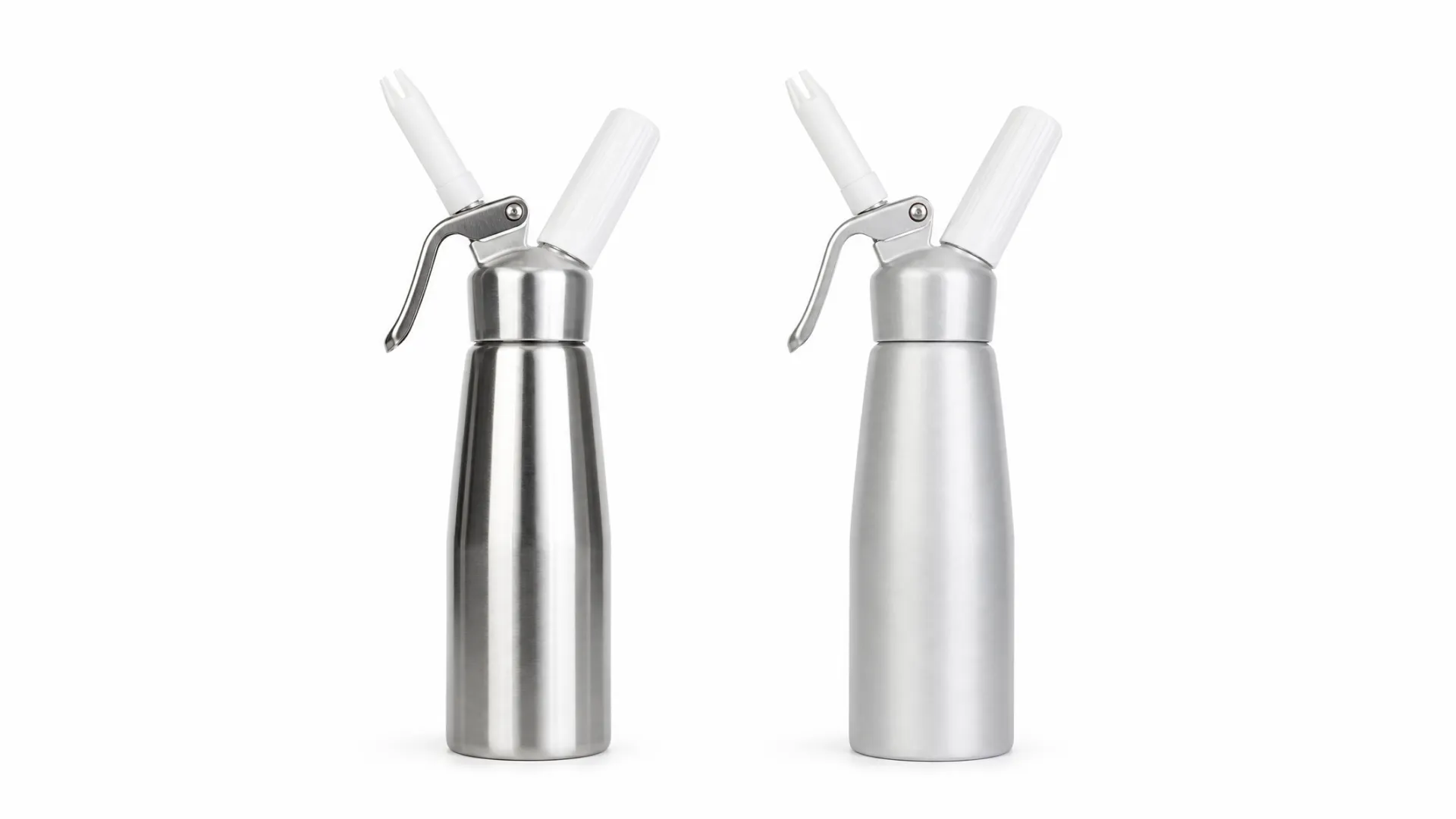
Material is the biggest quality and price differentiator between dispensers, and we've published a full side-by-side breakdown — durability, hygiene, hot-use capability, price ranges — in our reusable cream canister guide. The short version for a purchase decision: stainless steel (304/316) is the professional standard — it handles hot and cold preparations, survives dishwashers and drops, and its threads hold up under years of daily assembly cycles. Aluminum is lighter and cheaper, fine for occasional cold-only home use, but it must be hand-washed and wears faster. Plastic only makes sense for a tool used a handful of times a year.
One detail the spec sheets hide and buyers routinely miss: check the head material separately from the body. Some "stainless" dispensers pair a steel body with a composite plastic head. The head carries the valve, the gasket seat, and the threads — the highest-stress zones on the whole unit — so a plastic head on a metal body caps the real service life regardless of what the body is made of. For commercial duty, specify stainless in both — our 500ml stainless steel cream whipper is built to exactly this spec.
Choosing the Right Size
Dispensers come in three standard capacities: 250ml (half pint), 500ml (one pint), and 1L (one quart). The right answer follows from your daily output, not from "bigger is safer."
| Capacity | Chargers per fill | Approx. finished cream | Best fit |
|---|---|---|---|
| 250ml | 1 × 8g | ~0.5–0.75L | Home use, small households, testing recipes |
| 500ml | 1 × 8g | ~1–1.5L | Cafés, bars, most restaurants — the industry standard size |
| 1L | 2 × 8g | ~2–3L | Bakeries, dessert shops, banquet and high-volume lines |
The 500ml unit is the standard for a reason. It matches one 8g charger exactly, it's light enough for a barista to handle through a rush, and one fill covers a typical café's cream demand for a service block. A 1L unit halves refill frequency for high-output stations but needs two chargers per fill and weighs noticeably more when full. Operations running large-format N2O cylinders with a pressure regulator can charge any dispenser size without single-use cartridges — a setup worth considering above roughly 30–40 charger-equivalents per day.
First Use: The Six-Step Checklist
We publish a full step-by-step tutorial with troubleshooting in our guide on how to use a cream charger, so here is the condensed checklist — the six points that prevent nearly every "defective dispenser" complaint we handle.
- Check the gasket first. A missing or twisted head gasket is the most common reason a brand-new unit "doesn't work."
- Fill with cold heavy cream (30–36% fat), never past the max-fill line — the gas needs headspace to dissolve. Strain flavorings to keep solids out of the valve.
- Screw the head on straight and firm. Cross-threading is what ruins aluminum units early.
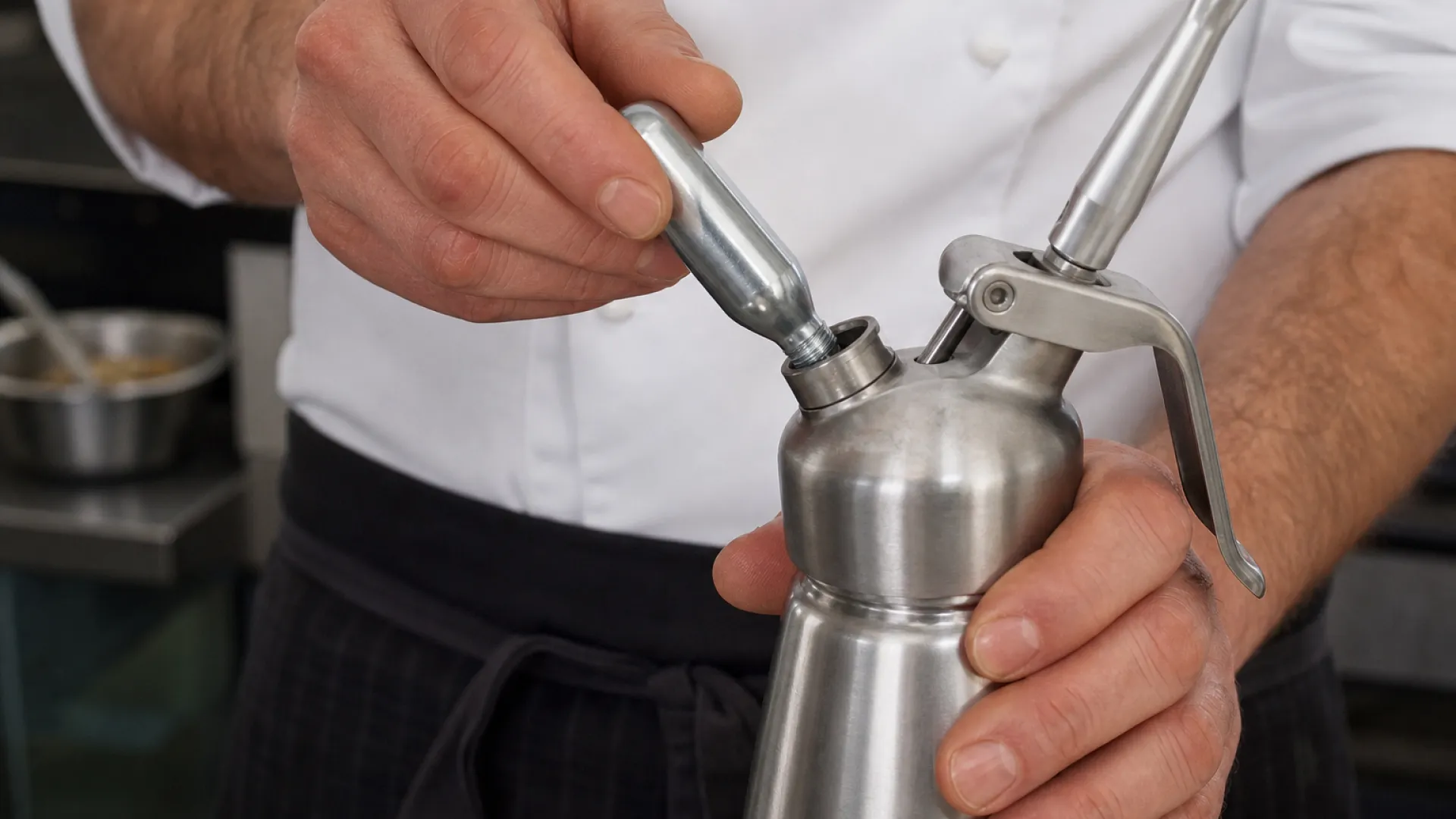
- Charge: one 8g charger for 0.5L, two for 1L. Thread the holder until you hear the gas enter.
- Shake 2–4 times to distribute the gas — vigorous shaking isn't necessary for cream; thicker bases need a few more.
- Dispense inverted, nozzle down, with a gentle press — output pressure surprises most first-time users.
Nothing coming out usually means settled cream, a leaking gasket, or a charger that never fully pierced. Liquid coming out means too little shaking, or cream that's too warm or too lean.
Cleaning and Maintenance: The Short Version
A commercial dispenser fails at the gasket, the valve, or the threads — almost never at the body. Three habits protect all three. First, always vent remaining pressure fully before opening the head; opening a pressurized dispenser is the one genuinely dangerous mistake in this category. Second, disassemble completely after each use — head, nozzle, gasket, valve — wash in warm soapy water, brush the nozzle channel, and air-dry fully before reassembly. Third, treat the gasket as a consumable: inspect monthly in commercial use and replace at the first sign of flattening, because a $2 gasket failure presents exactly like a broken dispenser. And one material rule with no exceptions: aluminum never goes in the dishwasher.
The Commercial Buyer's Checklist
When we quote dispensers for cafés, distributors, and private-label brands, these are the five specifications that separate a unit that runs for years from one that generates support tickets. Use them as a procurement filter regardless of whose product you buy.
- Pressure rating. The vessel should be rated comfortably above the ~8–10 bar working pressure a standard charge creates. Reputable manufacturers state this; absence of a stated rating is itself an answer.
- Head material and valve serviceability. Stainless head, and a valve that can be removed for cleaning. A sealed, non-serviceable valve turns a clogged nozzle into a dead unit.
- Standard charger compatibility. The holder must accept universal 8g chargers. Proprietary-cartridge designs lock you into one supply chain and higher per-unit gas costs.
- Gasket spares availability. The gasket is the part you will actually replace. Confirm spares are available and cheap before committing to a fleet purchase — orphaned models with unobtainable seals become scrap.
- Food-contact certification. LFGB, FDA, or equivalent documentation for every food-contact part, not just the body. For import and resale this is also what clears customs without friction.
Scaling note: operations burning through 30–40 chargers a day should price a large N2O cylinder plus pressure regulator against cartridges — the dispenser stays the same, only the gas supply changes.
Get Dispensers and Chargers From One Source
A dispenser is only half the system; the gas is the other half, and the two are bought best together. Champion Whip manufactures food-grade N2O and fills chargers factory-direct, and we supply 500ml stainless steel dispensers built for daily commercial rotation. For cafés, distributors, and private-label brands, buying cream chargers wholesale with matched dispensers means one quality standard, one point of accountability, and consistent results cup after cup. Send us your volume and market, and we'll quote a complete setup within one business day.
FAQ
What does a whipped cream dispenser do?
It turns liquid cream into whipped cream, foams, mousses, and espumas using pressurized N2O gas. Cold cream goes into the sealed canister, an 8g charger releases nitrous oxide into it, the gas dissolves into the cream's fat under pressure, and pressing the lever dispenses finished foam instantly. It replaces manual whipping with a faster, more consistent, longer-keeping method.
Is a cream whipper the same as a whipped cream dispenser?
Yes. Whipped cream dispenser, cream whipper, and cream siphon are three names for the same tool: a pressurized canister charged with N2O. Regional habits differ — "siphon" is common in professional European kitchens, "dispenser" in North America — but the product and its operation are identical.
How many chargers does a whipped cream dispenser need?
One standard 8g charger fully charges a 250ml or 500ml dispenser. A 1L dispenser needs two chargers per fill. Using more chargers than rated doesn't produce better cream; it over-pressurizes the vessel and pushes the texture toward stiff and grainy. High-volume operations often replace single-use chargers with a large N2O cylinder plus pressure regulator.
What size whipped cream dispenser should I buy?
Match capacity to daily output. 250ml suits home use and recipe testing; 500ml is the industry standard for cafés, bars, and most restaurants — it pairs exactly with one 8g charger and yields roughly 1–1.5L of finished cream per fill; 1L fits bakeries and high-volume lines but needs two chargers per fill and weighs noticeably more when full. When in doubt, 500ml is the answer for a reason.
Can I use a whipped cream dispenser with a large N2O cylinder instead of 8g chargers?
Yes — that's the standard commercial upgrade. A 640g or larger N2O cylinder connects to the dispenser through a pressure regulator, replacing single-use cartridges entirely. The dispenser itself doesn't change; only the gas supply does. The setup pays off once an operation runs through roughly 30–40 charger-equivalents per day, cutting both gas cost per serving and reload downtime.
Why is my whipped cream dispenser not whipping?
Work through the causes in this order: cream too warm or below ~30% fat; not enough shaking (2–4 shakes for cream, more for thick bases); gasket missing, twisted, or worn so the gas leaked out; charger not fully pierced (no hiss on installation); or dispensing upright instead of upside down. These five cover nearly every "broken" dispenser we've ever been asked to replace.
Can I put my whipped cream dispenser in the dishwasher?
Only the body of most stainless steel models is dishwasher-safe — check the manufacturer's rating. The head, gasket, valve, and nozzle should always be hand-washed, because heat and detergent degrade the silicone seal. Aluminum dispensers should never go in a dishwasher; the detergent corrodes the metal and shortens the unit's life significantly.


Elevate Your Creations with
Champion Whip
Explore our premium whipped cream chargers – designed for perfectionists.
View our Products


