

Reusable Cream Canister: A Complete Buyer's Guide
2026-06-29
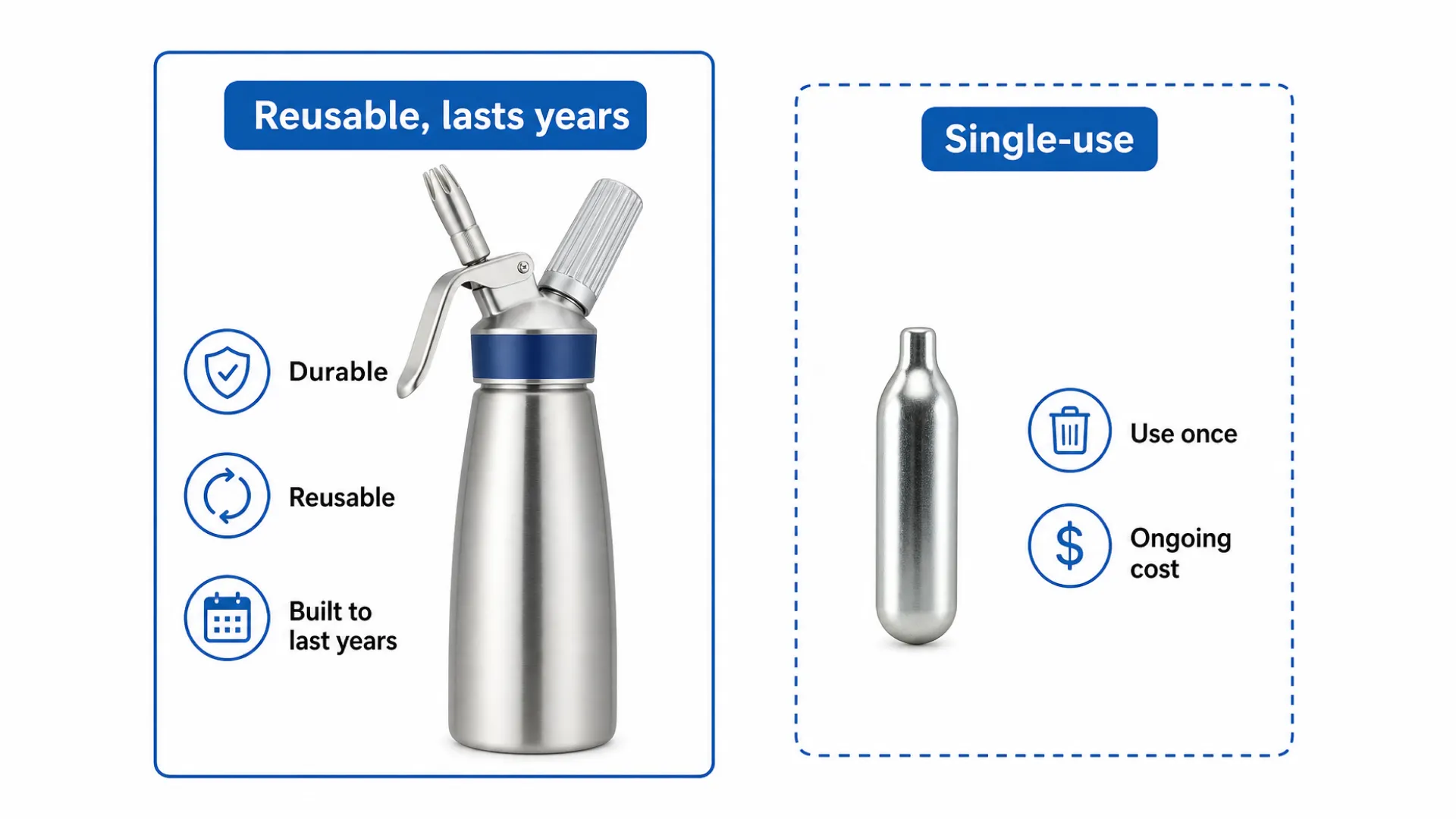
There's a common point of confusion in the cream charger world that trips up a lot of first-time buyers: the difference between what's reusable and what isn't. When people search for a "reusable cream canister," they're usually picturing a charger they can refill and use again. That's not how the system works. The canister you reuse is the dispenser body — the stainless steel or aluminum bottle you fill with cream. The charger, the small cartridge that holds the nitrous oxide, is single-use.
This guide clears up that confusion and walks through everything that actually matters about reusable cream canisters: what they are, how the materials differ, how to use and maintain them, and what professional kitchens need to know when buying in volume. We've manufactured this equipment for over a decade, so the focus here is on practical detail, not marketing.
What a Reusable Cream Canister Actually Is
A reusable cream canister — more accurately called a cream dispenser, cream whipper, or cream siphon — is the durable bottle that turns liquid cream into whipped cream. You fill it with heavy cream, screw in a charger, and the pressurized N2O does the rest. The canister itself gets washed and reused indefinitely. A quality stainless steel model can last years of daily commercial service.
The part that confuses people is the charger. A cream charger is a small steel cartridge filled with a precise dose of food-grade nitrous oxide. Once you puncture the foil seal and release the gas, the cartridge is spent. You cannot refill it, repressurize it, or reseal it at home. The steel is recyclable, but the charger's working life ends after one use. This is by design — the pressurized cartridge is not built to survive repeated charge cycles, and tampering with it is genuinely dangerous.
So the system has two parts with very different lifespans: a reusable canister (the dispenser) and a disposable charger (the gas cartridge). When you understand that split, most of the questions about "refilling" answer themselves.
Reusable Canister vs. Disposable Charger: The Core Distinction
| Feature | Reusable Cream Canister (Dispenser) | Disposable Cream Charger (Cartridge) |
|---|---|---|
| Lifespan | Years of repeated use | Single use |
| What it does | Holds cream, builds pressure, dispenses foam | Supplies the N2O gas dose |
| Material | Stainless steel or aluminum | Recyclable steel shell |
| Refillable? | Yes — refill with cream every use | No — never refill or repuncture |
| Cleaning | Wash after every use | Recycle the empty shell |
| Typical cost | $15–$70 one-time | Sold in bulk per cartridge |
The practical takeaway: you buy the canister once and keep it. You buy chargers as a consumable, the same way an espresso machine is a one-time purchase but coffee beans are ongoing. For a café running daily service, the dispenser is fixed equipment and the chargers are stock you reorder.
Stainless Steel vs. Aluminum: Which Canister Material to Choose
Reusable cream canisters come in two main materials, and the choice affects durability, hygiene, weight, and price. This is the single most important decision when buying a dispenser, so it's worth understanding the real differences rather than the surface-level ones.
Stainless Steel Canisters
Stainless steel — typically food-grade 304 or 316 — is the professional standard. It resists dents, corrosion, and rust even under constant use. It's non-reactive, so it won't pick up odors or react with acidic ingredients like citrus-infused creams or fruit foams. Most stainless heads are dishwasher-safe, and the material handles both hot and cold applications, which matters if you're making warm savory foams or hollandaise.
The trade-offs are weight and cost. Steel is heavier, which can cause wrist fatigue during long decorating sessions, and it carries a higher upfront price, usually $30–$70. For a commercial kitchen running daily volume, that cost is recovered quickly through durability.
Aluminum Canisters
Aluminum is lighter and cheaper, generally $15–$30. It also has excellent thermal conductivity, meaning it chills fast and helps keep cream cold, which improves whip quality and hold. For home users and light-volume operations, it's a perfectly capable option.
The downsides show up over time. Aluminum is softer, so it dents more easily and the threads wear faster if handled roughly. The internal coating can degrade with acidic ingredients or harsh cleaning agents, and once that anodized layer is compromised, you may notice dark spots or a faint metallic odor. Aluminum is also generally limited to cold applications.
| Factor | Stainless Steel | Aluminum |
|---|---|---|
| Durability | Very high, dent and corrosion resistant | Moderate, softer and dents easier |
| Weight | Heavier | Lightweight |
| Hygiene | Non-reactive, no odor retention | Coating can degrade over time |
| Hot use | Yes | Cold only |
| Dishwasher | Usually safe | Hand wash recommended |
| Price | $30–$70 | $15–$30 |
| Best for | Professional, high-volume, acidic recipes | Home, casual, budget, portable use |
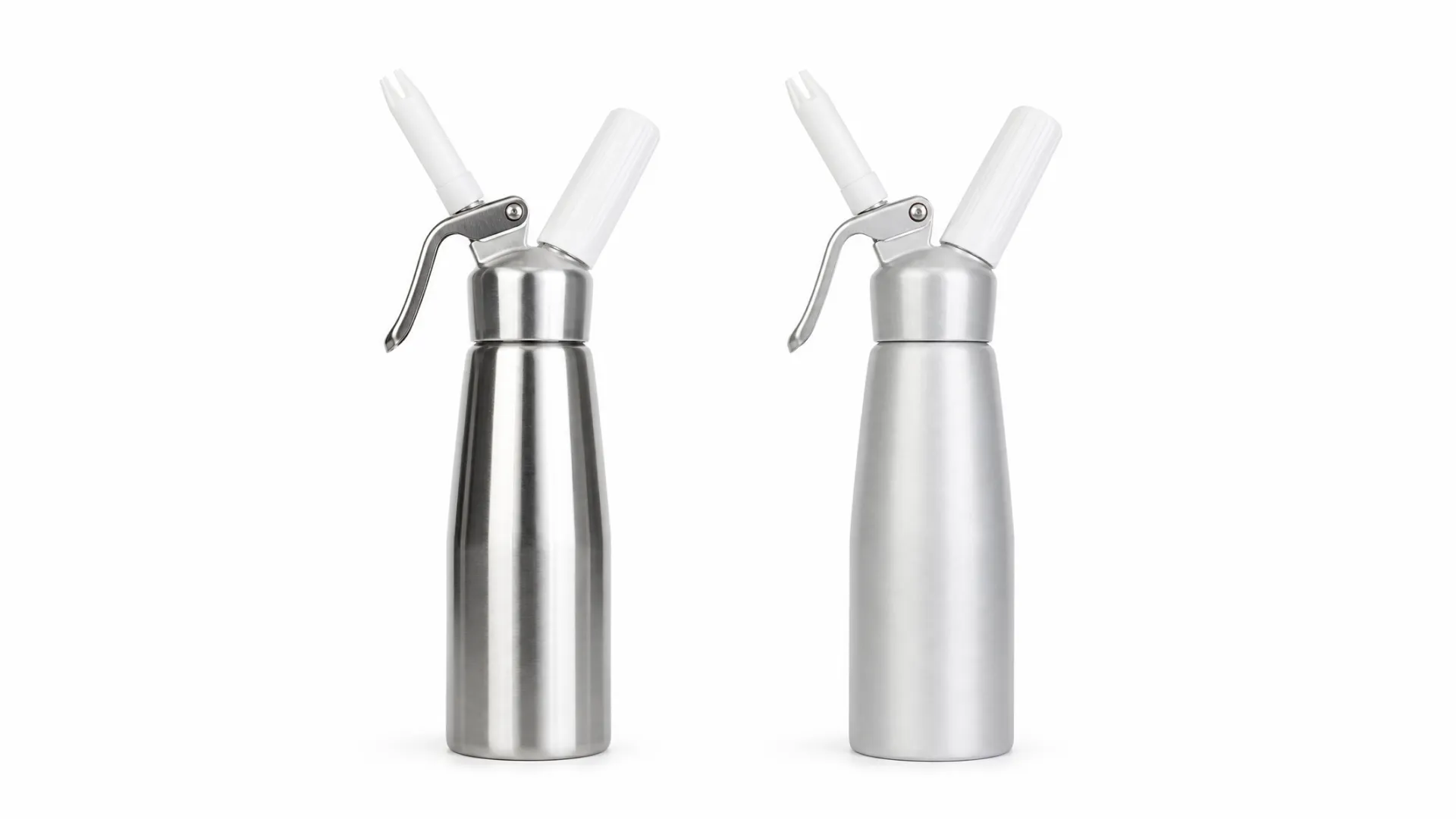
The simple rule: if you're running a café, bakery, or restaurant, or you plan to make infused and acidic preparations, choose stainless steel. Our 500ml stainless steel cream whipper is built for exactly this kind of daily commercial use. If you're an occasional home user on a budget, aluminum will serve you fine.
How to Use a Reusable Cream Canister
The process is straightforward once you've done it a couple of times. Here's the standard workflow for an 8g charger setup.
- Chill the canister and cream. Cold cream whips better and holds longer. Refrigerate both the dispenser and the heavy cream beforehand, especially if you're using aluminum.
- Fill with cream. Pour in heavy cream with at least 30% fat content. Don't overfill — leave headspace as marked on the canister. Add sugar or flavoring now if you want sweetened or infused cream.
- Seal the head. Screw the head on firmly until it's properly seated. A loose head leaks gas and ruins the charge.
- Insert the charger. Load an 8g charger into the holder, then screw the holder onto the head. You'll hear a hiss as the foil seal is pierced and the N2O releases into the canister.
- Shake. Shake firmly four to six times to distribute the gas through the cream. Don't over-shake — that can turn the cream to butter.
- Dispense. Hold the canister upside down, press the lever, and the whipped cream comes out through the nozzle.
One 8g charger and a 0.5L canister produces roughly 1.5L of whipped cream — about three times the liquid volume. A charged dispenser keeps in the fridge for up to two weeks, since the N2O inhibits bacterial growth. Give it a gentle shake before each use to redistribute the gas.
Cleaning and Maintaining Your Canister
This is where reusable canisters earn or lose their lifespan. Poor cleaning is the most common reason dispensers fail early. The cream protein gets into the head, the valve, and the seals, and if it isn't removed it hardens and degrades performance.
- Discharge fully before opening. Make sure all gas and cream are released before you unscrew the head. Opening a pressurized canister is dangerous.
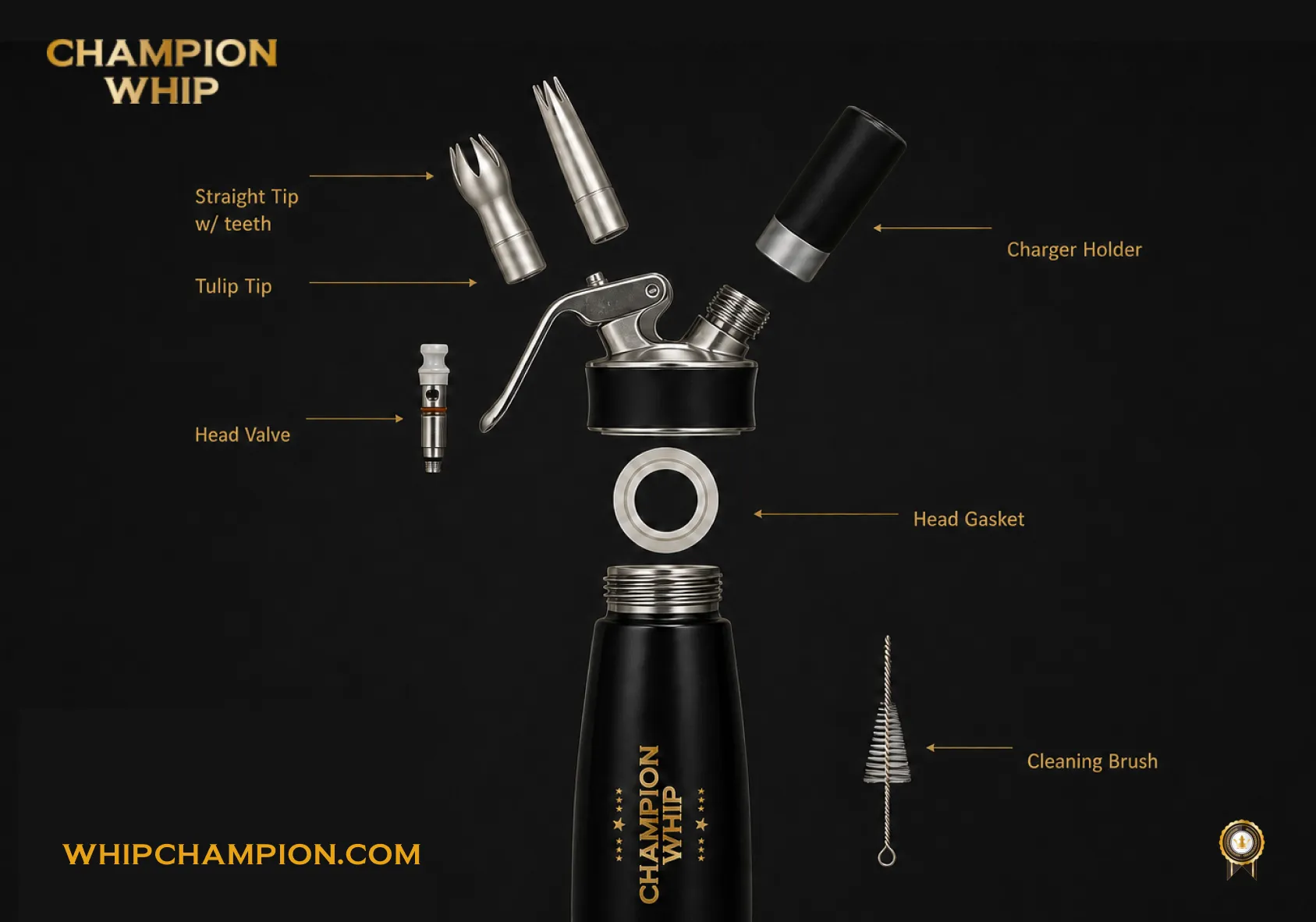
- Disassemble the head. Remove the nozzle, piston, and silicone gasket. Cream collects in all of these.
- Wash every part. Use warm soapy water and the cleaning brush that comes with the dispenser to clear the head channels and nozzle. Stainless heads are often dishwasher-safe; aluminum should be hand-washed.
- Inspect the gasket. The silicone seal is the part that wears out. Check it for cracks or stretching and replace it when needed — a worn gasket leaks gas and kills pressure.
- Dry and store open. Let parts air-dry completely and store the head off the canister so the gasket doesn't stay compressed.
For commercial kitchens, build this into a daily closing routine. A dispenser cleaned properly every shift will outlast one that's rinsed carelessly by years.
B2B and Commercial Applications
For cafés, bakeries, and restaurants, the reusable canister is fixed equipment that pays for itself through versatility and waste reduction. Beyond standard whipped cream, the same dispenser handles cold foams for coffee, savory espumas, mousses, flavored foams for cocktails, and rapid infusions. That range is why professional kitchens treat the cream whipper as a core tool rather than a single-purpose gadget.
For high-volume operations, the canister pairs with larger gas formats. Instead of single 8g chargers, a busy kitchen connects the dispenser to a larger N2O cylinder through a pressure regulator, cutting both cost per serving and the time spent reloading. The canister stays the same; only the gas supply scales up.
From a sourcing standpoint, distributors and foodservice operators should match dispenser material to the client's use case. Stainless steel for daily commercial volume and acidic recipes; aluminum for budget-conscious or portable needs. Buying canisters and food-grade chargers from a single manufacturer keeps quality consistent and simplifies the supply chain. If you're sourcing equipment for resale or commercial use, our wholesale program covers both reusable dispensers and food-grade chargers in volume.
Why You Should Never Try to Refill a Charger
It's worth being direct about this, because the search term "reusable cream canister" sometimes hides a question about refilling chargers. Don't do it. The reasons are concrete:
- The steel isn't built for it. A charger is engineered to hold pressure for one release cycle. It's not designed for repeated pressurization, and the metal fatigue from refilling creates a real rupture risk.
- The seal is destroyed. Once the foil is pierced, there's no way to reseal it to hold pressure safely.
- You can't control the dose. Chargers are filled with a precise gas amount under controlled factory conditions. Home refilling has no way to measure or regulate that.
The canister is your reusable component. The charger is a consumable. Keep that line clear and the equipment stays safe.
Final Word
The reusable part of a cream charger system is the canister — the dispenser body you fill, use, wash, and reuse for years. The charger is the single-use gas cartridge that powers each batch. Choosing the right canister comes down to material: stainless steel for durability, hygiene, and commercial use; aluminum for light, budget-conscious, portable use. Maintain it properly and a good stainless canister becomes a permanent fixture in the kitchen.
If you're equipping a business or sourcing for resale, Champion Whip manufactures both stainless steel cream whippers and food-grade N2O chargers factory-direct, with full B2B and OEM support. Browse our cream whipper and charger ranges, or reach out through our wholesale channel for volume pricing.
FAQ
Can you reuse a cream canister?
Yes. The cream canister — the dispenser body you fill with cream — is fully reusable and lasts for years with proper care. What you cannot reuse is the cream charger, the small cartridge that supplies the nitrous oxide. The canister is your permanent equipment; the charger is a single-use consumable.
Can you refill a cream charger?
No. Cream chargers are single-use and must never be refilled. Once the foil seal is pierced and the N2O is released, the cartridge is spent. The steel is not engineered to survive repeated pressurization, the seal cannot be safely re-closed, and there is no way to control the gas dose at home. Refilling creates a genuine rupture risk. Recycle the empty steel shell instead.
Is a stainless steel or aluminum cream canister better?
It depends on use. Stainless steel (food-grade 304 or 316) is the professional choice — durable, non-reactive, dishwasher-safe, and suitable for hot and cold applications. It costs more ($30–$70) and is heavier. Aluminum is lighter and cheaper ($15–$30) with excellent cold retention, but it dents more easily, is limited to cold use, and its internal coating can degrade over time. Choose stainless for commercial volume and acidic recipes; aluminum for casual home use.
How long does a reusable cream canister last?
A quality stainless steel canister lasts many years of daily commercial service. Aluminum models have a shorter lifespan because they dent more easily and the threads and internal coating wear faster. The component most likely to need replacement on any canister is the silicone gasket, which is inexpensive and easy to swap.
How do you clean a reusable cream dispenser?
Discharge all gas and cream first, then unscrew the head. Disassemble the nozzle, piston, and silicone gasket. Wash every part in warm soapy water using the cleaning brush to clear the head channels. Stainless heads are often dishwasher-safe; aluminum should be hand-washed. Inspect the gasket for wear, then air-dry and store the head off the canister. Proper cleaning every use is the single biggest factor in canister lifespan.
How long does whipped cream last in a charged canister?
Up to two weeks when stored sealed in the refrigerator. The N2O inhibits bacterial growth, which keeps charged cream fresh far longer than hand-whipped cream. Give the canister a gentle shake before each use to redistribute the gas for consistent texture.
Are reusable cream canisters worth it for a business?
For most foodservice operations, yes. A reusable canister is fixed equipment that handles whipped cream, cold foams, espumas, mousses, and infusions from one tool. It eliminates aerosol can waste, gives full control over ingredients, and lowers cost per serving over time. High-volume kitchens can pair the canister with a larger N2O cylinder and pressure regulator to scale up further while keeping the same dispenser.


Elevate Your Creations with
Champion Whip
Explore our premium whipped cream chargers – designed for perfectionists.
View our Products


