

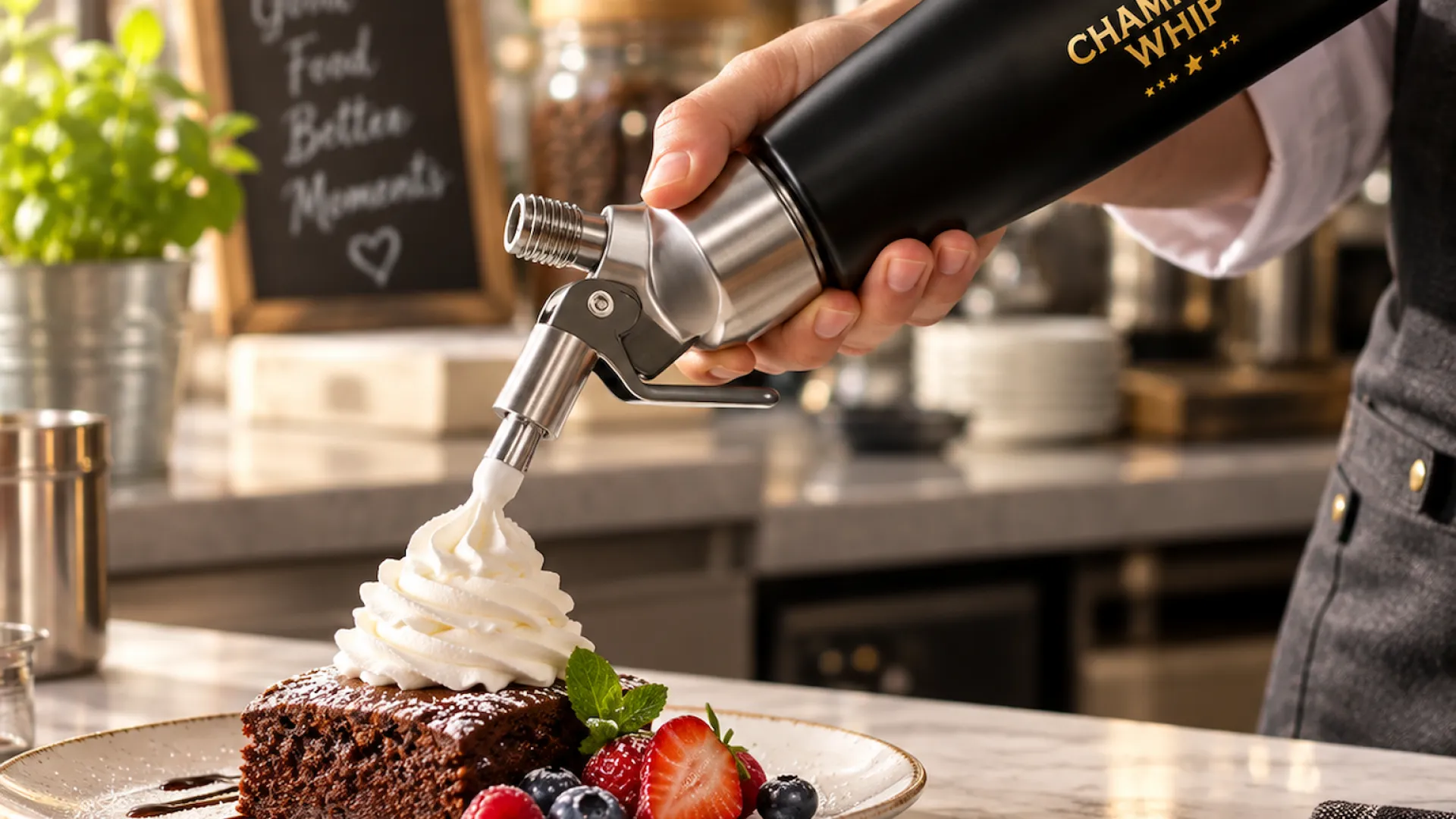
How Long Does Whipped Cream Last? Fridge, Freezer & Dispenser Storage Times
2026-09-24
How long does whipped cream last? Anywhere from 2 hours on a dessert plate to 2 weeks in a sealed dispenser — the method decides.
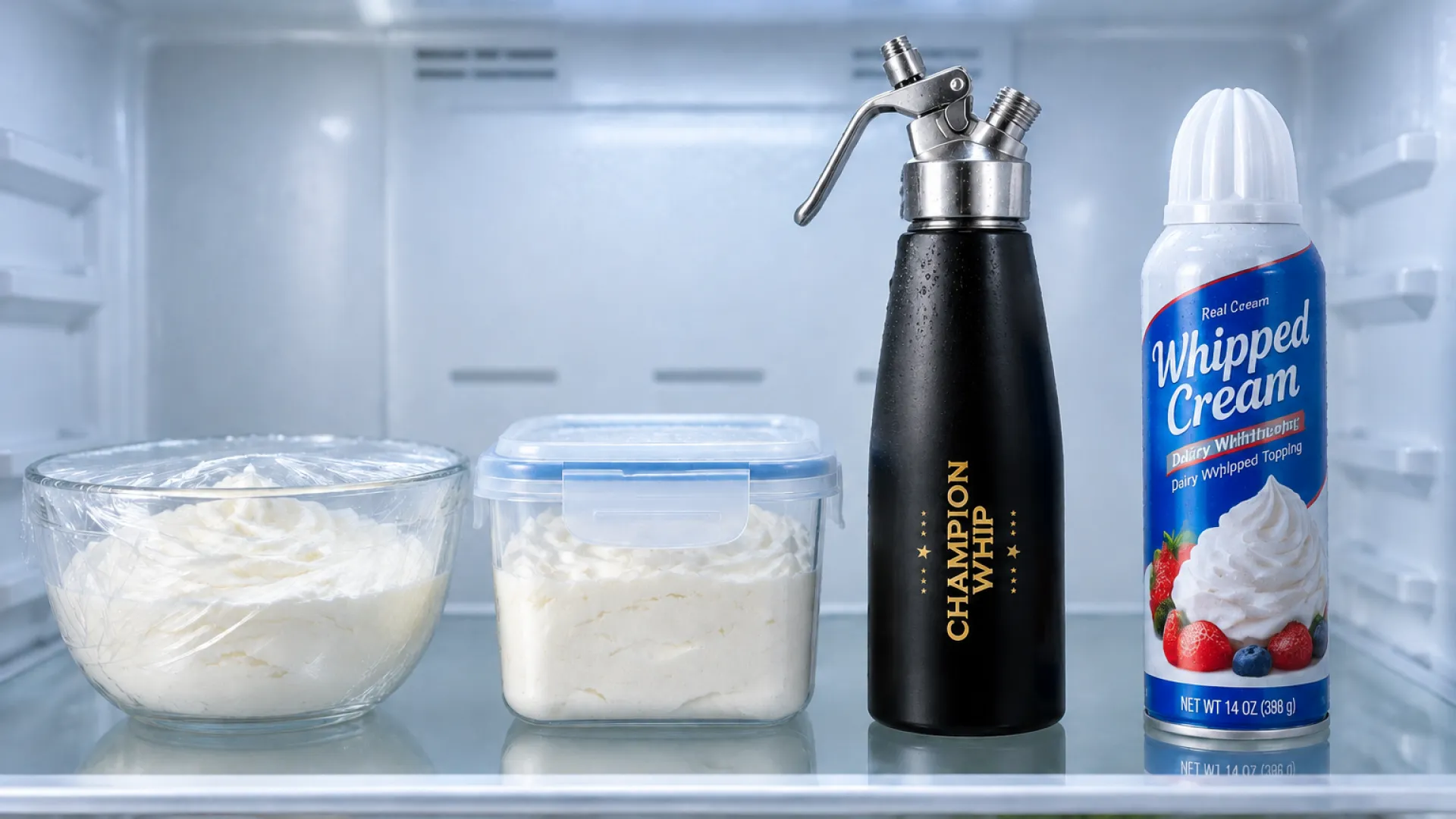
For a café or dessert bar, that range is the difference between smooth service and wasted prep, and home bakers run into the same question on a smaller scale. The table below breaks the storage times down by method and storage condition, and the sections that follow show how to get the most out of each one.
| Whipping method | Room temperature | Refrigerated (≤4°C / 40°F) | Frozen |
|---|---|---|---|
| Hand- or mixer-whipped, unstabilized | Up to 2 hours | 2–3 days | Up to 1 month (texture suffers) |
| Stabilized (gelatin, cornstarch, pudding mix) | Up to 2 hours | 3–4 days | Up to 2 months |
| Dispenser-whipped (sealed, N2O-charged) | Up to 2 hours once dispensed | 1–2 weeks inside the dispenser | Not recommended inside the dispenser |
| Aerosol can (store-bought) | Up to 2 hours once dispensed | Until the printed date, usually several weeks | No |
How Long Does Whipped Cream Last in the Fridge?
Freshly whipped cream stored in an airtight container in the refrigerator keeps for 2 to 3 days. After that, the foam starts to collapse: liquid pools at the bottom, the texture turns grainy, and the dairy itself approaches the end of its safe window. Stabilized whipped cream — made with gelatin, cornstarch, or a pudding mix — holds 3 to 4 days under the same conditions.
Two details decide where your batch lands inside that range. First, temperature: store the container in the coldest part of the fridge, not in the door. Second, the cream you started with: cream whipped on its last fresh day gives you a noticeably shorter window than cream whipped the day it was opened.
In a Dispenser: Up to 2 Weeks
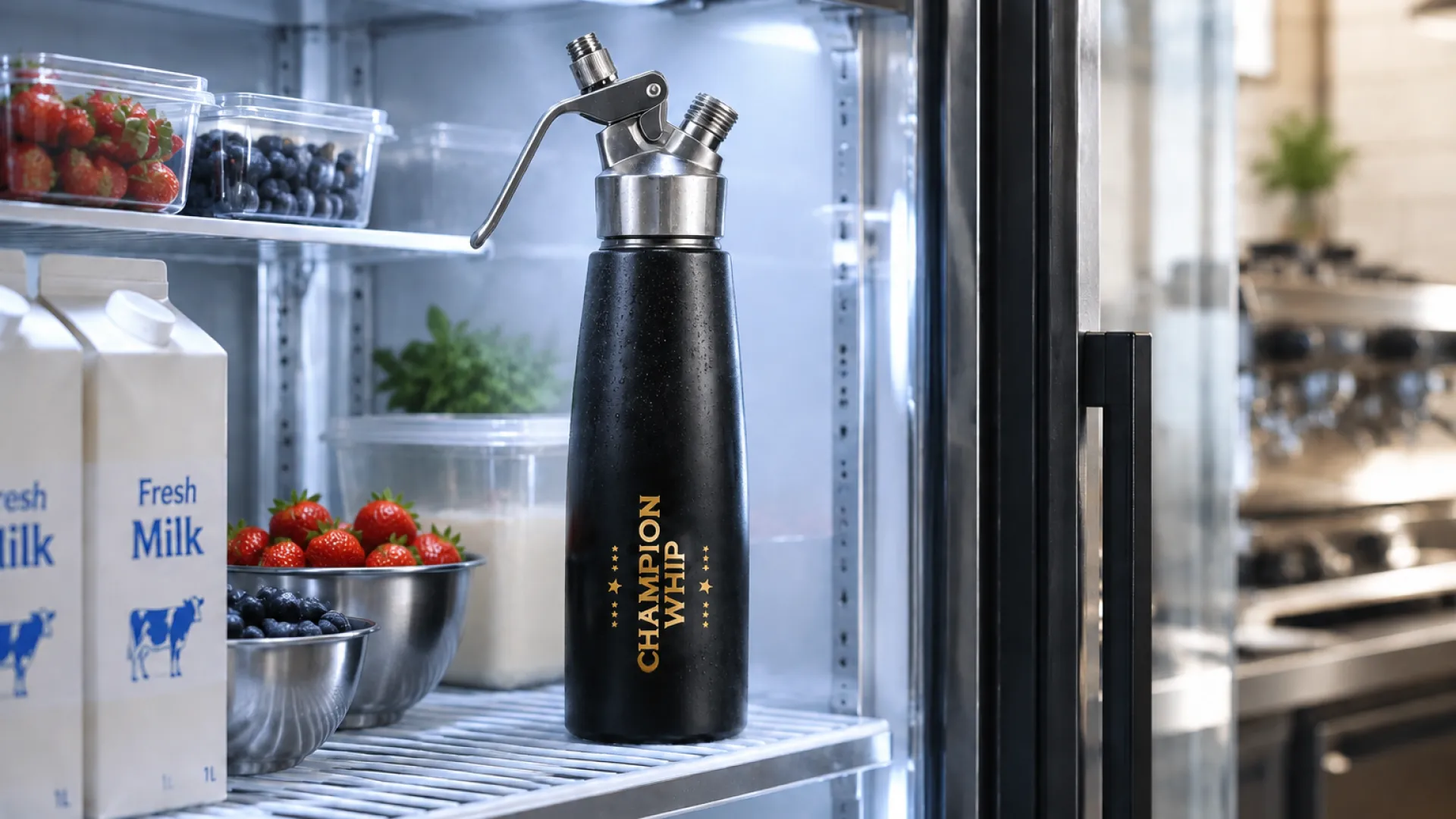
Cream inside a charged, sealed whipped cream dispenser keeps considerably longer than bowl-whipped cream — commonly 1 to 2 weeks under refrigeration, provided the cream was fresh when loaded and the dispenser stays cold and sealed. This is the storage method most cafés and bars rely on for daily service.
The physics behind the longer window are straightforward. Once the charger is pierced, food-grade N2O pressurizes the headspace and pushes air out of contact with the cream. Less oxygen contact means slower oxidation and fewer opportunities for airborne contamination. The sealed valve also means every serving leaves the dispenser without opening it, so the remaining cream is never re-exposed. A whipped cream dispenser works as both a whipping tool and a sealed storage vessel, which is something no mixing bowl can do. The complete guide to whipped cream dispensers covers the mechanics in more detail.
Equipment condition sets the ceiling on this advantage. The gasket and valve must hold pressure cleanly — on our 304 stainless steel cream whippers, the silicone seal ring and metal valve are pressure-tested to 30 bar, which keeps the headspace sealed through weeks of daily use. If the seal wears or the nozzle clogs with residue, the protective effect drops, so gasket checks and daily cleaning are part of the storage equation, not just hygiene.
At Room Temperature: The 2-Hour Rule
Whipped cream follows the standard dairy rule: no more than 2 hours at room temperature, and no more than 1 hour when the room is above 32°C (90°F). After that, bacterial growth risk rises and the foam structure breaks down anyway, so both safety and quality point the same direction. For buffets, outdoor events, and self-serve stations, plan small refills from the fridge rather than one large bowl left out.
On Cakes and Pies: A Few Hours at Best
Once piped onto a cake or pie, whipped cream starts losing its shape within a few hours in the fridge, even though the dessert stays safe to eat for 2 to 3 days refrigerated. Weeping — beads of liquid around the piped edges — is the usual first sign. For cakes that need to look right at display or delivery time, stabilize the cream (see the methods below) and decorate as close to service as practical. At room temperature, a cream-topped dessert follows the same 2-hour limit as the cream itself.
Can You Freeze Whipped Cream?
Yes, and the practical way to do it is in portions rather than in bulk. Pipe or spoon individual dollops onto a parchment-lined tray, freeze them solid, then move them to a freezer bag. Frozen this way, whipped cream keeps for up to 1 month unstabilized and around 2 months stabilized. Drop a frozen dollop straight onto hot chocolate or coffee and it melts into place; for cake decorating, thaw portions in the fridge and expect a slightly softer texture than fresh.
Freezing a whole bowl of whipped cream works less well — thawed bulk cream separates and needs re-whipping, which only partly restores the foam. Do not freeze cream inside a charged dispenser; freezing stresses the contents and the valve, and the texture result is poor.
How to Tell if Whipped Cream Has Gone Bad
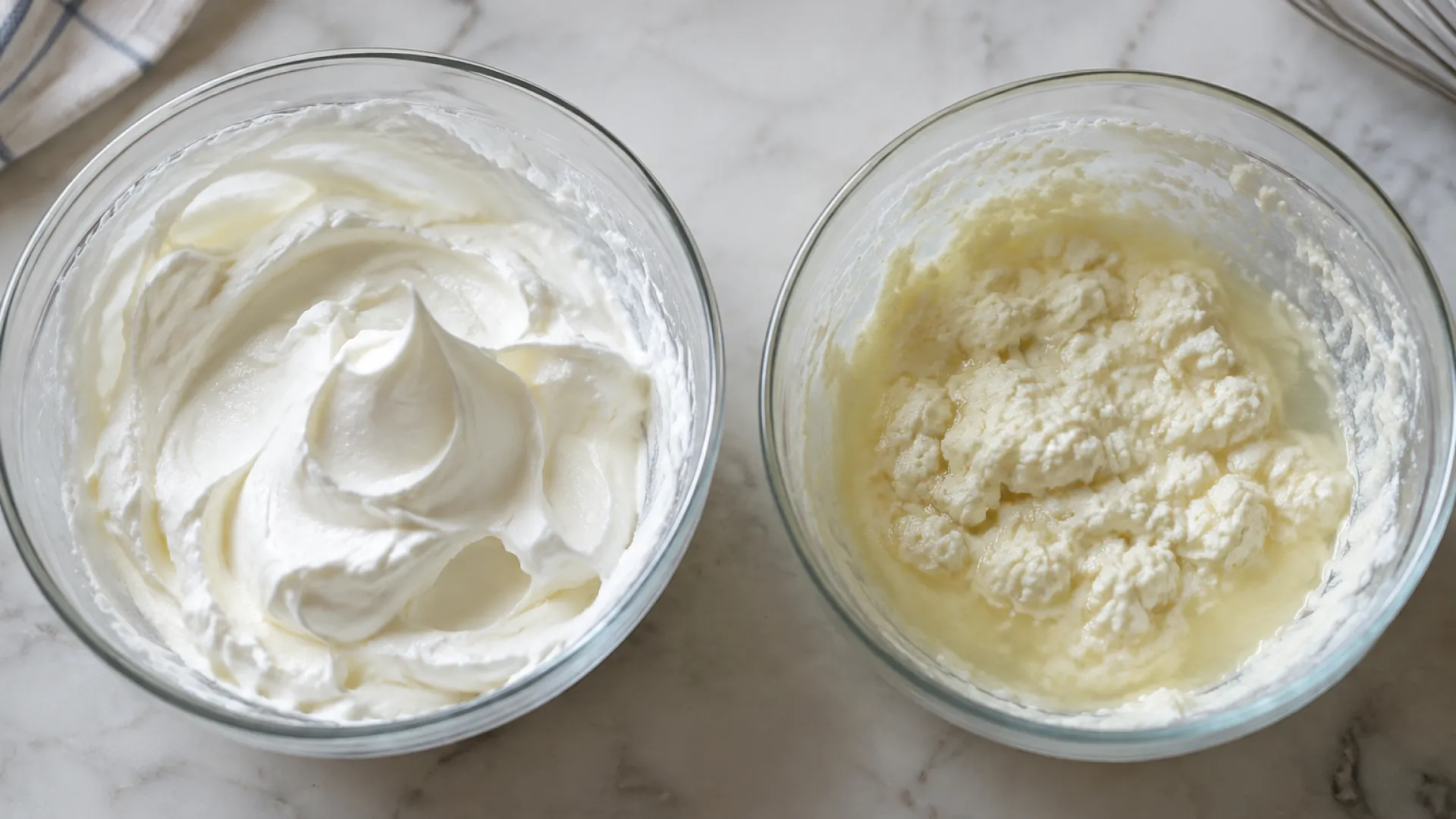
Whipped cream gives clear signals before it becomes a safety question. Discard the batch when you notice any of these:
- Sour or off smell, even faint
- Yellowing or any color change from fresh white
- Liquid separating and pooling (beyond light weeping)
- Grainy, chunky, or slimy texture
- Any visible mold — in this case discard the whole batch, not just the spot
Flat, deflated cream that still smells and looks fresh is a quality issue, not a safety one. It can be re-whipped briefly with a whisk, or recharged in a dispenser with a fresh charger if it was stored in one.
How to Make Whipped Cream Last Longer
Start with cold cream, a cold bowl or dispenser, and stop whipping at medium peaks — over-whipped cream is already on its way to butter and collapses faster in storage. Beyond technique, stabilizers extend the fridge window, and each works differently:
| Method | How it works | Fridge life | Best for |
|---|---|---|---|
| Powdered sugar (contains cornstarch) | Absorbs free moisture | 2–3 days | General use, drinks |
| Cornstarch (1 tbsp per cup of cream) | Binds water in the foam | 3–4 days | Piping, toppings |
| Cream of tartar (⅛ tsp per cup) | Strengthens protein structure | 2–3 days | Light texture, no flavor change |
| Gelatin (bloomed, 1 tsp per cup) | Sets the foam like a light mousse | 3–4 days | Cake decorating, display |
| Instant pudding mix (1 tbsp per cup) | Starch plus flavor | 3–4 days | Dessert fillings |
| N2O charger + dispenser | Gas dissolves into the cream fat under pressure, forming a fine, uniform foam; the sealed headspace then protects it in storage | 1–2 weeks in the sealed dispenser | Daily café and bar service, make-ahead prep |
The additive methods change texture or flavor slightly; the dispenser route changes neither, which is why professional kitchens treat the charger-and-dispenser setup as both a production tool and a storage method. Gas quality matters here: food-grade N2O at 99.95% purity keeps the foam clean-tasting and free of the off-notes that lower-grade gas can carry.
Commercial Kitchens: Holding Whipped Cream Through Service
In a commercial setting, the question is rarely "how long does it last" but "how do I prep enough without wasting any." A working routine looks like this:
- Match batch size to daypart demand. Estimate servings per dispenser load from your sales pattern, and load for the morning or afternoon rush rather than the whole day.
- Label every batch with prep time. A marker strip on the dispenser or container removes guesswork and keeps the 2–3 day (container) or 1–2 week (sealed dispenser) windows honest.
- Rotate first in, first out. Older batches go to the front of the fridge and get used first, every time.
- Keep dispensers cold between uses. A dispenser sitting on the pass through a warm service spends its safety window. Return it to the fridge between orders.
- Clean on schedule, not on appearance. Cream residue in the nozzle and valve shortens both shelf life and equipment life. Disassemble and wash daily; our stainless steel cream whippers are designed for full disassembly and commercial dishwashers for exactly this reason.
Champion Whip supplies certified food-grade N2O chargers from 8g cartridges to 3000g cylinders alongside 304 stainless steel cream whippers, with stock in US and European warehouses for fast restock. If you are setting up or scaling a whipped cream program for a café, bakery, or bar, our wholesale team can help you match charger capacity to your daily volume.
FAQ
How long does whipped cream last in the fridge?
Plain homemade whipped cream keeps 2–3 days in an airtight container in the fridge, stabilized versions hold 3–4 days, and cream in a sealed, charged dispenser keeps 1–2 weeks. Store-bought aerosol cans last until the printed date when kept refrigerated.
How far ahead can I make whipped cream?
Same-day is best for plain whipped cream. Stabilized whipped cream can be made 1 day ahead without visible weeping, and a loaded dispenser can be prepped up to a week ahead for daily service as long as it stays sealed and refrigerated.
Can you freeze whipped cream?
Yes. Pipe or spoon individual dollops onto a parchment-lined tray, freeze them solid, and store them in a freezer bag for up to 1 month unstabilized or about 2 months stabilized. Use frozen dollops directly on hot drinks, or thaw portions in the fridge.
How long does whipped cream last in a dispenser?
Typically 1–2 weeks in the refrigerator, provided the cream was fresh when loaded and the dispenser stays sealed and cold between uses. The pressurized, air-free headspace is what extends the window beyond bowl-whipped cream.
Does whipped cream need to be refrigerated?
Yes. Whipped cream is a dairy product and follows the standard rule: no more than 2 hours at room temperature, and no more than 1 hour when the room is above 32°C (90°F). Keep it refrigerated until serving.
Can you re-whip whipped cream after it deflates?
Yes, if the cream still smells and looks fresh. Give it a brief whisk by hand, or recharge it in the dispenser with a new charger. If the cream has separated heavily, turned grainy, or smells sour, discard it instead.
Why does canned whipped cream last longer than homemade?
Canned whipped cream uses pasteurized cream in a sealed, pressurized can where the gas keeps air away from the cream. Bowl-whipped cream is exposed to air during and after whipping, so it oxidizes and collapses sooner.


Elevate Your Creations with
Champion Whip
Explore our premium whipped cream chargers – designed for perfectionists.
View our Products


