

How to Buy Bulk Cream Chargers: A Complete B2B Buyer's Guide
2026-09-02
If your cafe goes through a case of 8g chargers every week, or your distribution business is comparing container-load quotes, you already know the unit price on a quotation is only part of the deal. Buying bulk cream chargers involves landed cost, batch consistency, compliance paperwork, and a supplier who can keep pace with your reorder cycle. A charger that arrives late, underfilled, or without documents costs more than a few cents saved per piece.
We manufacture food-grade N2O and fill cream chargers factory-direct, so we see both sides of these orders every day. This guide covers what bulk buying actually means, why it pays off, and the seven steps to place a first bulk order without surprises.
What Are Bulk Cream Chargers?
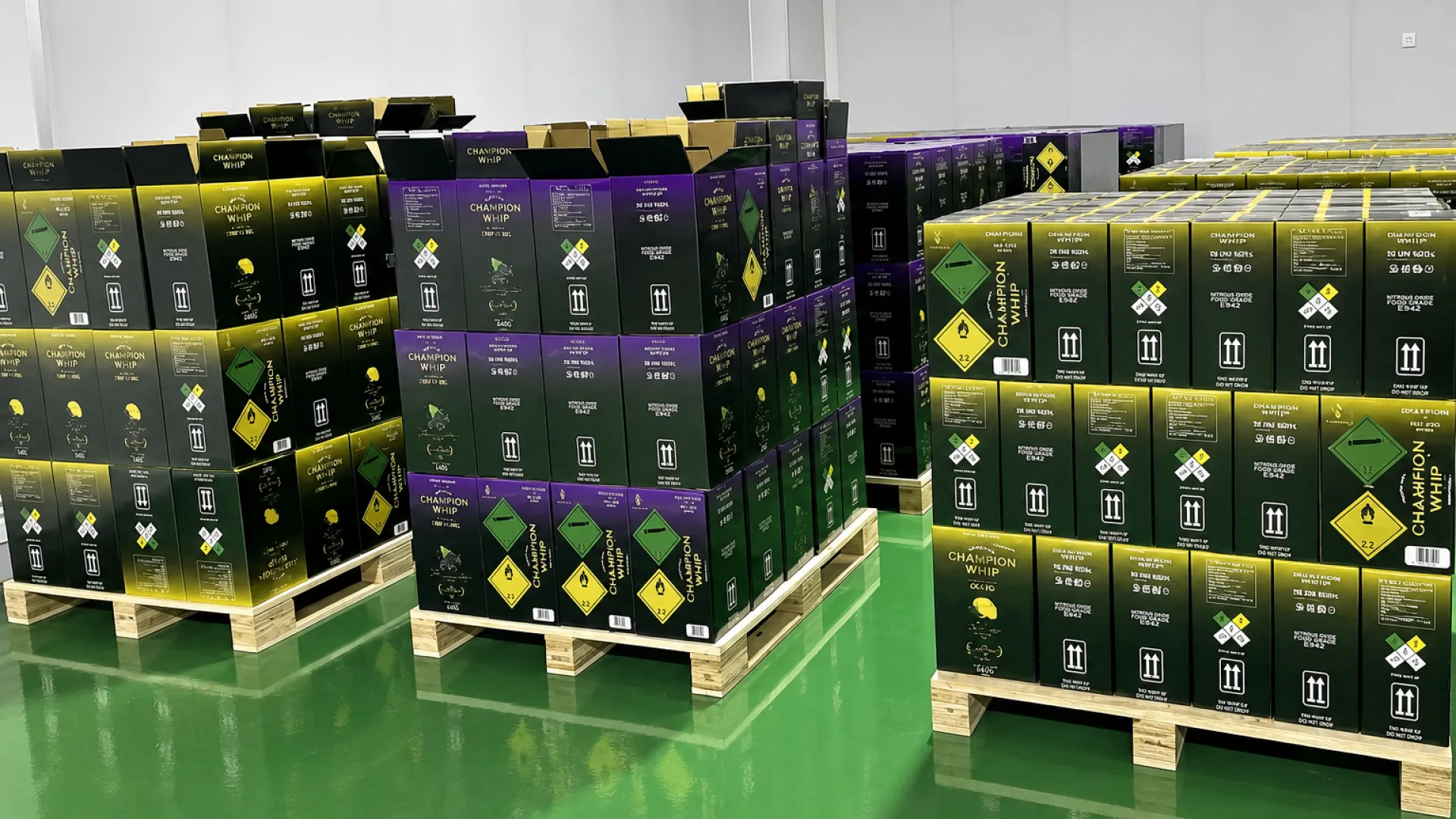
Bulk cream chargers are the same food-grade N2O cartridges and cylinders sold in commercial quantities, usually by the carton, pallet, or container. The product itself does not change. What changes is the purchasing process: specifications, compliance documents, packaging requirements, and a planned supply schedule replace one-off retail purchases.
Who Buys in Bulk
Three types of buyers account for most bulk orders. Foodservice operators, such as restaurants, cafes, bakeries, hotel chains, and caterers, buy to cover steady daily consumption. Distributors and wholesalers buy to resell into their local foodservice and retail channels. Private-label brands buy chargers packaged under their own name, which is where OEM service comes in. Each buyer type cares about the same fundamentals, but weighs them differently: operators care about uptime, distributors about margin and supply stability, and brands about packaging and consistency.
8g Cartridges vs Larger N2O Cylinders
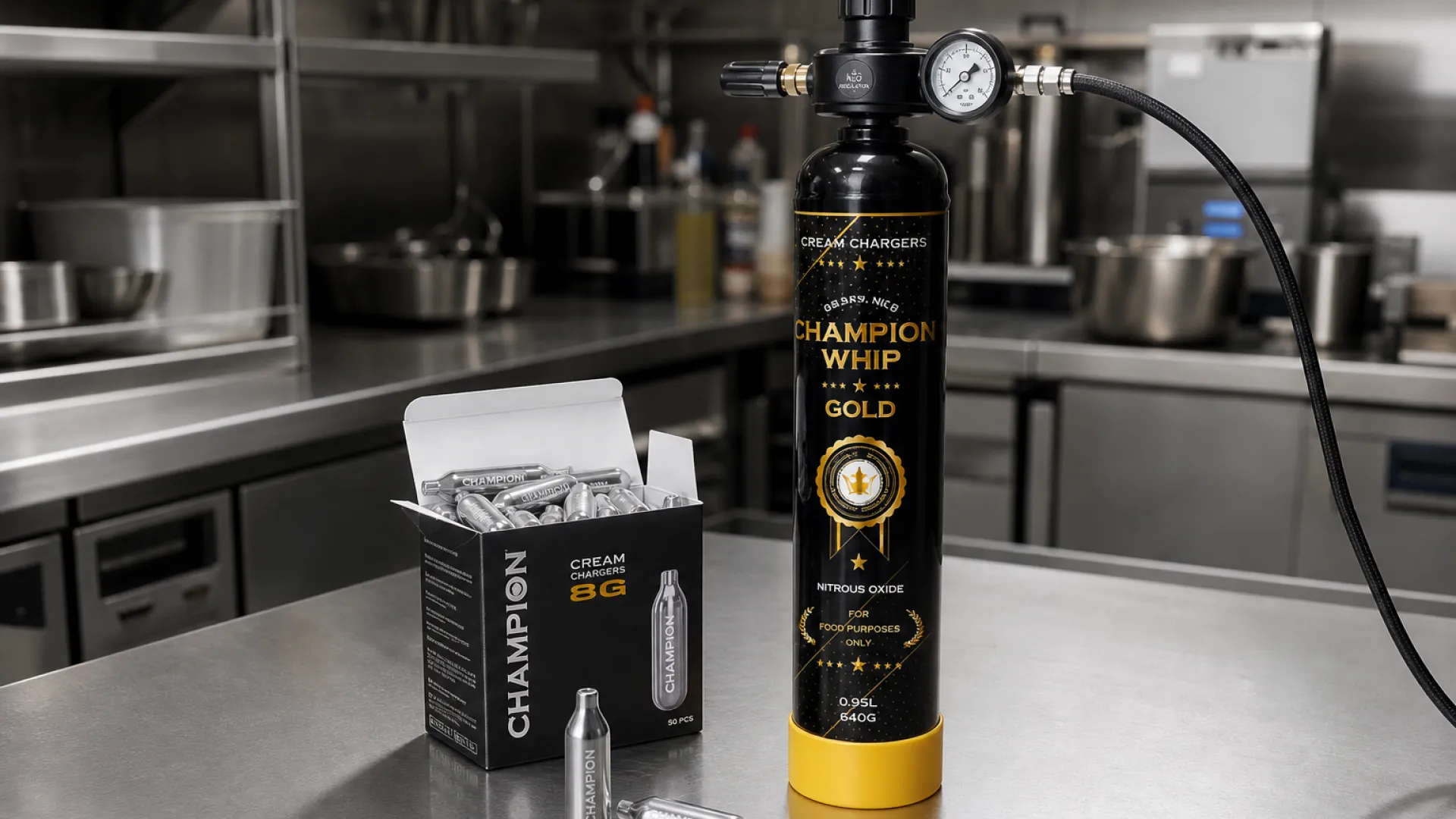
The 8g cartridge is the standard format for countertop cream dispensers and remains the most flexible option when several workstations each run their own dispenser. Larger cylinders, from 320g up to 3000g of N2O, serve high-volume stations through a pressure regulator and hose. They are not a drop-in replacement for 8g cartridges; they require compatible equipment. Most commercial buyers standardize on one primary format and treat the other as a supplement. You can compare the full range of sizes on our cream charger product category page.
Why Buy Bulk Cream Chargers?
Businesses buy bulk cream chargers for four practical reasons: a lower total landed cost per unit, protection against stockouts during peak demand, consistent specifications from batch to batch, and access to OEM or private-label services that only become available at volume.
Lower Total Landed Cost per Unit
Larger orders almost always bring the unit price down, but the quoted price is not the real cost. Freight, insurance, duties, packaging, and payment fees all land on top. The only fair way to compare two suppliers is total landed cost, ideally calculated per gram of N2O rather than per piece, because piece sizes differ between 8g cartridges and large cylinders.
Inventory Security in Peak Demand
Cold foam season, holiday dessert menus, and festival catering all spike consumption. A stockout during those weeks costs far more than the storage space a buffer pallet occupies. Bulk buying turns procurement from a weekly emergency into a planned cycle with room for delays.
Batch Consistency and Simpler Reordering
Staying with one supplier keeps fill weight, seals, and valve dimensions identical across deliveries. Your dispensers behave the same way every time, receiving checks become routine, and your team stops re-testing every shipment. Consistency is an operational cost saving that never appears on a quotation.
OEM and Private-Label Opportunities
Volume is the entry ticket to customization: branded cartons, printed boxes, custom pack counts, and flavored lines where your market allows them. If you plan to sell under your own brand, confirm the packaging MOQ, artwork process, and lead time before placing the first order. Our OEM and custom cream charger service covers these options in detail.
How to Buy Bulk Cream Chargers in 7 Steps
The reliable way to buy bulk cream chargers is a fixed sequence: calculate your consumption, pick the right format, verify purity and documents, evaluate the supplier, test samples, lock the commercial terms, then set up replenishment. Skipping a step usually shows up later as a cost.
Step 1: Calculate Your Real Consumption
Start with your average weekly usage, multiply by the supplier's lead time in weeks, and add one to two weeks of safety stock. For example, a cafe using 500 chargers per week with a four-week lead time should order at least 2,000 to 2,500 pieces per cycle. Distributors should size orders against their resell pipeline, not just storage space. Ordering far beyond cash flow or warehouse capacity ties up money in steel.
Step 2: Choose the Right Size and Format
Match the format to the equipment you actually run. The table below summarizes the common choices for commercial buyers.
| Format | N2O per unit | Approx. 8g equivalents | Best for | Equipment needed |
|---|---|---|---|---|
| 8g cartridge | 8g | 1 | Cafes, bars, multiple workstations | Standard cream dispenser |
| 640g cylinder | 640g | 80 | Restaurants, bakeries, busy single stations | Dispenser plus pressure regulator |
| 1364g cylinder | 1364g | 170 | Chains, central prep kitchens | Regulator and hose setup |
| 2000g / 3000g cylinder | 2000g / 3000g | 250 / 375 | Distributors, high-volume production | Regulator and hose setup |
Step 3: Verify Purity and Compliance Documents
For food applications, the gas must meet your market's standard: FDA 21 CFR 184.1545 in the US, E942 under the EU food additive framework, or FAO/WHO INS 942. Ask for a batch-level Certificate of Analysis, a Safety Data Sheet, and a specification sheet before you discuss price. Purity tiers on the market run from 99.5% to 99.95%, and the difference shows up in taste neutrality and equipment wear over time. Our guide to food-grade N2O purity explains the tiers and the paperwork behind them.
Step 4: Evaluate the Supplier, Not Just the Quote
A factory-direct manufacturer controls filling, testing, and packaging under one roof; a trading company passes your requirements down a chain. Neither is automatically wrong, but you should know which one you are talking to. Use this checklist when comparing candidates.
| What to check | What to ask for |
|---|---|
| Manufacturing identity | Business license, factory audit or production video, export records |
| Quality control process | Fill weight tolerance, leak testing method, inspection records |
| Batch traceability | Batch-level COA, production date coding |
| Capacity and replenishment | Lead time for repeat orders, ability to hold specifications across batches |
| Export experience | Documents for your destination market, incoterms offered |
Step 5: Request Samples and Test in Your Real Workflow
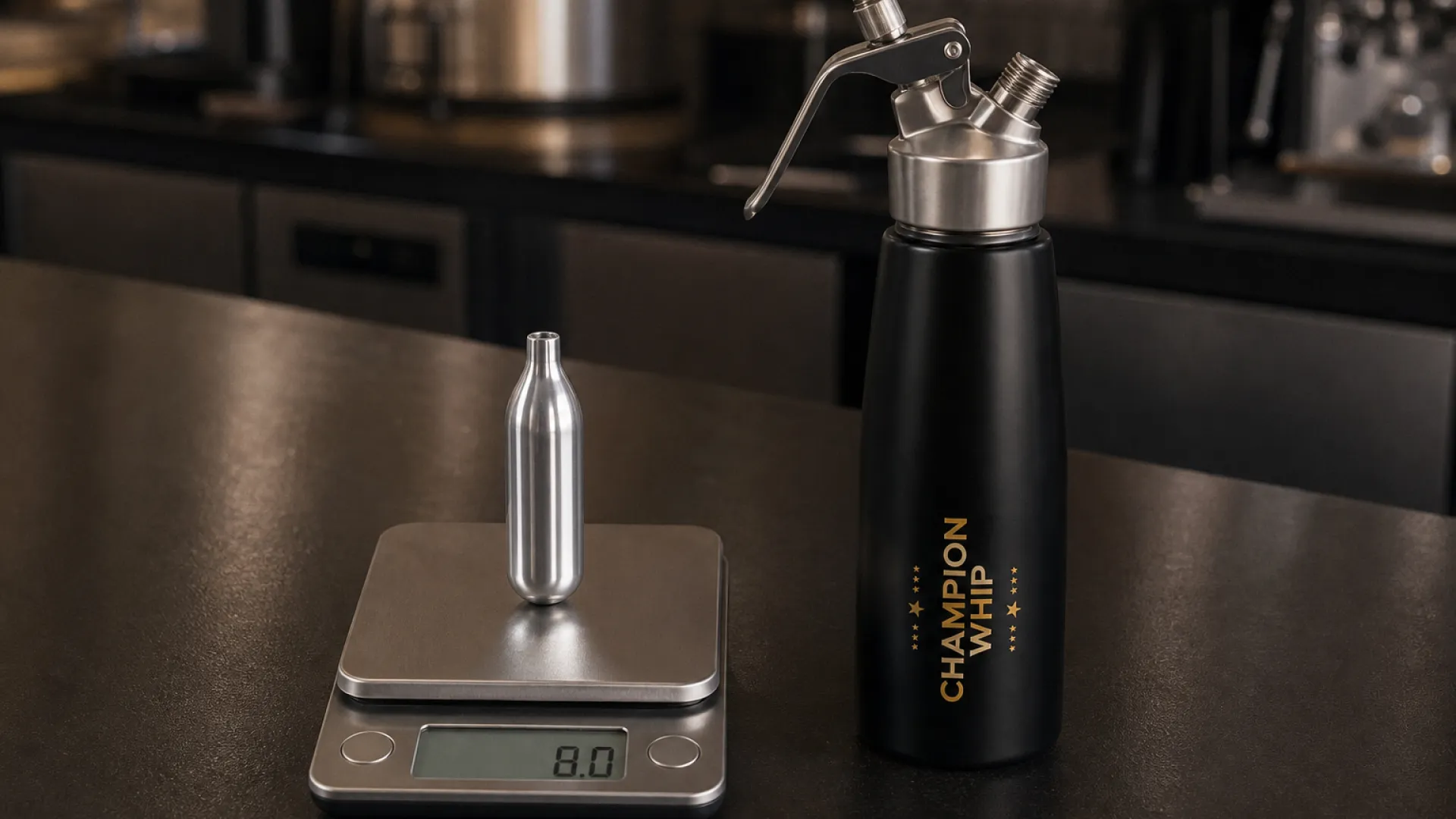
Most manufacturers provide samples or trial orders. Run the sample through your actual operation: charge a dispenser, whip a batch, and judge foam texture and taste neutrality. Weigh a few units on a kitchen scale to verify fill weight. Store the rest for a couple of weeks and test again. A ten-minute test with your own equipment tells you more than any brochure.
Step 6: Confirm MOQ, Packaging, Lead Time, and Shipping Terms
Get the commercial terms in writing before the deposit. MOQ depends on charger size and packaging, and custom printing raises it. Ask for the tiered price list so you can see what the next quantity break is worth. Pressurized containers move as Class 2.2 dangerous goods, so confirm the shipping method, estimated transit time, and which incoterm the quote is based on. FOB and CIF prices for the same goods are not comparable.
Step 7: Place the Order and Plan Replenishment
Set your reorder point before the first shipment arrives: lead-time consumption plus safety stock. For steady volume, discuss a standing order or quarterly schedule so production capacity is reserved for you. Keep the written specification identical on every purchase order; changing a detail midstream is how inconsistency starts.
First-Order Mistakes to Avoid
- Comparing unit price only. Landed cost per gram is the number that matters.
- Skipping the sample test. A pallet of the wrong product costs far more than a delayed first order.
- Ignoring destination-market rules. Food-contact documentation and labeling requirements differ by country; confirm them before production, not at customs.
- Over-ordering beyond storage or cash flow. The next price break is not a saving if stock sits for a year.
- Changing specifications between orders. Fix size, fill weight, and packaging in writing and keep them constant.
Sourcing Bulk Cream Chargers Factory-Direct
Champion Whip manufactures food-grade N2O and fills cream chargers in our own facility, with a range from 8g cartridges to 3000g cylinders plus dispensers and pressure regulators, so commercial buyers can source the full setup in one place. OEM and private-label projects are supported with custom packaging options. If you are planning to source bulk cream chargers, send us your usage estimate, destination market, and packaging requirements through our cream chargers wholesale page, and we will come back with a specification and quotation built around your operation.
FAQ
What is the typical MOQ for bulk cream chargers?
MOQ varies by charger size, packaging format, and customization level. Standard 8g cartridges in plain cartons usually start at a few thousand pieces, while private-label packaging or custom printing pushes the minimum higher. Large cylinders are often quoted by the pallet or container. Ask each supplier for the MOQ tied to your exact specification, not a generic number.
How do I calculate how many cream chargers to order?
Start from your average weekly consumption, multiply by the supplier's lead time in weeks, then add a safety buffer of one to two weeks of stock. For example, a cafe using 500 chargers per week with a four-week lead time should order at least 2,000 to 2,500 pieces per cycle. Distributors should also factor in their resell pipeline and seasonal peaks.
8g chargers vs large cylinders: which is better for bulk buying?
Neither is universally better; it depends on your equipment and workflow. If your team uses standard dispensers at several stations, 8g cartridges are the practical choice. If one or two stations produce high volume all day, a 640g to 3000g cylinder with a pressure regulator cuts cost per gram and reduces cartridge waste. Many businesses buy both formats in one order.
What documents should I request from a cream charger supplier?
At minimum: a product specification sheet, a batch-level Certificate of Analysis (COA), and a Safety Data Sheet (SDS). For food applications, confirm the gas meets your market's standard, such as FDA 21 CFR 184.1545 in the US or E942 in the EU. If you import, also confirm which export and customs documents the supplier provides.
Can I get samples before placing a bulk order?
Yes, and you should. Most manufacturers and wholesale suppliers provide samples or trial orders. Run the sample through your actual workflow: charge a dispenser, check foam quality and taste, verify fill weight on a scale, and store a few units for a couple of weeks before committing to volume.
How should bulk cream chargers be stored?
Keep them in a cool, dry, well-ventilated area away from direct sunlight and heat sources, and follow the manufacturer's storage instructions. Pressurized containers should not be exposed to high temperatures. For large stock, use first-in-first-out rotation so older batches ship first.
How do I keep quality consistent across repeat orders?
Fix your specification in writing and keep it identical on every purchase order: charger size, fill weight, packaging, and documents. Work with a supplier that maintains batch-level records and can provide a COA for each shipment. If anything changes between batches, a documented specification gives you a clear basis for a claim.


Elevate Your Creations with
Champion Whip
Explore our premium whipped cream chargers – designed for perfectionists.
View our Products


