

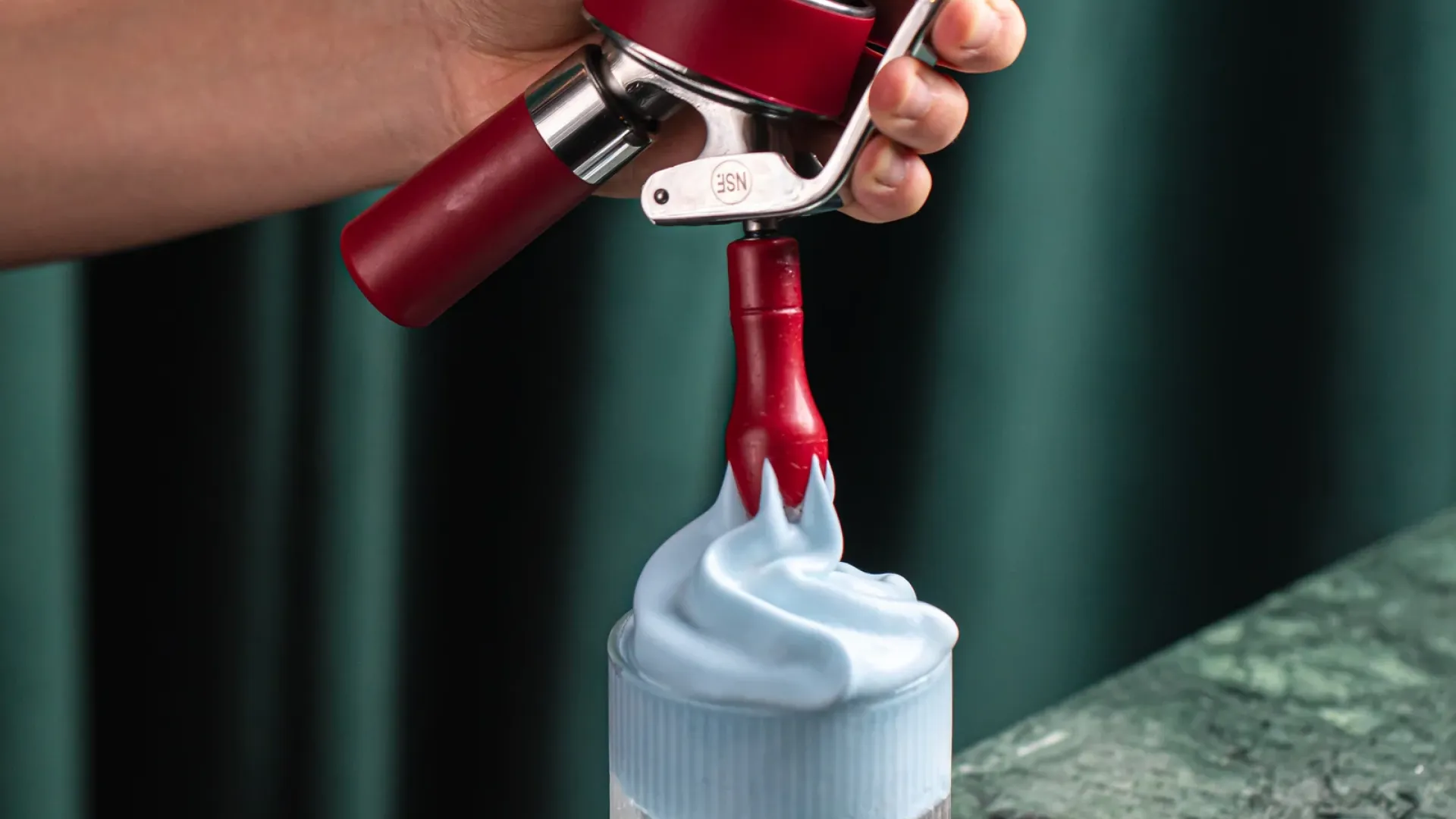
Best Whipped Cream Dispensers: An Honest Buyer's Review
2026-07-20
Pick the wrong whipped cream dispenser and the problems show up within weeks: cream seeping down the head threads, a charger that half-pierces and vents into the air, a valve that clogs and can't be opened for cleaning. We see these failures from the supply side. We manufacture food-grade N2O and fill 8g cream chargers at factory scale, and we qualify dispensers to bundle with our gas for café, restaurant, and distributor customers. This review applies the same criteria we use before we put our name next to a unit.
Below: the four criteria that actually predict reliability, our picks across commercial, mid-range, and entry-level tiers, a side-by-side price comparison, and the failures worth knowing about before you spend money. If you want the mechanics first — how pressurized N2O turns liquid cream into stable foam — our complete guide to whipped cream dispensers covers that ground.
How We Judge a Whipped Cream Dispenser
Every unit in this review was scored against four criteria. They are the same four we check when qualifying dispensers for wholesale customers, and they map directly onto the complaints that reach our support inbox.
- Sealing. A charged dispenser is a small pressure vessel holding roughly 8–10 bar. Head threads, gasket quality, and valve fit decide whether it holds that pressure for years or starts leaking in a month. This is the number one failure point across every brand we have tested or serviced.
- Capacity. Dispensers come in 0.25L, 0.5L, and 1L. A half-litre unit covers most cafés and home kitchens — one 8g charger per fill, ten or more servings of whipped cream. A 1L unit suits banquet and high-volume work and takes two chargers. Buy for your busiest hour, not your average one.
- Material. Body and head both matter. Full stainless steel survives daily commercial dishwashing and acidic preparations. Aluminum is lighter and cheaper but oxidizes in dishwashers and its threads wear faster. Plastic head components are the weak point of most budget units.
- Certification. For commercial kitchens, NSF certification and HACCP compliance simplify health inspections. For importers and resellers, food-contact documentation such as LFGB or FDA equivalence is what clears customs without friction.
Best Commercial-Grade Whipped Cream Dispensers
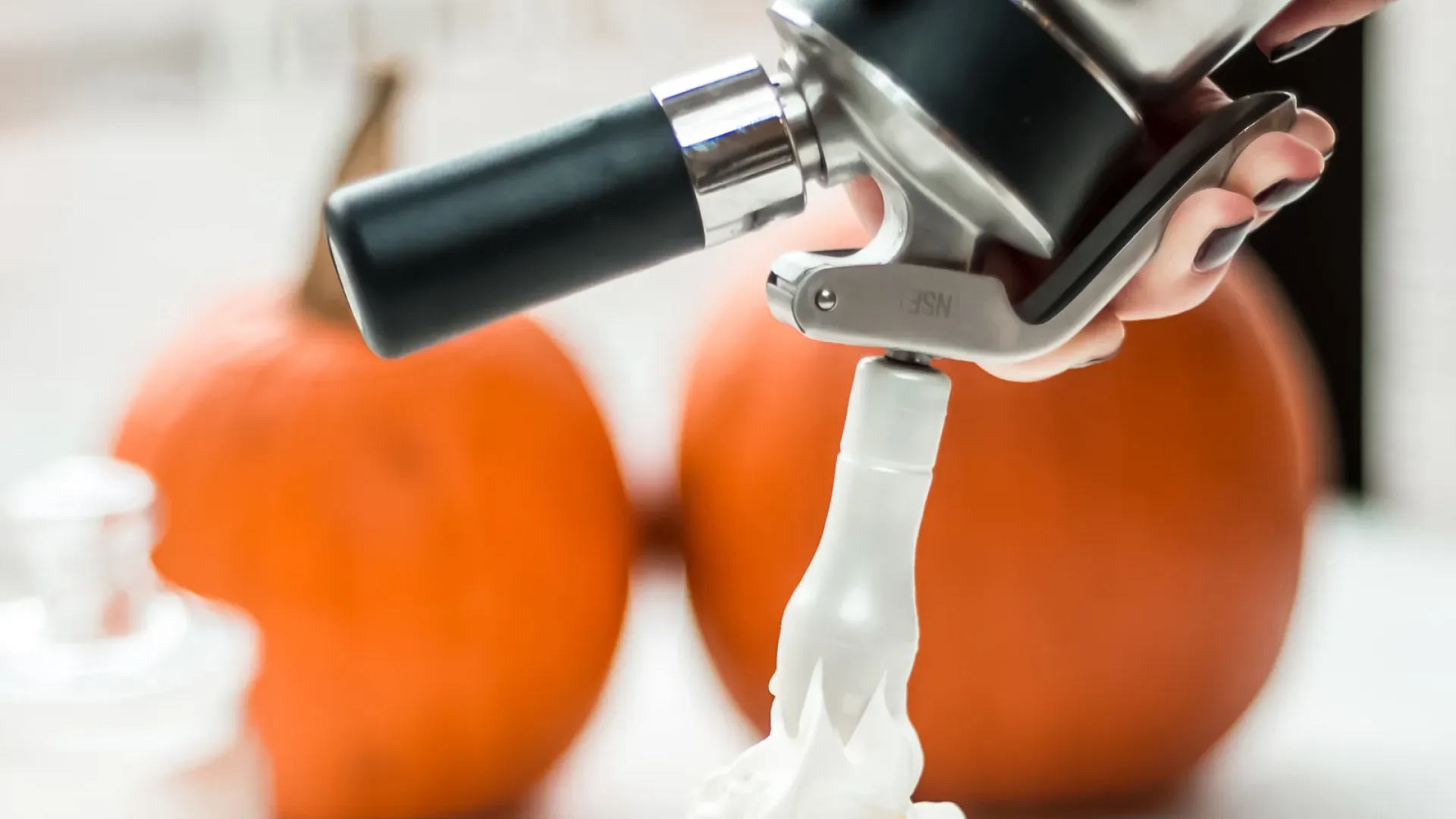
iSi Cream Profi Whip — the reference standard. Ask three independent test kitchens and the same name comes up first. The Profi Whip is NSF-certified and HACCP-compliant, built entirely from stainless steel, with a removable piston valve that comes apart for cleaning and a full unit that goes straight into the dishwasher. A 0.5L fill with one charger yields ten-plus servings. Expect to pay around $110–120 for the pint size. The one limitation: it is rated for cold preparations only, roughly 34–86°F.
iSi Gourmet Whip — the hot-application pick. The Gourmet Whip is the only mainstream dispenser rated for hot use, up to 165°F (74°C), which makes it the default for warm espumas, hollandaise, and sauce work. It comes in 0.25L, 0.5L, and 1L, carries NSF certification, and costs more than the Profi. Buy it if your menu includes hot foams; otherwise the Profi is the better value.
Champion Whip CW-500SS — the factory-direct alternative. This is our own unit, so weigh that accordingly — but the specifications are public. The CW-500SS 500ml stainless steel whipper is built from 304 food-grade stainless, pressure-tested to 30 bar (three times normal working pressure), ships with three stainless decorating nozzles and a cleaning brush, disassembles completely, and is safe in commercial dishwashers. Production follows CE and LFGB standards, with random-sample pressure testing on every batch. For distributors and private-label buyers, we customize logo, color, and capacity from 250ml to 1000ml. The honest positioning: the same duty class as the Austrian benchmark, at factory-direct economics.
Best Mid-Range Dispensers
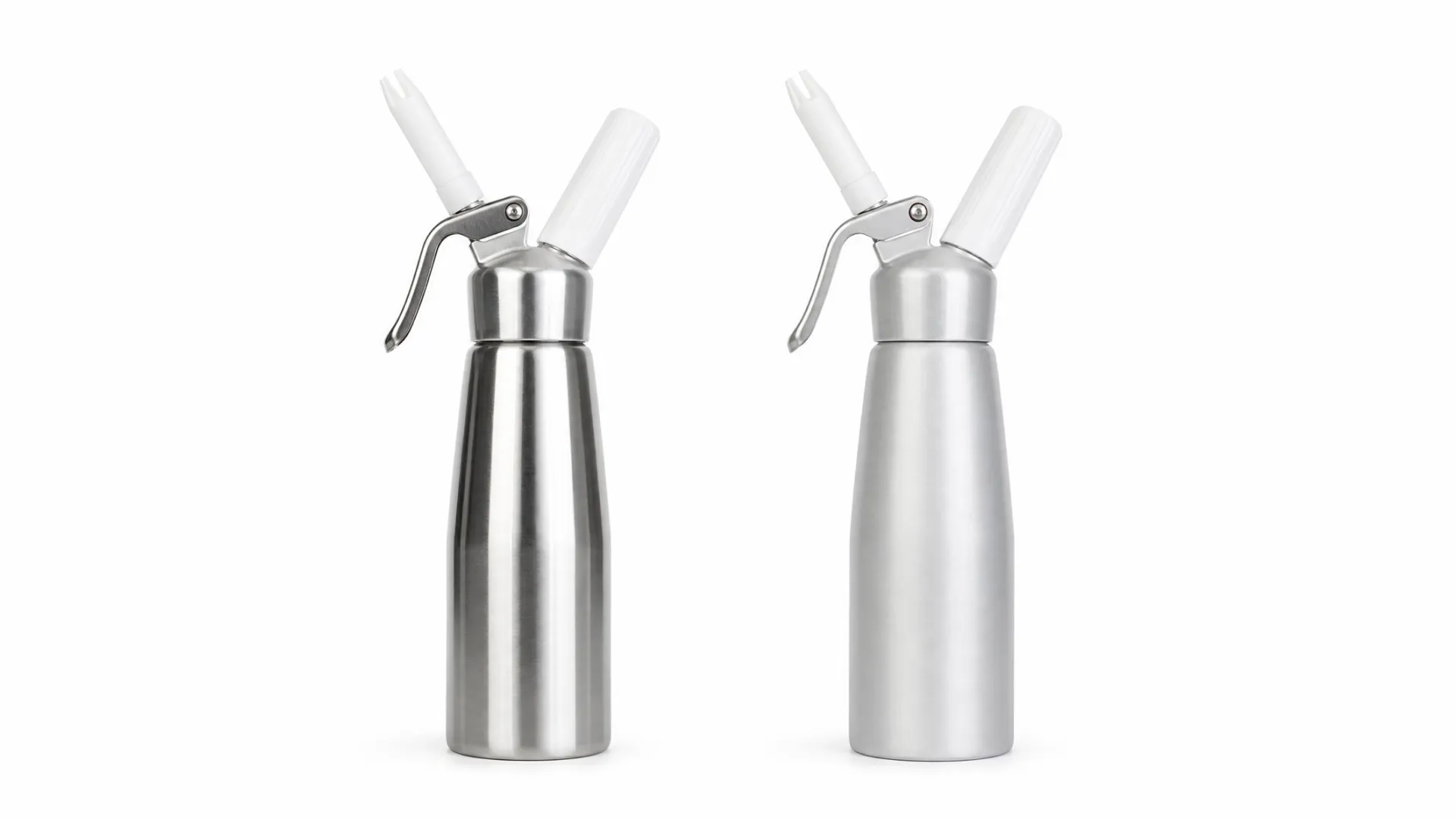
Otis Classic. A 304 stainless body with a generous accessory kit — seven metal nozzles including injector tips — and street prices that swing from $60 to $110 depending on the channel. Only the body is dishwasher safe; the head and valve need hand washing. Inspect the gasket on arrival, because seal quality is where units at this price vary most.
Mosa. Stainless construction around the $70 mark, widely distributed across Asia-Pacific, with decent spare-parts availability. Threads and valve fit are a step below the iSi units but clearly above the entry tier. A sensible pick for a home enthusiast or a low-volume café.
Best Entry-Level Dispensers
ICO. The best of the budget tier at roughly $30–50, with TÜV certification on its aluminum models. Perfectly serviceable for home use and light café duty. Watch the charger-holder threads — they are the part most likely to cross-thread if rushed.
EurKitchen and ZOEMO. Both sit in the $30–40 band, aluminum bodies, hand wash only. Treat them as light-duty tools: a few servings a day, not a commercial rotation.
One caveat applies to this whole tier. Plastic head components and soft aluminum threads are where budget dispensers fail, and when they fail, the repair usually costs more than the unit. Entry-level pricing makes sense for occasional use; past ten or fifteen servings a day it becomes false economy.
Price Comparison at a Glance
| Model | Tier | Material | Capacity | Approx. Price (USD) | Certification | Dishwasher Safe |
|---|---|---|---|---|---|---|
| iSi Cream Profi Whip | Commercial | Stainless steel | 0.5L / 1L | $110–120 | NSF, HACCP-compliant | Full unit |
| iSi Gourmet Whip | Commercial (hot) | Stainless steel | 0.25L / 0.5L / 1L | $120–150 | NSF | Full unit |
| Champion CW-500SS | Commercial | 304 stainless steel | 500ml (250–1000ml custom) | Factory-direct volume pricing | CE, LFGB production standards | Full unit |
| Otis Classic | Mid-range | 304 stainless steel | 500ml | $60–110 | — | Body only |
| Mosa | Mid-range | Stainless steel | 500ml / 1L | ~$70 | — | Check manual |
| ICO | Entry | Aluminum | 0.5L / 1L | $30–50 | TÜV (aluminum models) | Hand wash |
| EurKitchen | Entry | Aluminum | 500ml | $30–40 | — | Hand wash |
Two things to read from this table. First, the jump from entry to mid-range buys you stainless construction and better threads; the jump from mid-range to commercial buys you certified sealing, serviceable valves, and full dishwasher safety. Second, the price spread inside tiers is wide — the same Otis Classic lists at nearly double across channels — so compare per-channel pricing before committing, especially on a fleet order.
The Failures We See Most Often
Four problems account for the large majority of "broken dispenser" complaints that reach us, and all four are preventable.
- Worn gaskets. A flattened or nicked gasket leaks exactly like a cracked head, and it is a two-dollar part. In commercial rotation, inspect monthly and replace at the first sign of flattening. Confirm spare gaskets are available before you commit to any brand — orphaned models become scrap.
- Cross-threaded charger holders. A holder that seats crooked pierces the charger off-center; gas vents around the seal instead of into the cream. Screw the holder on firmly and squarely, and prefer metal holders over plastic.
- Aluminum in the dishwasher. Dishwasher detergent oxidizes aluminum threads and bodies, leaving grey residue and rough surfaces that destroy seals. Aluminum units are hand-wash only, no exceptions.
- Non-serviceable valves. A valve that can't be removed turns one clogged nozzle into a dead unit. A removable valve is worth real money over the life of a dispenser.
Buying for a Business: Look Past the Unit Price
For a commercial buyer, the dispenser is the small half of the economics. The gas is the running cost. A 0.5L dispenser uses one 8g N2O cream charger per fill; a 1L unit uses two. A café topping forty drinks a day burns through thirty to forty chargers daily, and at that volume a 640g or 2000g cylinder paired with a pressure regulator cuts gas cost per charge sharply — the dispenser stays the same, only the supply changes.
For resellers and house-brand programs, two more factors decide the deal: spare-parts supply (gaskets first, then valves and nozzles) and food-contact documentation that satisfies your market's import rules. Both are easier to secure from a manufacturer than from a trading intermediary.

Get Dispensers and Chargers From One Source
A dispenser is half the system; the gas is the other half, and the two are bought best together. Champion Whip manufactures food-grade N2O and fills chargers factory-direct, and we supply the 500ml stainless steel whipper built for daily commercial rotation. For cafés, distributors, and private-label brands, sourcing cream chargers wholesale alongside matching dispensers means one quality standard, one point of contact, and consistent results cup after cup. Send us your volume and your market through our custom and OEM page — we will quote a complete setup within one business day.
FAQ
What is the best whipped cream dispenser for commercial use?
For daily commercial duty, the iSi Cream Profi Whip is the benchmark: NSF-certified, HACCP-compliant, all-stainless, and fully dishwasher safe at around $110–120. Buyers who need the same duty class at volume, or under their own brand, should look at factory-direct 304 stainless units such as the Champion Whip CW-500SS, which adds 30-bar pressure testing and OEM customization.
Is a stainless steel or aluminum whipped cream dispenser better?
Stainless steel, for anything beyond occasional use. Aluminum's only real advantage is price: it oxidizes in dishwashers, its threads wear faster, and it reacts with acidic preparations. Stainless handles daily commercial rotation, survives the dishwasher, and keeps its threads and seals intact for years.
What size whipped cream dispenser should I buy?
A 0.5L dispenser covers most cafés and home kitchens — one 8g charger per fill and ten-plus servings of whipped cream. Choose 1L for banquet or high-volume work (it takes two chargers), and 0.25L only for occasional garnish use. Buy for your busiest hour, not your average one.
How many cream chargers does a dispenser need per fill?
One 8g charger for 0.25L and 0.5L units; two chargers for a 1L unit. Fill the canister no more than half to two-thirds full, charge, and shake 20–30 times. Using fewer chargers than specified gives runny cream; extra chargers past the rating are unsafe.
How long does whipped cream last in a dispenser?
About one week refrigerated in the sealed, charged canister, and up to two weeks when the cream contains sugar or a stabilizer. The N2O atmosphere inside the closed vessel suppresses bacterial growth. Discard the cream if it smells sour or dispenses watery.
Are whipped cream dispensers dishwasher safe?
It depends on the model. Full stainless units such as the iSi Cream Profi Whip and the Champion CW-500SS are dishwasher safe as complete units. Many mid-range models allow only the body in the machine, and aluminum dispensers are hand-wash only — detergent oxidizes the metal and ruins the threads.
Do whipped cream dispensers come with chargers?
Usually not. Most dispensers ship with nozzles and a cleaning brush but no gas. Standard 8g N2O cream chargers fit all standard charger holders, so you can source gas separately — buying chargers and dispenser from one supplier simplifies logistics and quality control.
Can I put hot liquids in a whipped cream dispenser?
Only in models rated for it. The iSi Gourmet Whip handles hot preparations up to 165°F (74°C). Standard dispensers are rated for cold use, roughly 34–86°F — hot liquid warps gaskets and pushes internal pressure beyond the vessel's rating, so keep hot work to a hot-rated unit.


Elevate Your Creations with
Champion Whip
Explore our premium whipped cream chargers – designed for perfectionists.
View our Products


