

Cream Charger Wholesale Price Guide 2026: Cost Breakdown, Quote Analysis and Sourcing Tips
2026-06-22
Every year, new clients ask us the same question: "How come your price is so different from XX supplier?" Cream charger wholesale pricing looks simple on the surface — it's just a canister of gas, right? In reality, everything from raw materials and production capacity to purity level and shipping method affects the final quote. This article breaks down what goes into cream charger wholesale pricing in 2026, so you know exactly what you're paying for on a quote sheet and can avoid getting burned by low-price traps.
What Makes Up a Cream Charger Wholesale Price
A cream charger's factory gate price is built from four stacked cost layers: raw gas, cylinder packaging, filling capacity, and logistics. The weight of each layer shifts depending on charger size and order volume, but the sequence stays the same.
- Raw gas cost — N2O is produced through thermal decomposition of ammonium nitrate. Raw material prices fluctuate with the ammonium nitrate market. Purifying to food-grade 99.5%+ requires multi-stage filtration; the higher the purity (e.g. 99.95%), the more purification steps involved, and the higher the cost.
- Cylinder/packaging cost — 8g mini cylinders use less steel, so per-unit cost is low. 640g and 2000g large cylinders consume significantly more steel and require stricter pressure testing, pushing per-unit packaging cost up noticeably.
- Filling and capacity utilization — Factories with in-house filling lines have a unit cost advantage over trading companies that outsource filling, especially on large-volume orders where the gap widens.
- Logistics and duties — N2O is classified as hazardous goods for transport. Shipping declarations, packaging requirements, and insurance costs are all higher than standard cargo. Import duties and anti-dumping tariffs in the destination country stack directly onto the landed cost. We recommend asking suppliers to break out the FOB price and estimated landed cost separately during quoting, so you can calculate your real cost accurately.
Why Quotes for the Same Spec Can Vary by 2x
Clients often come to us with two 8g charger quotes and ask why the prices are so different. The usual variables:
| Variable | Impact |
|---|---|
| Purity level | 99.5% vs 99.95% can differ by 15–30%; higher purity means fewer impurities (moisture, oil residue, residual nitrogen oxides) |
| Factory-direct or trader | Trader quotes typically include a middle margin; factory-direct eliminates that layer |
| MOQ (minimum order quantity) | Larger orders spread fixed production line costs across more units; tiered discounts are standard |
| Certification coverage | FDA, CE, FSSC22000, SGS testing and certification add cost, but these are non-negotiable requirements for B2B purchasing |
| Cylinder steel grade and wall thickness | Some low-price suppliers cut costs with thinner steel walls — this is a safety risk |
A reasonable wholesale quote should come with the supplier clearly stating the purity number, certification list, and cylinder spec. If they only give you a lump-sum price and won't break down these details, that's usually a sign something's hidden in the pricing.
2026 Pricing Trends: What's Driving Changes
Based on our conversations with clients this year, several trends are worth watching:
- Raw material price swings. Ammonium nitrate is a dual-use agricultural and industrial feedstock. Its price follows energy costs and agricultural commodity cycles, which feed directly into N2O production cost.
- Tightening regulations across multiple countries. The UK, several Australian states, and US states like Tennessee have all introduced retail-facing purchase restrictions or bans in recent years. These regulatory changes mainly affect the retail channel, but they're also pushing more suppliers to strengthen batch traceability and compliance documentation — that compliance cost eventually shows up in quotes.
- Tariffs and trade policy. Import tariffs on Chinese-manufactured N2O products vary by destination country and may shift. We recommend confirming the latest tariff rates directly with destination-country customs or your supplier before purchasing — don't estimate landed cost using outdated numbers.
- Scale-driven pricing room. Factories with integrated in-house gas production and filling capacity have more room to negotiate on large-volume orders. This is why factory-direct sourcing is generally more cost-effective than going through a trading company.
Unit Economics by Charger Size
What you should actually compare in wholesale purchasing is not "how much per unit" but "how much per dispense." Larger formats typically deliver lower per-use cost, but the upfront equipment investment (like a pressure regulator) needs to be factored in.
| Size | Best for | Per-use cost trend |
|---|---|---|
| 8g charger | Home use, small cafés, low-frequency use | Low per-unit price, but relatively higher per-use cost at volume |
| 640g cylinder | Small-to-mid size food outlets, café chains | Requires pressure regulator; per-use cost drops noticeably |
| 2000g cylinder | High-frequency restaurant groups, foodservice supply centers | Lowest per-use cost, but requires higher initial purchase volume and storage space |
If your operation goes through more than 20–30 chargers per day, switching to 640g or larger cylinders will almost always save money — the math is straightforward. Divide your monthly charger spend by total dispenses, then compare the per-use cost between the two formats.
Five Questions to Ask Your Supplier When Quoting
- What's the exact purity? Ask for the precise number from the test report, not a vague "food-grade" label.
- Is this FOB or landed price? Many low quotes are FOB only. After adding duties, marine insurance, and inland transport, the actual cost can overtake a "higher-priced" supplier.
- Can you provide original certification documents or verifiable certificate numbers? FDA, CE, FSSC22000, and SGS certifications should have real, checkable certificate IDs.
- What's the cylinder wall thickness and pressure test standard? This relates directly to transport and usage safety — you can't judge it by looking at the outside.
- Can you provide batch-level traceability records? A legitimate factory should be able to match each shipment to its production date and QC data.
Running through these five questions will filter out most suppliers who attract attention with low prices but can't back it up with product quality and documentation.
How to Tell If a "Low Price" Is Actually a Good Deal
A below-market quote isn't necessarily a trap, but you need to actively verify why it's low. Legitimate reasons for a low price include: factory-direct supply cutting out the middleman, volume-based economies of scale, and off-season capacity promotions. Illegitimate low pricing usually hides in: overstated purity, thinner steel walls, skipped testing or certification steps, and old batch inventory passed off as new stock. Before placing a large order, request a small sample batch first. Check actual weight, pressure rating, and the gas purity report. Confirm everything checks out before signing a volume contract.
Bottom Line
Cream charger wholesale pricing is not a standalone number — it's the stacked result of purity, packaging, capacity, and logistics costs. When reviewing a quote, asking "what's included in this price" will help you make a better purchasing decision than simply comparing totals.
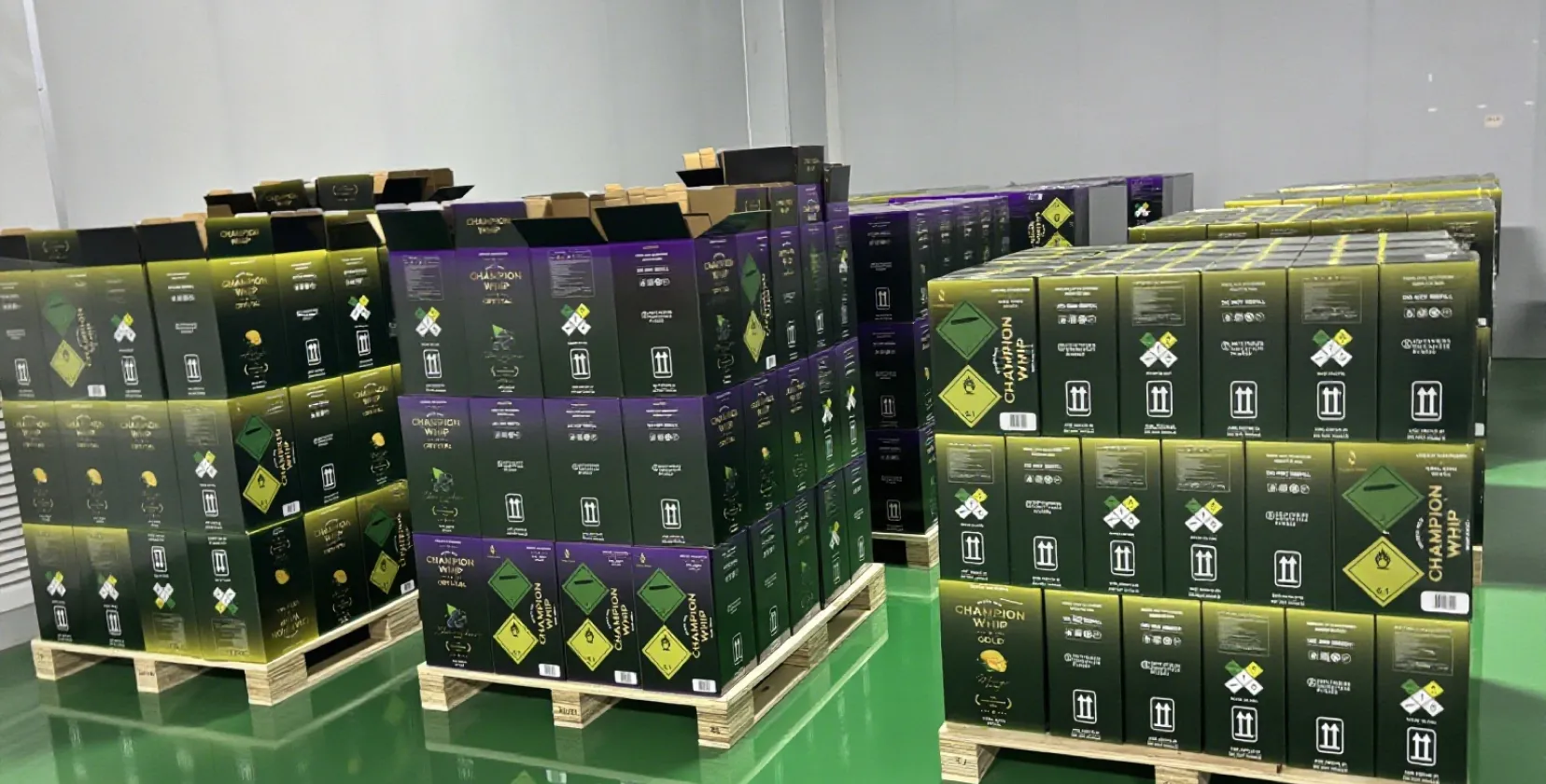
Champion Whip is a factory-direct cream charger manufacturer with in-house gas production and filling lines. Our full range from 8g to 3000g cylinders is available for bulk supply, at 99.95% food-grade purity, certified to FDA, CE, FSSC22000, and SGS standards, with OEM custom packaging and flavors available. If you need the latest 2026 wholesale pricing, contact us directly for a tiered quote matched to your order volume.
FAQ
How is cream charger wholesale pricing calculated?
Why do same-spec cream chargers have such different prices?
Is there a minimum order quantity for wholesale cream chargers?
How much is the price difference between 99.5% and 99.95% purity?
Is factory-direct pricing much cheaper than buying from a trader?
Are larger cylinder formats really more cost-effective than small chargers?
How do I tell if a wholesale quote is reasonable?


Verhoog uw Creaties met Champion Whip
Ontdek onze premium slagroomopladers — ontworpen voor perfectionisten.
View our Products


