

US Federal Bill Would Ban Retail N2O Sales Nationwide — Commercial Food Supply Exempt
2026-07-07
On June 24, 2026, Representative Kevin Mullin (D-CA) introduced the Nitrous Oxide Safety Act (H.R. 7945) in the US Congress. The bill would ban retail sales of nitrous oxide consumer products nationwide, including online sales. It is the first serious attempt to regulate N2O at the federal level, after two years of state-by-state legislation. For the food-grade cream charger supply chain, the most important part of the bill is what it leaves alone: commercial food production, commercial kitchens, and B2B foodservice supply are all explicitly exempt.
What the Bill Does
H.R. 7945 uses consumer product safety law as its mechanism. Starting 180 days after enactment, any consumer product containing nitrous oxide would be classified as a banned hazardous product under Section 8 of the Consumer Product Safety Act. In plain terms: gas stations, smoke shops, convenience stores, and consumer-facing websites could no longer sell N2O canisters to the public, no matter how the product is labeled.
That labeling point matters. Under current federal law, selling N2O for inhalation is already illegal, but sellers have avoided enforcement by labeling large flavored tanks as culinary products. The bill closes this gap directly: a "food use only" label would no longer make a consumer retail sale legal.
What Is Exempt
The bill preserves access for every legitimate professional channel. The exemptions written into the text cover:
- Commercial food production — including manufacturing settings and commercial kitchens, defined as restaurants, caterers, and other food preparation businesses
- Whipped cream canisters — consumer products where N2O is sold as a component of food and used as a propellant (standard aerosol whipped cream cans stay legal)
- Medical and dental treatment — care provided by licensed professionals
- Industrial, automotive, and research applications
Sellers supplying these exempt channels would need to show their products are not reaching general consumers. That means documentation, buyer verification, and traceable B2B distribution — the same compliance direction already visible in the UK, Australia, and multiple US states.
Why a Federal Bill Now
State legislation has moved fast but unevenly. In the past two months alone: South Carolina's S.751 took effect in June with fines up to $10,000 and possible jail time for illegal sales. New York passed S.9567B ("Nima's Law") on June 3, prohibiting retail N2O sales statewide. Tennessee's retail ban under Public Chapter 702 took effect July 1. Each state law has different definitions, penalties, and exemption language.
Rep. Mullin's argument is that this patchwork leaves gaps, especially for online sales that cross state lines. The bill was drafted with a coalition of parents whose children were hospitalized or died after inhaling flavored N2O products sold under brand names like "Galaxy Gas." It has bipartisan support — Rep. Stephanie Bice (R-OK) is a co-sponsor — and has been referred to the House Committee on Energy and Commerce.
Current Status and What Happens Next
The bill is introduced, not passed. Most bills die in committee, and there is no vote scheduled yet. But three signals suggest this one should be taken seriously: it has sponsors from both parties, it mirrors laws that multiple states have already passed with wide margins, and it targets a problem with heavy media coverage and an organized advocacy coalition behind it. Even if H.R. 7945 stalls, its exemption structure is a preview of where US regulation is heading.
What This Means for B2B Buyers and Distributors
A short answer for anyone sourcing cream chargers for the US market: the foodservice supply chain is not the target, and nothing in this bill would restrict a restaurant, bakery, café, or distributor buying food-grade N2O through wholesale B2B channels. What would change is the burden of proof. Suppliers would need to demonstrate their products flow to exempt commercial users, which makes documentation the deciding factor in supplier selection.
Practical steps worth taking now:
- Work with manufacturers that provide batch-level traceability and food-grade purity certification (FDA 21 CFR 184.1545, E942, FAO/WHO INS 942) as standard practice
- Keep records showing commercial end use — business licenses, foodservice registrations, purchase documentation
- Avoid consumer-styled products in B2B inventory; flavored tanks marketed with party imagery are the direct target of this bill
Suppliers that already run documented, verified B2B channels for food-grade N2O cream chargers lose nothing under this bill. Sellers that depend on gray-zone retail volume lose their US market. That split has been coming for two years — a federal bill just makes it official policy direction.
Sources
- Rep. Mullin: Introduces Bill to Address Nitrous Oxide Abuse (June 24, 2026)
- Congress.gov: H.R. 7945 — Nitrous Oxide Safety Act of 2026 (full text)
- KGW News: Congressman introduces federal bill banning retail sale of nitrous oxide nationwide (June 26, 2026)
- NY Senate: Passage of legislation to prohibit retail sales of nitrous oxide (June 3, 2026)
- SC Daily Gazette: SC law bans recreational sales of nitrous oxide (June 2026)

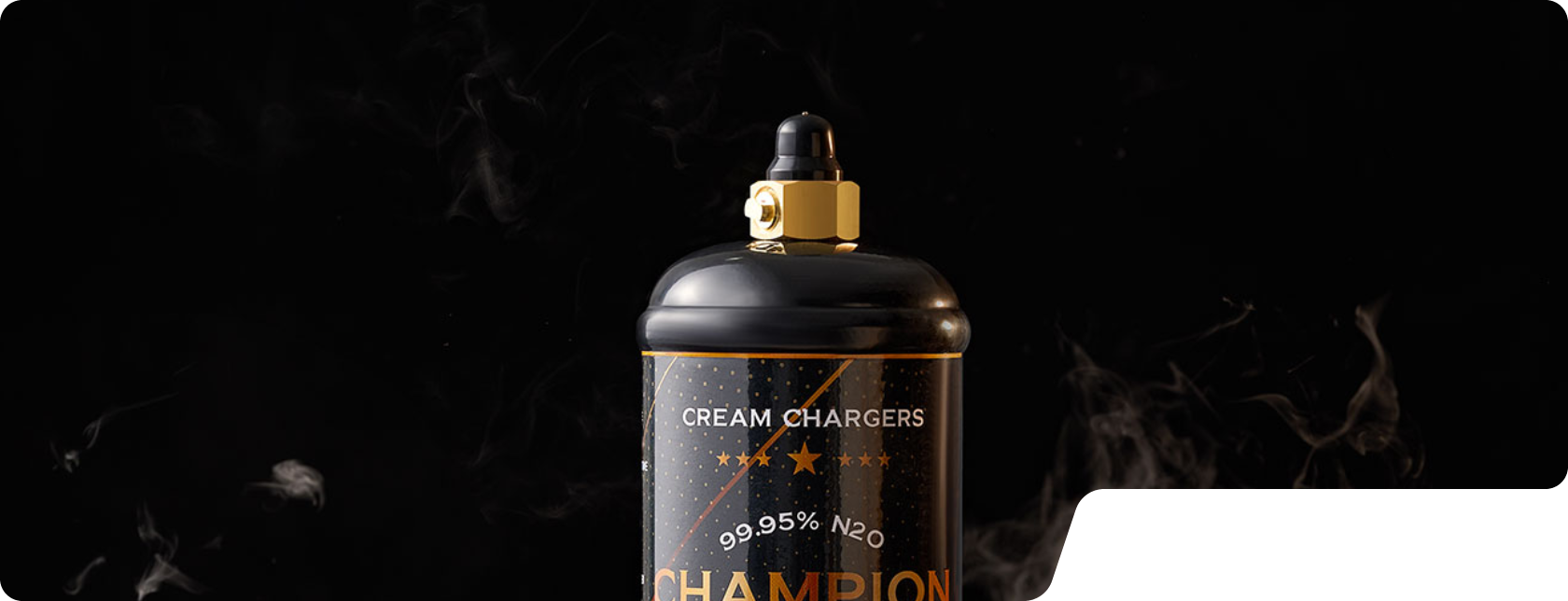
Elevate Your Creations with
Champion Whip
Explore our premium whipped cream chargers – designed for perfectionists.
View our Products


