

CO2 vs N2O: Key Differences and Which Gas to Use for Whipped Cream
2026-06-11
We manufacture N2O cream chargers, and a question comes up in almost every conversation with a new buyer: can CO2 cartridges do the same job? They look nearly identical on a shelf, they're often sold by the same suppliers, and the price gap tempts people to swap one for the other. This guide lays out how the two gases actually behave in food, where each one belongs, and what happens when you mix them up. It's the same explanation we give cafes, bars, and distributors who order from our factory.
The Short Answer
N2O (nitrous oxide) is the gas for whipped cream, mousses, foams, and rapid infusions. It dissolves into fat, holds no flavor of its own, and produces fine, stable bubbles. CO2 (carbon dioxide) is the gas for carbonation: sparkling water, soda, fizzy cocktails, and draft beverage systems. It dissolves into water and forms carbonic acid, which creates the sharp, tangy bite of a carbonated drink. The two are not interchangeable. Put CO2 into cream and you get a sour, fizzy, collapsing mess; put N2O into water and you get flat liquid with a brief, weak sparkle.
How N2O Works in Food
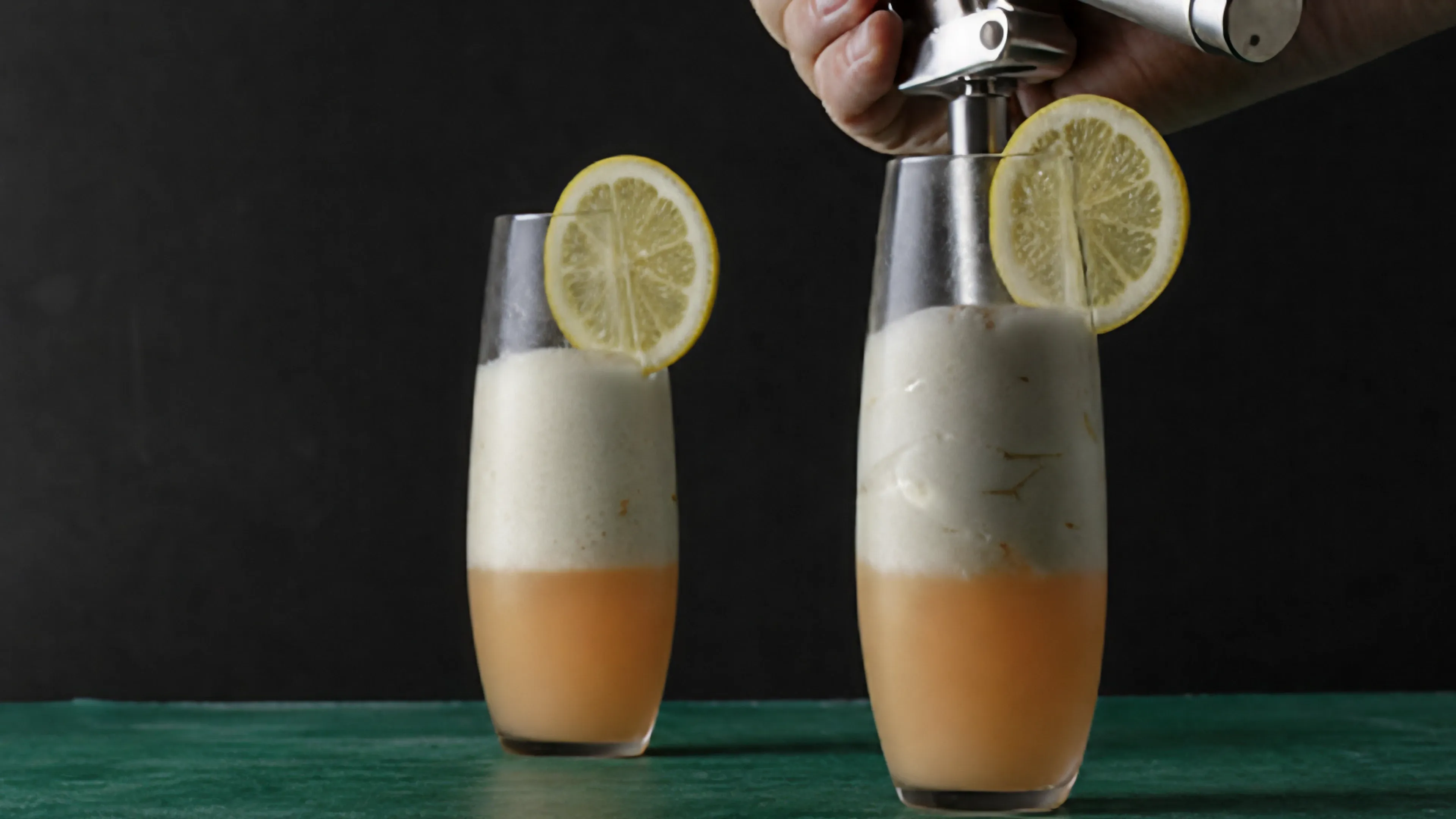
N2O is lipid-soluble. Inside a pressurized cream whipper, the gas dissolves directly into the fat molecules of the cream. When you press the lever and pressure drops to atmospheric, the dissolved gas expands instantly into millions of micro-bubbles, and the fat network locks those bubbles in place. The result is the smooth, dense foam you expect from professional whipped cream.
Three properties make N2O the standard in commercial kitchens:
- Neutral, slightly sweet character. N2O does not react with cream or change its pH, so the flavor of the dairy comes through clean.
- Bacteriostatic effect. N2O inhibits bacterial growth in the sealed, pressurized dispenser. A charged whipper keeps cream fresh in the fridge for up to two weeks, far longer than hand-whipped cream.
- No oxidation. The gas displaces oxygen inside the canister, so the cream does not go rancid while stored under pressure.
The same fat-dissolving behavior is why chefs use N2O for espumas, savory foams, chocolate mousse, and quick flavor infusions in oils and spirits. Cream needs roughly 28-30% fat minimum for the foam to hold; below that, there isn't enough fat to trap the gas.
How CO2 Works in Food
CO2 is water-soluble. Force it into a liquid under pressure and a portion of it reacts with the water to form carbonic acid (H2CO3). That acid is the whole point of carbonation: it delivers the crisp, slightly sour bite of sparkling water, soda, and beer. CO2 bubbles are also larger and coarser than N2O bubbles, which is exactly what you want in a fizzy drink and exactly what you don't want in cream.
Typical CO2 jobs in a food or beverage business:
- Soda siphons and home carbonation systems
- Soda guns and post-mix systems at the bar
- Kegged and draft beverages, including beer and carbonated cocktails
- Modified-atmosphere packaging and dry ice in cold-chain logistics
CO2 vs N2O: Side-by-Side Comparison
| Property | N2O (Nitrous Oxide) | CO2 (Carbon Dioxide) |
|---|---|---|
| Solubility | Dissolves into fat | Dissolves into water |
| Reaction with food | Inert; no pH change | Forms carbonic acid (around pH 3-4 in solution) |
| Taste effect | Neutral, slightly sweet | Sharp, tangy, acidic |
| Bubble structure | Very fine, stable micro-bubbles | Large, coarse bubbles that release fast |
| Main culinary use | Whipped cream, foams, mousses, infusions | Carbonated drinks, draft systems |
| Cartridge pressure | ~50-60 bar (liquefied gas) | ~50-60 bar (liquefied gas) |
| Common formats | 8g chargers; 320g-3000g cylinders | 8g soda chargers (often unthreaded); 16g threaded; bulk tanks |
| Effect on shelf life | Bacteriostatic; charged cream keeps up to 2 weeks chilled | Acidifies; can destabilize dairy |
Why CO2 Ruins Whipped Cream
Cream is an emulsion of fat and water. Load it with CO2 and the gas ignores the fat and dissolves into the water phase, where it forms carbonic acid. Three things go wrong at once:
- Sour, seltzer-like taste. Carbonic acid sits around pH 3-4 in solution. In a sweet dairy product that reads as spoiled. Kitchens that have tried it report desserts coming back from the dining room because guests assumed the cream had turned.
- Wrong texture. CO2 bubbles are large and uneven. Instead of a dense, pipeable foam, you get coarse, fizzy cream that collapses within minutes.
- Protein destabilization. The acid drop in pH can curdle the milk proteins, leaving a grainy or split texture even after the fizz fades.
None of this is a quality problem with the cream or the dispenser. It's chemistry, and no technique fixes it. If a batch of whipped cream tastes sour straight out of the siphon, the first thing to check is whether a CO2 cartridge was loaded by mistake.
Can You Use N2O to Carbonate Drinks?
The reverse swap fails too, just less dramatically. N2O has poor water solubility, so a drink charged with it holds only a faint, short-lived sparkle and none of the acidic bite that defines a carbonated beverage. That said, N2O has real bar applications of its own: rapid infusions (pressurizing spirits with herbs, fruit, or spices to extract flavor in minutes), silky cocktail foams, and nitro-style cold foam toppings on coffee and cocktails. Those uses rely on the gas-in-fat or gas-in-liquid expansion effect, not on carbonation.
Cartridge Compatibility: Don't Swap Them
Part of the confusion is physical. An 8g CO2 soda charger and an 8g N2O cream charger are close to the same size and shape, and both store liquefied gas at a similar 50-60 bar. But compatibility breaks down in two ways:
- Threading and fit. Many 8g CO2 soda chargers are unthreaded, while common 16g CO2 cartridges for bike inflators and mini kegs are threaded. N2O charger holders are built for the 8g cream charger standard. A mismatched cartridge can leak at the seal or fail to pierce cleanly.
- The result is wrong even when it fits. If a CO2 cartridge happens to seat in a cream charger holder, the gas still does CO2 things to the cream. Fit does not equal function.
For larger N2O cylinders (640g and up), the connection question matters even more: cylinders require a pressure regulator to step tank pressure down to the dispenser's safe working range, typically 8-12 bar. CO2 regulators and N2O regulators use different fittings in most markets precisely so the two systems don't get crossed.
Which Gas for Which Job
| Application | Correct Gas | Why |
|---|---|---|
| Whipped cream, dessert toppings | N2O | Dissolves into fat; stable, clean-tasting foam |
| Espumas, mousses, savory foams | N2O | Fine bubble structure, no flavor change |
| Cold foam for coffee and cocktails | N2O | Smooth micro-foam texture |
| Rapid infusions (oils, spirits) | N2O | Pressure-driven extraction without acidifying |
| Sparkling water, soda | CO2 | High water solubility; lasting fizz and acidic bite |
| Carbonated cocktails, draft drinks | CO2 | Standard for kegs and post-mix systems |
| Beer dispensing | CO2 (or CO2/N2 mix) | Maintains carbonation under pressure |
One note on nitro coffee: the velvety cascade in nitro cold brew comes from nitrogen (N2), a third gas, not from N2O or CO2. Cafes adding a nitro tap need an N2 or mixed-gas setup; an N2O whipper produces a similar cold foam texture on top of a drink but doesn't nitrogenate the liquid itself.
What This Means If You're Buying in Bulk
For procurement, the practical takeaways are simple. First, confirm the gas before the format: a quote for "8g chargers" can mean either gas, so specify food-grade N2O for any cream application. Second, check purity and certification. We fill every charger and cylinder with 99.95% pure food-grade N2O, verified under SGS testing, because trace impurities show up directly in taste and foam stability. Third, size the format to your volume: 8g cream chargers suit low-volume and household use, while a 640g cylinder refills about 80 standard 0.5L whippers and a 2000g cylinder handles roughly 250, which cuts per-charge cost and downtime for busy cafes and caterers.
Champion Whip produces the full N2O range in-house, from 8g chargers through 3000g cylinders, including flavored options, with stock in US and EU warehouses for 2-5 day bulk delivery. If you're weighing gas options for a cafe chain, bar group, or distribution business, send us your use case and volumes. Contact us for wholesale pricing and OEM options.
FAQ
What is the difference between CO2 and N2O cartridges?
CO2 and N2O are both food-grade gases sold in pressurized cartridges, but they behave differently in food. N2O (nitrous oxide) dissolves into fat, which is why it whips cream into a stable, fine foam. CO2 (carbon dioxide) dissolves into water and forms carbonic acid, which is what gives soda its fizz and sharp bite. In short: N2O is for whipping and foaming, CO2 is for carbonating.
Can I use a CO2 cartridge in a whipped cream dispenser?
Why does CO2 make whipped cream taste sour?
Are CO2 and N2O cartridges interchangeable?
Can N2O be used to carbonate drinks?
Which gas is in whipped cream chargers?
Do CO2 and N2O cartridges have the same pressure?
Which gas should a cafe or bar stock?


Elevate Your Creations with
Champion Whip
Explore our premium whipped cream chargers – designed for perfectionists.
View our Products


