

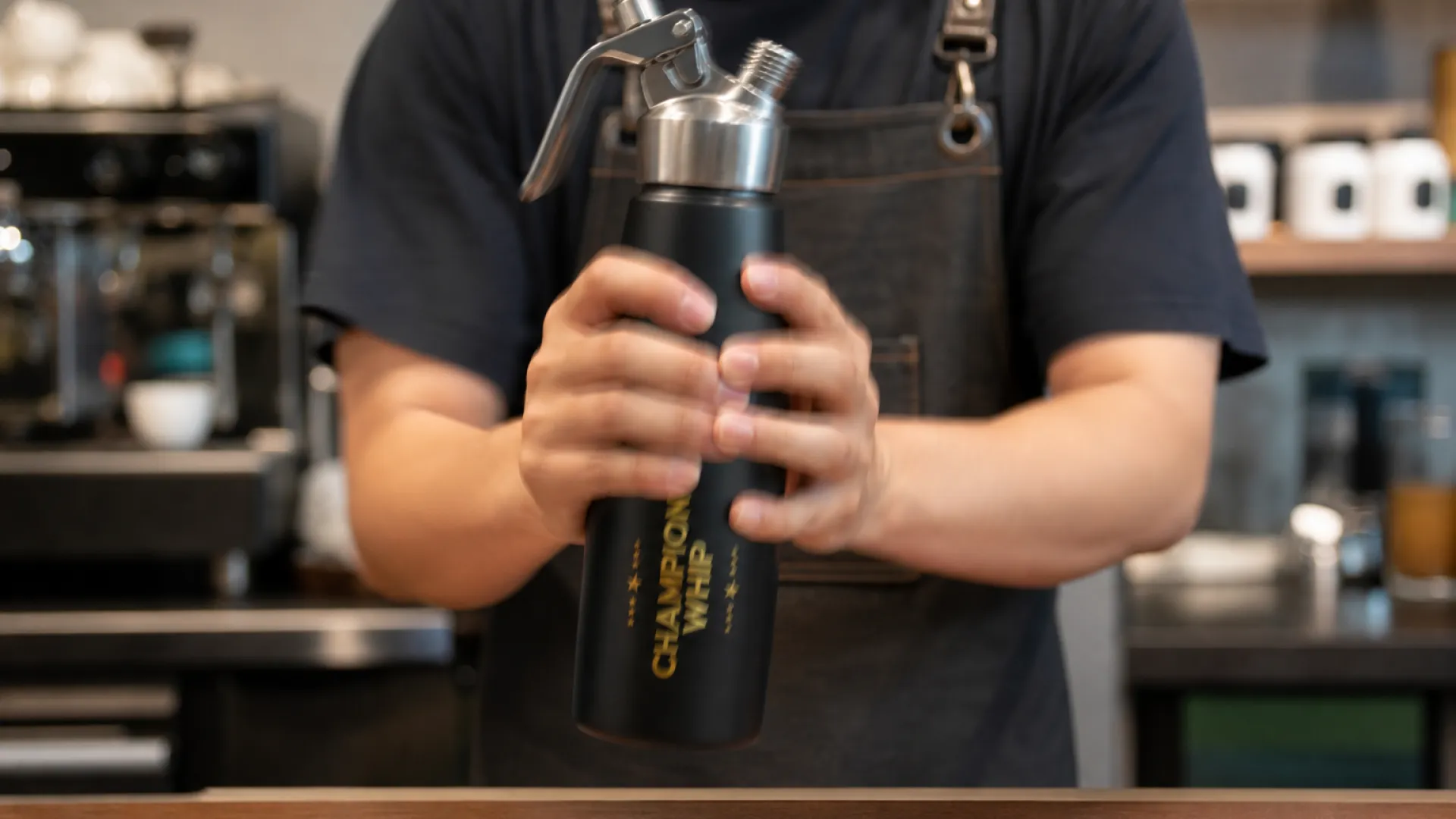
5 Benefits of Cream Charger Use in Commercial Kitchens and Bakeries
2026-08-28
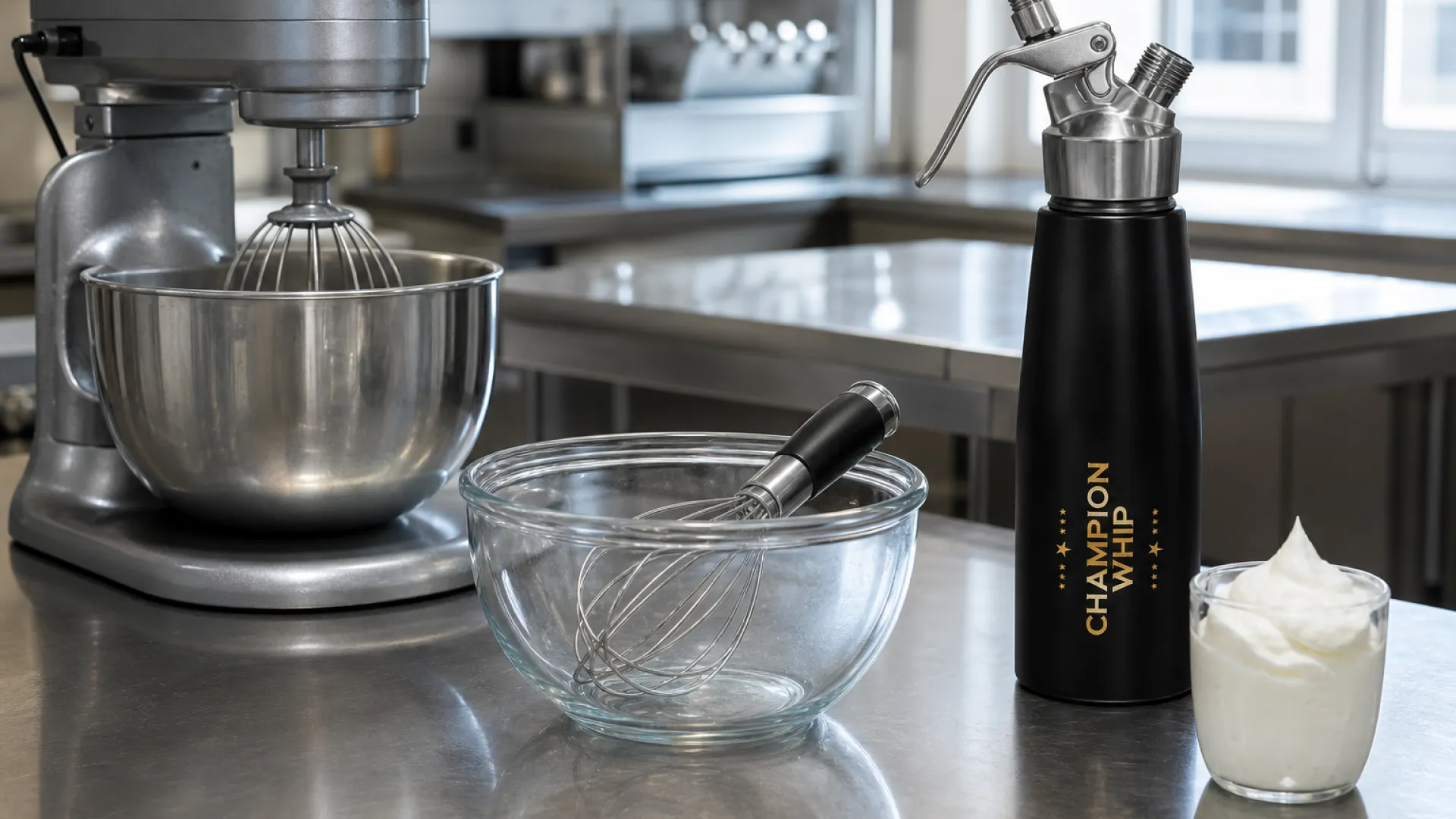
At 7:40 on a Saturday morning, the first dozen orders of the day all need the same finishing touch: a crown of whipped cream that holds its shape from the pass to the table. A stand mixer keeps pace for the first hour. By the third, the batch prepped at opening is weeping in the fridge, and the person who should be plating desserts is back at the bowl, re-whipping.
Two costs hide in that scene: the labor spent re-whipping during your busiest hours, and the guest who receives a flat topping on a dessert they saw crowned with a tall swirl in your photos. Cutting the first cost and removing the second is the reason we recommend cream chargers to any kitchen that plates whipped cream daily.
The benefits of cream charger use are practical and measurable, and they fall into five areas. Here is what each one looks like in a working kitchen.
What Are the Benefits of Cream Charger Use in a Commercial Kitchen?
The benefits of cream charger use come down to five measurable gains: cream whipped in seconds, identical texture on every plate, a lower and predictable cost per portion, prepped cream that stays usable for days, and one dispenser that covers desserts, foams, and drink toppings. Each gain maps to a line item a buyer already tracks: labor, waste, margin, and menu range.
All five gains have the same source: pressurized nitrous oxide aerates cold cream inside a sealed dispenser and holds that foam stable until the moment of service. The sections below look at each benefit the way an operator would, starting with what changes on the station and ending with what that change is worth.
Faster Service During the Rush
Hand whipping a liter of cream takes several minutes of active labor and full attention. A charger and a dispenser compress the same job into one fill, one charge, and one shake, which takes seconds and requires no skill. Across a full week, those recovered minutes add up to hours of prep time returned to the kitchen.
The bigger change is timing. Because aerated cream holds inside a sealed dispenser, prep moves to before the rush and finishing moves to the moment the order fires. During service, the topping becomes the fastest step on the dessert station, and nobody leaves the line to re-whip.
For operators running several locations, speed also becomes portable. A hand-whipped recipe depends on who is holding the whisk, so results vary between sites and shifts. A charger-driven recipe travels as a written specification: fill volume, charger count, shake count. New staff reach the standard on their first service, and the night shift plates what the morning shift plated.
Consistency: The Same Foam on Every Plate
A charger is engineered to deliver a consistent gas dose at a controlled pressure. Because the dose stays consistent under normal operating conditions, the foam no longer depends on the operator's arm, experience, or fatigue. Plate one and plate one hundred leave the pass with the same texture and the same height.
That consistency saves money before it wins looks. Collapsed or over-whipped toppings get remade, and every remake is paid for three times: in cream, in labor, and in table time. When the texture holds, portion cost holds with it, and the dessert that reaches the table matches the photo that brought the guest in.
Cost per Portion and Shelf Life: The Numbers Buyers Track
A dispenser meters a controlled amount per pull, so portion cost becomes predictable. A buyer can cost a dessert to the gram and expect that number to hold across staff and shifts, because the serving size no longer depends on who is squeezing the piping bag. The math is simple: divide the charger cost by the servings you get per fill, and you have your cost per serving; run the same math across formats to see which cylinder size fits your volume best.
Shelf life adds the second saving. Nitrous oxide stabilizes whipped cream without gelatin or other additives, so cream held in a sealed, refrigerated dispenser can stay service-ready for days when handled in line with your local food-safety requirements. A kitchen can prep one larger batch for the weekend, throw less away at close, and keep a short, clean ingredient list on the menu.
Whether those extra days come with off-flavors depends on gas purity. Champion Whip chargers are filled with 99.95% pure food-grade nitrous oxide, so the cream on the plate tastes like cream.
One Tool Across the Menu: Desserts, Espumas, and Drink Toppings
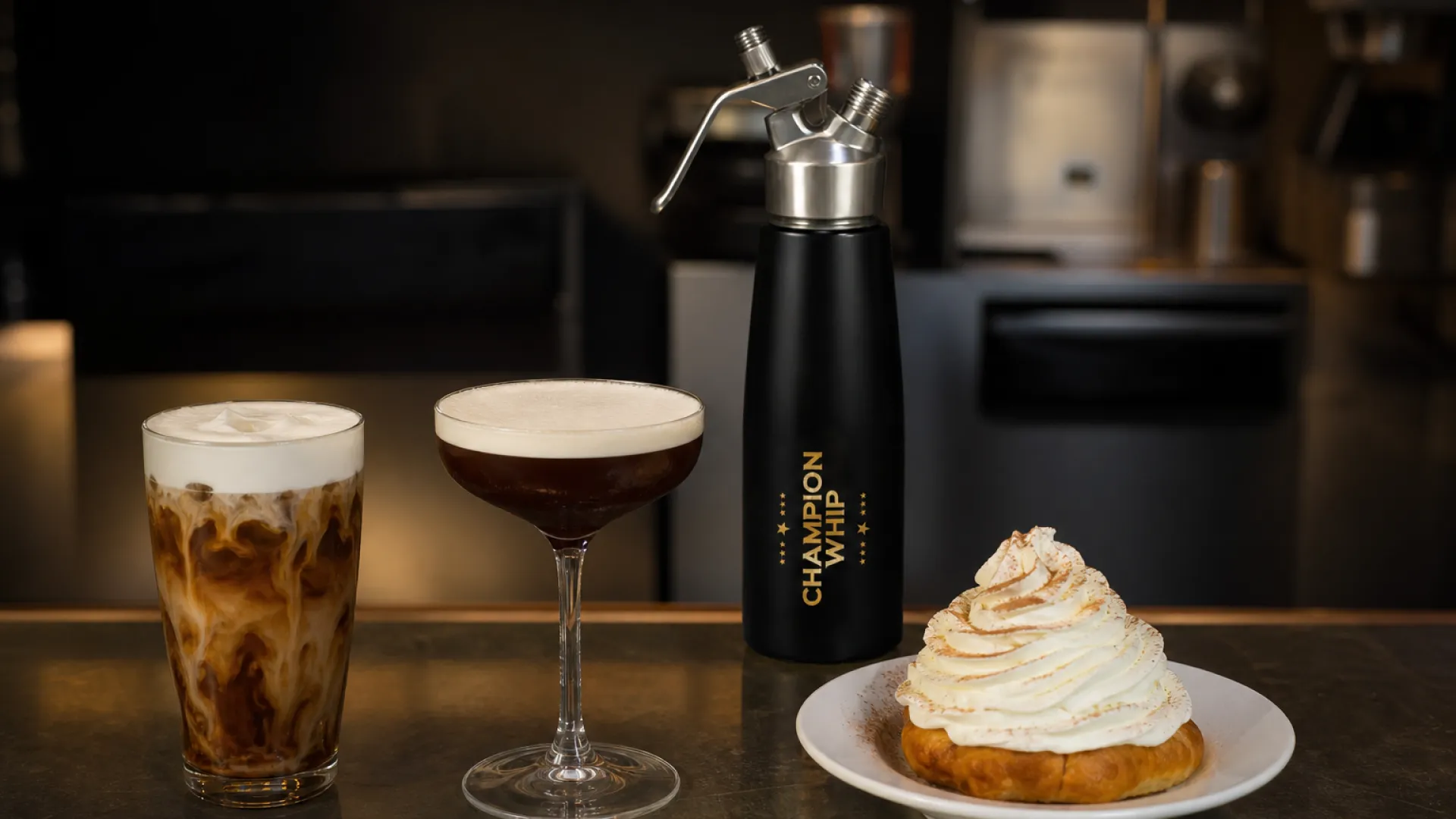
The same dispenser that crowns a hot chocolate also produces mousses, espuma-style foams, light sauces, and garnishes for signature drinks. For a buyer, one piece of equipment serves the dessert station, the bar, and the kitchen line in the same shift.
Flavored chargers widen that range with no extra prep step. Champion Whip cylinders come in blueberry, pineapple, strawberry, and watermelon, and the flavor infuses during aeration itself. For a full breakdown of applications, see what cream chargers are used for.
How the Benefits Play Out in Different Businesses
Every business gets the same benefits, yet they pay off in a different order depending on the business model. A café feels speed first: toppings finish to order through the morning rush, with no dedicated prep person. A bakery feels consistency first: decoration has to look identical across hundreds of portions. A restaurant feels range first, because one tool turns out sweet and savory foams à la minute.
Caterers and distributors sit at a different point in the chain, so their question is less about the plate and more about supply. For them the decisive benefit is predictable volume: large-capacity cylinders and factory-direct stock keep a 500-cover event, or a year-round resale program, fully supplied.
Choosing the Right Charger Format for Your Volume
Format selection is a volume question, so the place to start is daily output. The table below matches each Champion Whip format to the volume it serves best.
| Format | Capacity | Best for |
|---|---|---|
| Pearl Series 8g cartridge | 8g N2O | Cafés, bakeries, and low-volume service |
| 0.52L cylinder | 320g N2O | Small kitchens; flavored options available |
| 0.95L cylinder | 640g N2O | Professional kitchens; silent nozzle and safety valve |
| 2.2L cylinder | 1364g N2O | Medium-scale operations, distributors, and caterers |
| 3.3L cylinder | 2000g N2O | Steady bulk supply; fast US/EU warehouse shipping |
| 4.5L cylinder | 3000g N2O | Industrial-scale production; SGS certified with 10-year anti-corrosion warranty |
Champion Whip produces both the gas and the cylinders in its own facility, so purity control and pricing stay with one supplier. Low minimum order quantities and warehouse stock in the US and Europe keep restocking short, and the range runs from a single 8g cream charger sleeve to industrial cylinders.
The Bottom Line for Buyers
Speed, consistency, cost, shelf life, and menu range are the same five line items whether a business plates fifty desserts a day or five thousand. The benefits of cream charger use show up on all five within the first week of service.
Champion Whip manufactures the gas and the cylinders under one roof, with SGS-certified production and a 10-year anti-corrosion warranty on our flagship cylinder. Tell us your daily output and delivery region, and we will recommend a format and a restock plan, from 8g sleeves to bulk cream chargers that keep your program supplied year-round.
FAQ
Why do people use cream chargers?
Professional kitchens use cream chargers to whip cream in seconds and to produce foams, mousses, sauces, and drink toppings with one dispenser. For a business, the value is speed, consistency, and a lower cost per portion.
How many times can you use a cream charger?
An 8g cream charger is single-use: one charger aerates one standard half-liter dispenser fill, and a one-liter dispenser takes two. Larger cylinders such as the 640g or 2000g formats serve multiple fills and connect through a pressure regulator.
Are whip cream chargers illegal?
No. Cream chargers are a legal, standard food product manufactured for food preparation. For commercial use, buy food-grade N2O at documented purity from a certified producer, and follow local regulations on sale and storage.
What can you use cream chargers for?
Whipped cream, mousses, espuma-style foams, light sauces, dessert decoration, and drink toppings. One dispenser can serve the dessert station, the bar, and the kitchen line in the same shift.


Elevate Your Creations with
Champion Whip
Explore our premium whipped cream chargers – designed for perfectionists.
View our Products


